
How to Get a Child Who Hates Baths to Take a Bath (Without Turning It Into a Daily Battle)
How to get a child who hates baths to take a bath is something I’ve searched for myself more than once.
As a mom of four boys, I’ve learned something interesting over the years: every single one of my boys hated baths at some point.
My older boys, who are now 9 and 7, actually enjoy bath time and showers. They understand why it’s important, they can wash themselves independently, and bath time is just part of their routine.
But my 4-year-old and toddler? That’s a completely different story.
Some days they happily splash around and never want to get out. Other days they cry, fight, run away, negotiate, and do absolutely everything they can think of to avoid taking a bath.
The funny thing is that I know how this story ends because I’ve already lived it twice before. My older boys eventually outgrew bath resistance and learned to enjoy being clean. That reminder helps me stay patient on the hard days.
If you’re currently dealing with a child who refuses baths, I want you to know that you’re not alone and you’re definitely not failing as a parent.
Bath resistance is incredibly common, especially with toddlers and preschoolers.
One thing that has helped tremendously in our house is keeping a small collection of special bath toys that only come out during bath time.
As an Amazon Associate, I earn a small commission from qualifying purchases.
(AD) Bath Crayons for Kids – Shop on Amazon
The goal isn’t to trick children into taking baths.
The goal is to make bath time feel safe, familiar, and even a little fun.
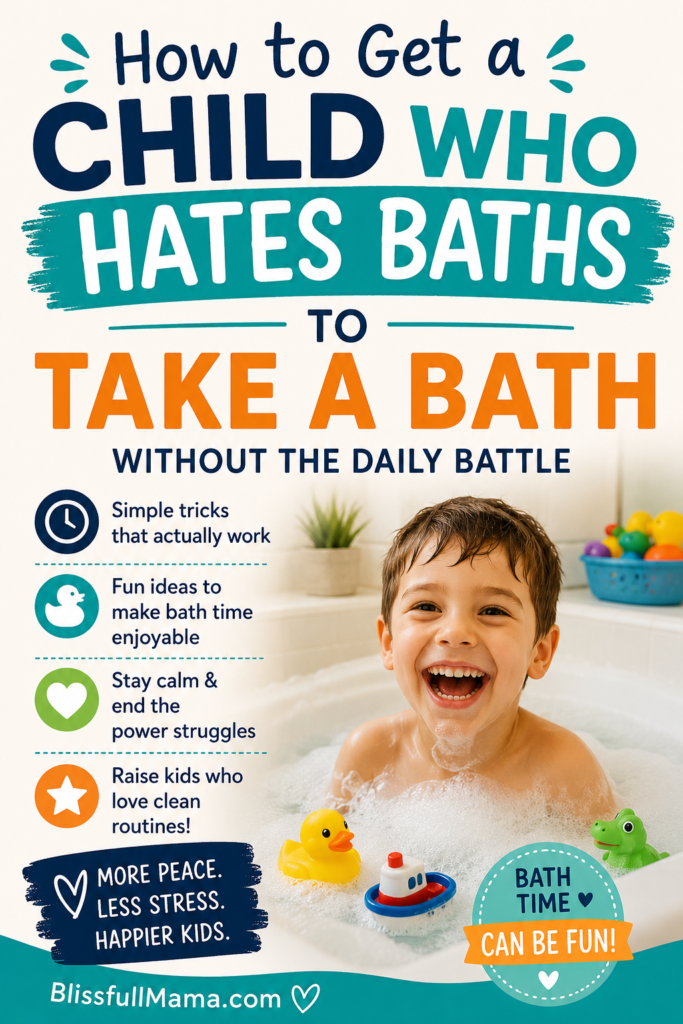
The Real Reason Your Child Hates Baths
Most children don’t actually hate being clean.
They hate specific parts of the bath process.
Once you figure out what your child dislikes, finding a solution becomes much easier.
They Hate Water on Their Face
This has been one of the biggest struggles with my younger boys.
Hair washing is often where bath time goes completely off the rails.
Many children dislike:
- Water running into their eyes
- Soap getting near their face
What looks like a small inconvenience to us can feel overwhelming to a young child.
They Don’t Want to Stop Playing
Sometimes the bath isn’t the problem at all.
Your child is busy building with LEGO, racing toy cars, playing outside, or watching a favorite show.
Then suddenly someone announces:
“Bath time!”
From their perspective, something fun is ending.
It’s easy to understand why they resist.
They’re Already Tired
In our house, baths usually happen after dinner and before bedtime.
That’s also when everyone is running low on patience.
I’ve noticed that when my boys are overtired, bath time becomes much harder.
Small frustrations quickly turn into tears.
Simple instructions become arguments.
And suddenly a five-minute bath feels like a major parenting challenge.
The Mistake That Made Bath Time Worse
One lesson I’ve learned the hard way is that children can sense when you’re rushing.
I remember one evening when the younger boys desperately needed baths because we had been outside all day.
Dinner was already in the oven.
I was tired.
The kitchen needed attention.
I wanted bath time done as quickly as possible.
So I rushed.
And they fought me every step of the way.
They cried.
They resisted.
I got completely soaked trying to bathe them together.
By the time I finally walked out of the bathroom, I was exhausted, wet, frustrated, and wondering why something so simple felt so hard.
That experience taught me something important:
The more pressure I put on bath time, the more resistance I got in return.
When children feel forced, they often fight harder.
When bath time feels playful and relaxed, it usually goes much more smoothly.
A Better Way to Think About Bath Time
After raising four boys, I’ve stopped looking at bath time as something I need to “win.”
Instead, I see it as a skill I’m teaching.
I’m teaching my children:
- Why personal hygiene matters
- How to care for their bodies
- How to wash independently
- How to build healthy daily habits
My goal isn’t simply getting them clean tonight.
My goal is helping them eventually become kids who can confidently take care of themselves.
And just like my older boys eventually learned to enjoy bath time, I know my younger boys will get there too.
Why This Matters
If your child currently hates baths, try not to panic.
This phase is incredibly common.
Most children eventually outgrow bath resistance, especially when parents stay calm, keep bath time positive, and avoid turning it into a power struggle.
The strategies in this post are the same ones I’ve used with four very different boys, and many of them can start working tonight.
Make Bath Time Something They Want to Join
Now let’s talk about the strategies that have worked best in our house.
None of these tricks magically turned my bath-resistant boys into kids who begged for baths overnight. But they did make bath time easier, calmer, and much less stressful for everyone.
The biggest lesson I’ve learned is this:
You don’t need to make bath time perfect. You just need to make it more enjoyable than fighting about it.
Give Plenty of Warnings Before Bath Time
One mistake many parents make is announcing bath time out of nowhere.
Your child is happily playing with LEGO, building a fort, or racing cars across the living room.
Then suddenly:
“Time for a bath!”
Of course they’re upset.
I get much better results when I give several warnings beforehand.
For example:
- 15-minute warning
- 10-minute warning
- 5-minute warning
- Final reminder
This gives children time to finish what they’re doing and mentally prepare for the transition.
My boys still don’t jump up and cheer when I announce bath time, but the resistance is much lower.
Let Them Make Small Choices
Children love feeling in control.
When bath time feels like something being forced on them, they often push back.
Instead of giving one command, try offering choices:
- Do you want bubbles tonight?
- Should we use the blue towel or green towel?
- Do you want to wash your hair first or last?
- Would you like bath crayons or bath toys?
The bath still happens.
Your child simply feels involved in the process.
This has worked especially well with my 4-year-old.
Turn Bath Time Into Play Time
This is probably the strategy that has helped us the most.
When children associate bath time with fun, the battle becomes much smaller.
Some favorites in our house include:
Bath Crayons
Kids can draw on the bathtub walls and then wash everything away afterward.
It’s simple but surprisingly effective.
(AD) Bath Crayons for Kids – Shop on Amazon
Bubble Baths
Never underestimate the power of bubbles.
Sometimes adding extra bubbles completely changes the mood.
My younger boys suddenly become excited to jump into the tub.
Toy Washing Station
Let your child bring washable toys into the bath.
Tell them their toys need baths too.
This works especially well with toy cars, plastic animals, and action figures.
Bath Color Tablets
Watching the water change colors feels magical to young children.
It turns an ordinary bath into something special.
Music and Singing
Some nights we sing silly songs.
Other nights I play calming music while they splash.
Anything that helps create a positive atmosphere makes bath time easier.
Be Careful Not to Overdo the Entertainment
This might sound surprising after everything I just said.
Yes, make bath time fun.
But don’t feel like you need to create a theme park experience every night.
One thing I’ve learned from raising four boys is that eventually children need to understand that bathing is simply part of taking care of themselves.
Fun helps build positive associations.
But independence is still the long-term goal.
That’s exactly what happened with my older boys.
When they were little, bath toys, bubbles, and games helped tremendously.
Now they take showers independently because they’ve learned that being clean is part of growing up.
The fun activities helped them get there.
If Hair Washing Is the Problem
For many children, the real battle isn’t the bath.
It’s washing their hair.
This was definitely true in our house.
My boys hated water running over their faces.
If your child is the same, try:
- Using a rinse cup with a gentle pour
- Letting them hold a washcloth over their eyes
- Having them look up at the ceiling
- Using tear-free shampoo
- Washing hair at the very end
Sometimes solving the hair-washing issue solves most of the bath-time resistance.
Connect Bath Time to Something They Enjoy
Bath time became easier in our home when it wasn’t the final destination.
Instead, it became part of a relaxing evening routine.
My boys know that after baths we move on to cozy bedtime activities like:
- Pajamas
- Story time
- Snuggles
- Audiobooks
- Quiet play
- Bedtime routines
When bath time is connected to something positive, children are often more willing to cooperate.
This is one reason our evening routine works so much better now than it did a few years ago.
If bath time is only one part of your evening struggle, these posts can help:
- Best Bedtime Bath Routine for Kids.
- How to Make Bath Time a Fun and Relaxing Routine for Kids (Even If They Usually Hate It).
- Products That Make Bedtime Easier for Overstimulated Kids for calming bedtime tools after bath time.
What to Do When Your Child Still Refuses Baths
Even with bath toys, bubbles, warnings, and all the fun tricks, there will still be days when your child refuses to take a bath.
I wish I could tell you that every bath in our house goes smoothly now.
It doesn’t.
Some evenings my younger boys happily jump into the tub.
Other evenings they act like I’m asking them to do the most terrible thing in the world.
That’s normal.
The goal isn’t to eliminate every bath-time struggle forever.
The goal is to handle those difficult moments without turning them into a nightly battle.
Stay Calm Even When You’re Frustrated
This is easier said than done.
I remember that evening when I was trying to bathe my younger boys before dinner.
The food was in the oven.
Everyone was dirty from playing outside.
I was tired.
They were tired.
And the more frustrated I became, the worse the situation got.
Looking back, I realize my boys were feeding off my energy.
When I sounded stressed, they became more resistant.
When I sounded frustrated, they pushed back harder.
Now I try to remind myself:
This is a parenting moment, not an emergency.
The bath will happen.
Maybe not exactly how I imagined.
Maybe not on my timeline.
But it will happen.
Taking a deep breath before responding often helps more than any bath toy ever could.
Avoid Turning Bath Time Into a Power Struggle
Children naturally want independence.
When they feel cornered, they often dig in their heels.
If your child says:
“No bath!”
Try not to immediately respond with:
“Yes bath!”
Now you’re both fighting to win.
Instead, stay calm and redirect.
Try:
- “Would you like to walk or hop to the bathroom?”
- “Do you want bubbles or bath crayons?”
- “Should we start with washing your body or playing first?”
You’re still moving toward the bath, but you’re avoiding a direct battle.
Keep Your Expectations Realistic
One mistake I made when my boys were younger was expecting every bath to look like the perfect parenting videos online.
You know the ones.
The children smile.
The water sparkles.
Everyone laughs.
Nobody cries.
Meanwhile, in real life, one child is splashing water everywhere, another is refusing to wash their hair, and you’re wondering why the bathroom floor is completely soaked.
Real bath time doesn’t need to be perfect.
If your child gets reasonably clean and everyone survives, that’s a success.
Consider Whether Sensory Issues Are Playing a Role
Some children aren’t being defiant.
They’re uncomfortable.
Things that seem minor to adults can feel overwhelming to kids.
Pay attention to whether your child dislikes:
- Water temperature
- Shampoo smells
- Water on their face
- Loud running water
- Certain towels
- Getting out of the warm bath
If you notice a pattern, make adjustments.
For example:
- Warm the bathroom beforehand.
- Let them choose their towel.
- Use gentler products.
- Keep rinsing quick and predictable.
Sometimes a small change makes a huge difference.
When It’s Okay to Skip a Bath
This may not be a popular opinion, but sometimes I simply let it go.
Not every bath needs to become a major family event.
If one of my boys is exhausted, sick, or completely overwhelmed after a long day, I ask myself:
“Does he truly need a bath tonight?”
Sometimes the answer is yes.
Sometimes the answer is no.
Children don’t need to be scrubbed from head to toe every single night to be healthy.
If they’ve spent the day indoors and had a bath yesterday, skipping one night isn’t the end of the world.
The bigger goal is building healthy hygiene habits over time.
Focus on Teaching Independence
One of the most encouraging things about parenting is seeing how much children grow.
My older boys are proof of that.
These are the same children who once fought baths, hated hair washing, and resisted every step of the routine.
Now they shower independently.
They understand why hygiene matters.
They take responsibility for themselves.
Your child won’t stay in this stage forever.
Every bath is an opportunity to teach:
- How to wash properly
- How to care for their body
- How to follow routines
- How to become more independent
That perspective helps me stay patient on the difficult days.
Remember: This Is Usually a Phase
If you’re currently dealing with a toddler or preschooler who screams when it’s bath time, take heart.
Most children outgrow this stage.
I’ve watched it happen with my own boys.
The same child who once ran away from the bathtub may someday spend twenty minutes singing in the shower and using half a bottle of shampoo.
Parenting is funny that way.
The phase you’re struggling with today often becomes the thing you laugh about later.
A Simple Bath Time Plan for Kids Who Hate Baths
If you’ve read this far, you probably don’t need another complicated parenting strategy.
You need something simple that works in real life.
After raising four boys, here’s the bath-time approach I keep coming back to:
My Simple Bath Time Routine for Reluctant Bathers
Step 1: Give Advance Warning
Instead of surprising your child with bath time, start preparing them ahead of time.
I usually give:
- 15-minute warning
- 5-minute warning
- Final reminder
This simple habit prevents many arguments before they even begin.
Step 2: Offer One or Two Choices
Let your child feel involved.
Examples:
- Bubble bath or bath crayons?
- Blue towel or green towel?
- Wash hair first or last?
Small choices can make a big difference.
Step 3: Keep Bath Time Fun
This doesn’t have to be elaborate.
A few minutes of:
- Bubbles
- Bath toys
- Music
- Toy washing
- Bath crayons
is often enough to change the mood completely.
Step 4: Stay Calm During Resistance
If your child complains, whines, or delays:
Stay calm.
Avoid arguing.
Avoid long lectures.
Simply guide them through the process and move forward.
Children often mirror our emotions.
The calmer we are, the easier bath time becomes.
Step 5: Follow Bath Time With Something Positive
One reason bath time works better in our home now is that my boys know something enjoyable comes next.
After baths we move into:
- Pajamas
- Story time
- Audiobooks
- Snuggles
- Bedtime routine
Bath time becomes a bridge to something comforting instead of an interruption.
For more ideas, check out my post on What to Do Between Bath Time and Bedtime and my complete Best Bedtime Bath Routine for Kids.
Favorite Bath Time Products
These are the types of products that have made bath time easier in our house.
Bath Crayons
Perfect for kids who need something fun to focus on while bathing.
(AD) Shop on Amazon
Bubble Bath for Kids
A simple way to make bath time feel special.
(AD) Shop on Amazon
Tear-Free Shampoo
Especially helpful for children who hate water or soap near their eyes.
(AD) Shop on Amazon
Hooded Towels
My younger boys always seem more excited about getting out of the bath when they have a cozy towel waiting.
(AD) Shop on Amazon
Bath Toy Storage Organizer
Keeps bath toys contained and easy to access.
(AD) Shop on Amazon
For more bedtime products that help kids wind down after bathing, read my post on Products That Make Bedtime Easier for Overstimulated Kids.
Frequently Asked Questions
Why does my child suddenly hate baths?
Children often go through phases where they resist activities they previously enjoyed.
Common reasons include:
- Wanting more independence
- Sensory sensitivities
- Fear of water on their face
- Not wanting to stop playing
- Being tired at the end of the day
Most children outgrow this phase with patience and consistency.
How often should kids take baths?
This depends on age, activity level, weather, and personal preference.
In our house, summer often means daily baths because my boys spend so much time outside.
During other seasons, every other day is usually our goal unless they get especially dirty.
What if my child screams during every bath?
Start by identifying the specific trigger.
Many children aren’t upset about the bath itself.
They’re upset about:
- Hair washing
- Water on their face
- Transitions
- Feeling rushed
Addressing the root cause often helps more than forcing the bath.
Is it okay to skip bath night occasionally?
In many cases, yes.
A missed bath here and there is not going to ruin your child’s hygiene habits.
Focus on consistency over time rather than perfection every single night.
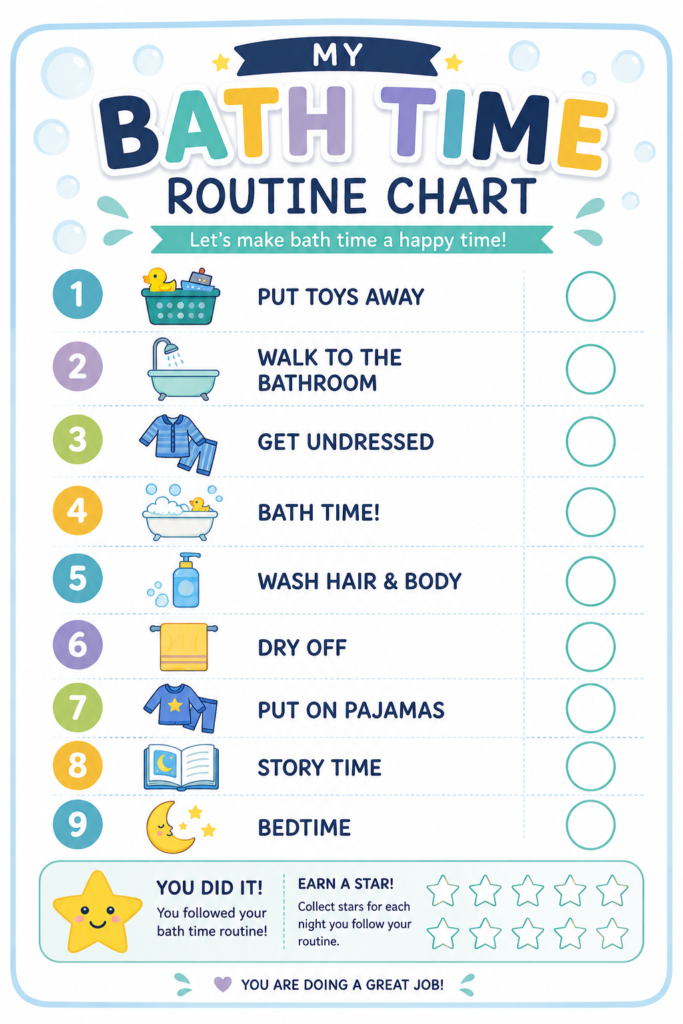
Bath Time Routine Chart for Kids
To make bath time easier, create a simple visual routine chart that includes:
✓ Put toys away
✓ Walk to bathroom
✓ Get undressed
✓ Bath time
✓ Wash hair
✓ Dry off
✓ Put on pajamas
✓ Story time
✓ Bedtime
Young children often cooperate better when they can see what comes next.
This would make a great free subscriber printable and naturally complements your existing bath-time content.
Final Thoughts on How to Get a Child Who Hates Baths to Take a Bath
If your child currently hates baths, I want to leave you with one encouraging thought:
This phase probably won’t last forever.
I know that doesn’t help much when you’re standing in a bathroom with a crying toddler and shampoo in your hand.
But I’ve watched all four of my boys grow and change.
The children who once fought baths eventually learned to enjoy them.
The toddlers who hated having their hair washed became older kids who shower independently.
What helped most wasn’t finding one magical trick.
It was staying patient, making bath time as positive as possible, and remembering that I wasn’t just getting my children clean, I was teaching them lifelong habits.
Some nights will still be messy.
Some baths will still end with wet floors and frustrated parents.
That’s normal.
Keep showing up.
Keep teaching.
Keep making bath time a little fun.
One day you’ll look back and realize the battle is over.
I remember bathtime being chaotic with my boys. You’ve offered some really great tips to help encourage little ones to love bathtime. I really like the bathtime routine chart!!
Thank you, Karen! 💛 I’m so glad you found the tips helpful, and I’m happy you liked the bath time routine chart. Thanks for stopping by!