
The Cleaning Routine I Use When I’m Overwhelmed and Exhausted
(A realistic, grace-filled system for busy moms who are running on fumes)
As an Amazon Associate, I earn a small commission from qualifying purchases.
As a mom of 4 energetic boys, I know what it feels like to look around the house and feel completely defeated before I’ve even started cleaning. Some days I’m motivated and productive. Other days I’m exhausted, overstimulated, and just trying to make it to bedtime. That’s why I created this realistic cleaning routine for overwhelmed moms.
When “Just Clean a Little” Feels Like Too Much
There are days when I look around my house and feel like the mess is physically sitting on my chest.
Not because I’m lazy.
Not because I don’t care.
But because I’m exhausted in a way sleep doesn’t fix.
The kind of exhaustion that comes from pouring yourself out all day, to kids, schedules, emotions, meals, homework, diapers, decisions—until there’s nothing left. And then you look at the clutter, the crumbs, the laundry piles, and your brain just… shuts down.
If that’s you, I want you to hear this first:
This routine is not about becoming a “clean mom.”
It’s about surviving the hard days without drowning in guilt.
I’m not sharing a Pinterest-perfect cleaning schedule. I’m not sharing a 5 a.m. miracle routine or a color-coded system that assumes uninterrupted time.
This is the bare-minimum, nervous-system-friendly, energy-aware cleaning routine I use when I’m overwhelmed and exhausted, but still need my house to feel livable.
And yes, this routine is strategic. Because when your energy is low, strategy matters more than effort.
Why Traditional Cleaning Routines Fail Exhausted Moms
Most cleaning advice is built on one false assumption:
You have consistent energy.
You don’t.
Some days you’re capable, focused, even motivated.
Other days, you’re functioning on autopilot and caffeine.
Traditional routines say:
- “Do a little every day”
- “Just keep up with it”
- “Clean as you go”
That advice collapses the moment:
- Your kids are extra dysregulated
- You’re mentally overstimulated
- You’re emotionally tapped out
- You didn’t sleep well (again)
So instead of forcing consistency, this routine adapts to your capacity.
It answers one core question:
What’s the least I can do today to make tomorrow easier?
That’s it. That’s the metric.
The Rule That Changed Everything for Me: Function Over Appearance
When I’m overwhelmed, I stop cleaning for how my house looks.
I clean for how my house functions.
That means I only focus on:
- What’s stopping us from moving through the day smoothly
- What’s making me feel more overstimulated
- What will cause tomorrow to be harder if I ignore it
This is why my routine has tiers, not tasks.
The 3-Tier Cleaning Mindset (This Is the Foundation)
Before I touch anything, I mentally decide which tier I’m in.
Tier 1: Survival Mode
This is where this post lives.
You’re exhausted. Overstimulated. Emotionally done.
Goal:
Make the house functional, not clean.
Tier 2: Maintenance Mode
You have a little energy, but not much.
Goal:
Prevent chaos from compounding.
Tier 3: Reset Mode
Rare, magical days.
Goal:
Deeper resets that make future survival days easier.
👉 Today, we’re only talking about Tier 1.
Because that’s where most moms actually live.
My Overwhelmed & Exhausted Cleaning Routine (Tier 1)
This routine has five non-negotiables.
Not because I “should” do them.
But because skipping them costs me more energy later.
And I do them in this exact order.
Step 1: Dishes First (Even When I Hate It)
I start with the sink. Always.
Not the floors.
Not the toys.
Not the laundry.
The sink.
Why?
Because dishes:
- Smell
- Block food prep
- Make the kitchen unusable
- Instantly increase mental load
I don’t aim for perfection. I aim for access.
That usually means:
- Emptying or partially emptying the dishwasher
- Loading what’s already there
- Hand-washing only what’s absolutely necessary
Sometimes I leave:
- Pots soaking
- One pan unwashed
- Random cups for later
And that’s fine.
If you’re drowning in dishes, tools matter. A good dish brush with a soap dispenser (AD) or a simple drying mat (AD) genuinely reduces friction—and friction is the enemy when you’re exhausted.
Why this works:
Once the sink is usable, feeding your family feels 10x easier. That alone lowers stress.
Step 2: Trash + Visual Noise Sweep (10 Minutes Max)
Next, I grab a trash bag and walk through the main living areas.
I don’t organize.
I don’t put things away properly.
I remove:
- Trash
- Packaging
- Random papers
- Broken toys
- Anything that doesn’t belong in the room at all
This is about visual relief, not order.
If something belongs in another room, it goes into a “drop basket” (AD). I deal with it later—or not. Depends on the day.
Timer rule:
I set a 10-minute timer. When it goes off, I stop.
Why this works:
- Visual clutter is one of the biggest stress triggers for overwhelmed moms
- Removing trash gives instant results with minimal energy
- Timers prevent burnout spirals
Step 3: One Load of Laundry (Only One)
This is where many routines go wrong.
They say:
“Do laundry every day.”
No.
When I’m exhausted, I do one strategic load:
- Either essentials (underwear, school clothes)
- Or the most overwhelming pile (usually towels or kids’ clothes)
I do not:
- Sort perfectly
- Fold immediately
- Finish multiple loads
Clean clothes in a basket is still a win.
A sturdy laundry basket that doesn’t collapse (AD) or a divided hamper (AD) makes this step less annoying—and annoyance matters more than people admit.
Why this works:
Laundry backlog creates panic. One load restores a sense of control.
Step 4: Reset the “Hot Spots” Only
Every house has hot spots.
For me, it’s:
- The kitchen counter
- The entryway
- The living room floor
I ignore everything else.
I ask:
Where does mess disrupt our daily flow the most?
Then I reset only those zones.
That might mean:
- Clearing one counter
- Throwing toys into bins (not sorting)
- Straightening the couch
Open bins or large toy baskets (AD) are survival tools—not aesthetic choices.
Why this works:
You experience your house through pathways. Clearing those reduces overwhelm fast.
Step 5: One Thing That Makes Tomorrow Easier
Before I stop, I do one future-focused task.
Examples:
- Setting out breakfast dishes
- Prepping school bags
- Running the dishwasher overnight
- Wiping the sink
Just one.
Because exhausted moms don’t need more to-do lists.
They need fewer obstacles tomorrow.
What I Don’t Do (And You Don’t Have To Either)
When I’m overwhelmed, I do not:
- Mop
- Deep clean bathrooms
- Declutter
- Organize drawers
- “Finish the job”
Those are Tier 3 tasks.
Doing them in Tier 1 leads to burnout, resentment, and quitting altogether.
This Routine Is About Self-Trust, Not Discipline
The biggest shift for me wasn’t the steps.
It was giving myself permission to say:
This is enough for today.
Not because I gave up.
But because I chose sustainability over shame.
What I Do When the House Is So Bad I Don’t Know Where to Start
There’s a very specific kind of overwhelm that hits when your house isn’t just messy…
it’s past the point of logic.
You walk into a room and your brain freezes.
There are toys, laundry, dishes, random objects that don’t even belong in that space, and suddenly you’re standing there doing absolutely nothing—because your nervous system is overloaded.
This is usually the moment when moms think:
“I need a full reset.”
“I should deep clean.”
“What kind of person lets it get this bad?”
Let me stop you right there.
When the house feels that bad, doing more is exactly what makes it worse.
This part of the routine is about unsticking yourself, not fixing everything.
The Truth No One Says: Overwhelm Is a Nervous System Issue, Not a Motivation Issue
When you’re overwhelmed and exhausted, your brain is not operating in a problem-solving state.
It’s in survival mode.
That means:
- Decision-making feels painful
- You can’t prioritize
- Every task feels equally urgent and impossible
- Starting feels harder than finishing
So the goal here is not “clean the house.”
The goal is:
Reduce cognitive load enough to regain movement.
That’s it.
The First Rule When Everything Feels Like Too Much: No Decisions Allowed
The fastest way out of freeze is eliminating choice.
So when my house is chaos-level bad, I follow a script. I don’t improvise. I don’t optimize. I don’t “see what needs to be done.”
I do the same things every time.
Step 1: I Choose One Room (Not the Whole House)
This is critical.
I do not say:
- “I need to clean the house”
- “I’ll start everywhere a little”
That’s a guaranteed shutdown.
Instead, I ask:
Which room will give me the most relief if it’s slightly better?
Usually:
- The kitchen
- Or the living room
Bedrooms don’t count yet. Bathrooms don’t count yet.
One room. One boundary.
Step 2: I Use the “Clear, Not Clean” Method
This is where most moms get stuck.
They start:
- Wiping
- Organizing
- Folding
- Rearranging
No.
When I’m overwhelmed, I do one thing only:
I clear surfaces.
Counters.
Tables.
Floors (visually).
I don’t care where things go.
I use:
- A laundry basket
- A tote
- A large bin
Everything that doesn’t belong in that room goes in the bin.
No sorting.
No decisions.
No guilt.
This works best with large, flexible storage bins (AD) or collapsible laundry baskets (AD) because they don’t add friction.
Why this works:
Your brain reads clear surfaces as “order,” even if the mess still exists elsewhere.
Step 3: I Contain the Chaos Instead of Eliminating It
Here’s the mindset shift that saved my sanity:
Mess doesn’t have to be gone to be manageable.
It just has to be contained.
That’s why I rely heavily on:
- Toy bins
- Catch-all baskets
- Drawer dumps
- Closet corners (yes, really)
Pretty doesn’t matter in Tier 1.
Functional matters.
Open toy bins with handles and stackable storage cubes are lifesavers on low-energy days.
You’re not failing because you didn’t organize.
You’re succeeding because the floor is clear enough to walk.
Step 4: I Clean One Thing That Impacts Health or Smell
After clearing, I choose one hygiene task.
Only one.
Options:
- Wiping kitchen counters
- Taking out trash
- Cleaning the sink
- Quick toilet wipe
I don’t stack tasks.
I keep disinfecting wipes (AD) or an all-purpose spray I actually like the smell of (AD) specifically for these moments.
Why smell matters:
Scent has a direct effect on mood and stress. Removing bad smells can instantly lower overwhelm.
Step 5: I Stop Earlier Than I Think I Should
This part is uncomfortable—but essential.
I stop while I still have a tiny bit of energy left.
Not when I’m drained.
Not when I’m resentful.
Not when I’m snapping at my kids.
Stopping early teaches your brain:
Cleaning doesn’t equal punishment.
That’s how you build consistency without forcing discipline.
What I Do When Even This Feels Impossible
There are days when even the steps above feel like too much.
On those days, I switch to Emergency Mode.
Emergency Mode includes:
- Running the dishwasher only
- Taking out trash only
- Clearing one counter only
That’s it.
No “I’ll just do one more thing.”
Because energy debt is real—and tomorrow will charge interest.
The Internal Script I Use to Kill Guilt Mid-Clean
This matters more than the routine itself.
When guilt creeps in, I say (out loud if I have to):
“This house reflects a full life, not a personal failure.”
“I’m allowed to meet myself where I am.”
“Maintenance is productive.”
This isn’t toxic positivity.
It’s cognitive reframing—something therapists actively teach for burnout recovery.
Why This Works Better Than “Motivation”
Motivation is unreliable when you’re exhausted.
Systems are not.
This routine works because:
- It removes decisions
- It respects limited energy
- It prioritizes function
- It ends before burnout hits
That’s how you clean without making exhaustion worse.
How I Keep the Mess From Exploding Again (Without Constant Cleaning)
This is the part no one really talks about.
You finally get the house to a barely-okay state, sit down, take a breath…
and then somehow, by the next morning, it looks like nothing you did mattered.
That rebound mess is what breaks most moms.
Not because cleaning is hard—but because it feels pointless.
So now, I want to walk you through exactly how I protect my energy after I’ve done the bare-minimum reset, without turning my life into one long cleaning loop.
This is not about maintaining a spotless home.
This is about preventing overwhelm from compounding.
The Core Principle: Containment Beats Consistency
Most advice says:
“Just be consistent.”
But consistency requires energy you don’t always have.
What you can control is containment.
If mess stays contained, it doesn’t become emotionally overwhelming—even if it’s still there.
That’s the goal.
The 15-Minute Evening Minimum Reset (My Non-Negotiable)
This is the only “routine” I aim to do daily—and even then, I treat it as flexible.
It takes 15 minutes or less, and it’s designed to protect tomorrow-me.
I do it after the kids are down or during the last stretch of the day when things naturally slow.
What the Evening Minimum Reset Includes:
1. Kitchen Reset (8–10 minutes)
I don’t clean the kitchen.
I reset it.
That means:
- Dishwasher loaded and running
- Counters cleared enough to prep breakfast
- Trash taken out if full
I ignore:
- Floors
- Cabinet fronts
- Perfect organization
A reliable dishwasher detergent (AD) and a sink caddy that keeps sponges from smelling (AD) make this feel less gross and more doable.
Why this matters:
Mornings set the emotional tone of the day. A functional kitchen lowers stress before it even starts.
2. Living Area Containment (5 minutes)
I do a quick sweep of the main living area.
Not a clean. A sweep.
Toys go into bins.
Blankets folded or tossed on the couch.
Shoes pushed to the side.
I don’t sort toys by category.
I don’t fix pillows.
Large toy baskets (AD) and soft fabric bins (AD) are key here because they make “throw it in” acceptable.
Why this works:
You wake up to visual calm—even if the mess technically still exists.
3. One Future Favor
Before I stop, I ask:
What’s one thing that will make tomorrow easier?
Examples:
- Setting out clothes
- Packing lunches
- Laying out coffee stuff
- Charging devices
One thing only.
This builds momentum without draining you.
The “Close the Kitchen” Rule (Mental, Not Literal)
This changed everything for me.
At a certain point in the evening, I close the kitchen mentally.
After that:
- No snacking messes
- No pulling out new dishes
- No “one more thing”
Not because I’m strict—but because I’m tired.
If you have kids who snack late, pre-setting a snack tray or using divided snack containers (AD) helps limit chaos.
Boundaries are a form of self-care. Even with your house.
How I Involve My Kids Without Losing My Mind
Let’s be honest.
Most “kids cleaning charts” are unrealistic when you’re already overwhelmed.
So I keep it stupid simple.
My Rules for Kid Involvement:
- No more than 5 minutes
- No more than one task
- No emotional investment in the outcome
Examples:
- “Put all the Lego in this bin”
- “Throw away trash on the floor”
- “Bring dishes to the sink”
That’s it.
I don’t correct.
I don’t redo in front of them.
I don’t lecture.
Low expectations = less resentment.
A visual timer (AD) helps make this feel finite and non-negotiable.
The Anti-Rebound Strategy: Fewer Decisions, Fewer Objects
This is the part most people skip—but it matters.
The reason mess rebounds so fast isn’t laziness.
It’s too many decisions per object.
So I:
- Reduce categories
- Use open storage
- Avoid systems that require maintenance
If a system requires:
- Folding perfectly
- Sorting by type
- Remembering where things go
…it will fail in an exhausted household.
That’s not a personal flaw.
That’s data.
What I Let Stay Messy on Purpose
This is important.
I consciously choose areas to not care about:
- Kids’ bedroom floors
- Laundry folding backlog
- Craft supplies
Why?
Because caring about everything means caring about nothing well.
Energy is finite. I spend it where it matters most.
The Mindset Shift That Makes This Sustainable
I stopped asking:
“Why can’t I keep up?”
And started asking:
“What kind of home supports the season I’m in?”
Right now, that looks like:
- Containment over perfection
- Systems over motivation
- Grace over guilt
And that’s not giving up.
That’s adapting intelligently.
If motherhood itself is leaving you exhausted, my post about mom burnout and feeling touched out may help.
How I Reset When I Finally Have Energy (and Why This Routine Actually Works Long-Term)
This is the part people assume comes first.
The “good energy” days.
The reset days.
The I can finally get my life together days.
But here’s the truth most cleaning content gets wrong:
Deep resets only work when your low-energy system is already in place.
If you try to deep clean without a survival routine underneath, you burn out—and the house rebounds even harder.
This part is about what I do when I have a little more capacity, and how I use that energy strategically, not emotionally.
First: I Don’t Reset Everything at Once (Ever)
When I finally feel a spark of energy, the temptation is to:
- Clean the whole house
- Catch up on everything
- “Fix” all the mess at once
That urge comes from scarcity thinking:
I don’t know when I’ll feel like this again.
But blowing all your energy in one day creates a crash.
So I follow one rule:
Reset one zone per day. Maximum two.
That’s it.
Not the whole house.
Not even the whole floor.
My Reset Priority Order (This Matters)
When I have energy, I don’t choose randomly.
I reset in this order because it gives the highest return on effort:
- Kitchen
- Bathroom
- Laundry system
- Entryway
- Kids’ playroom (last, always last)
Why?
Because:
- The kitchen affects every single day
- Bathrooms affect hygiene and mood
- Laundry affects everyone’s stress level
- Entryways control clutter spread
- Kids’ playroom explode again no matter what (acceptance is freedom)
What a “Reset” Actually Means for Me
A reset is not a deep clean of everything.
It’s:
- Clearing surfaces
- Wiping what gets touched
- Re-establishing containers
- Removing friction
That’s it.
Let me show you what that looks like in real life.
Kitchen Reset (45–60 minutes, not more)
This is the most important one.
I focus on:
- Clearing counters completely
- Wiping surfaces
- Cleaning the sink
- Emptying the fridge of old leftovers
- Running the dishwasher twice if needed
I don’t:
- Scrub cabinets
- Mop obsessively
- Reorganize drawers unless something is actively annoying me
A good all-purpose cleaner that doesn’t trigger headaches (AD) and a microfiber cloth set I can toss in the wash (AD) make this feel lighter.
Why this works:
A reset kitchen reduces daily effort by half for days afterward.
Bathroom Reset (30 minutes max)
I don’t deep clean every inch.
I focus on:
- Toilet
- Sink
- Mirror
- Trash
- Fresh towels
I skip:
- Baseboards
- Shower walls unless they’re bad
- Perfection
Using toilet cleaning tabs (AD) or a daily shower spray (AD) keeps this from getting overwhelming again.
Clean bathrooms create a sense of control disproportionate to the effort involved.
Laundry Reset (System, Not Folding)
This is where most moms waste energy.
I do not aim to “catch up” on laundry.
I aim to reset the system.
That means:
- All dirty laundry in one place
- All clean laundry in baskets
- Everyone has enough basics for the week
Drawer dividers (AD) or labeled bins for kids’ clothes (AD) reduce decision fatigue dramatically.
Clean but unfolded is still clean.
Entryway Reset (The Silent Hero)
If your entryway is chaos, your house never feels calm.
I reset it by:
- Removing excess shoes
- Adding one bin for backpacks
- Clearing the floor
That’s it.
A sturdy shoe rack (AD) or wall hooks for bags (AD) can change your daily flow more than any deep clean.
During especially busy seasons, I rely on my 15-Minute Cleaning Hacks for Busy Moms.
What I Never Deep Clean (On Purpose)
This might be controversial—but it’s honest.
I rarely deep clean:
- Toy storage
- Closets
- Garage/storage areas
Why?
Because:
- They don’t impact daily function
- They rebound immediately
- They drain energy with little payoff
I save those for:
- Seasonal purges
- External help
- Very rare bursts of motivation
Not everything deserves your energy.
If clutter is part of the problem, read How to Declutter Your Home in One Weekend With Kids.
Why This Whole Routine Actually Works
This system works because it’s aligned with real human energy, not idealized discipline.
It’s built on:
- Nervous system regulation
- Decision reduction
- Functional priorities
- Self-trust
Instead of asking:
“How do I keep my house clean?”
I ask:
“How do I support myself in this season?”
That question changes everything.
The Long-Term Result (This Is the Payoff)
Over time, this routine:
- Reduces shame
- Builds consistency naturally
- Makes cleaning less emotional
- Creates a house that feels safe, not stressful
And most importantly…
It teaches you that:
You are not failing at homemaking.
You are adapting to a demanding life.
That’s not weakness.
That’s intelligence.
If You Take One Thing From This Post
Let it be this:
You don’t need more motivation.
You need permission to do less—strategically.
A livable house is success.
A supported mom is success.
A system that bends instead of breaking is success.
You’re not behind.
You’re just tired.
And now—you have a routine that understands that. 💛
If you’re struggling to keep up with housework, you may also enjoy my 10-Minute-a-Day Cleaning Routine That Actually Works for Moms with Kids Everywhere.
Want This Made Even Easier? I’ve Got You 🤍
If you’re thinking:
“I love this, but my brain still goes blank when I’m tired”
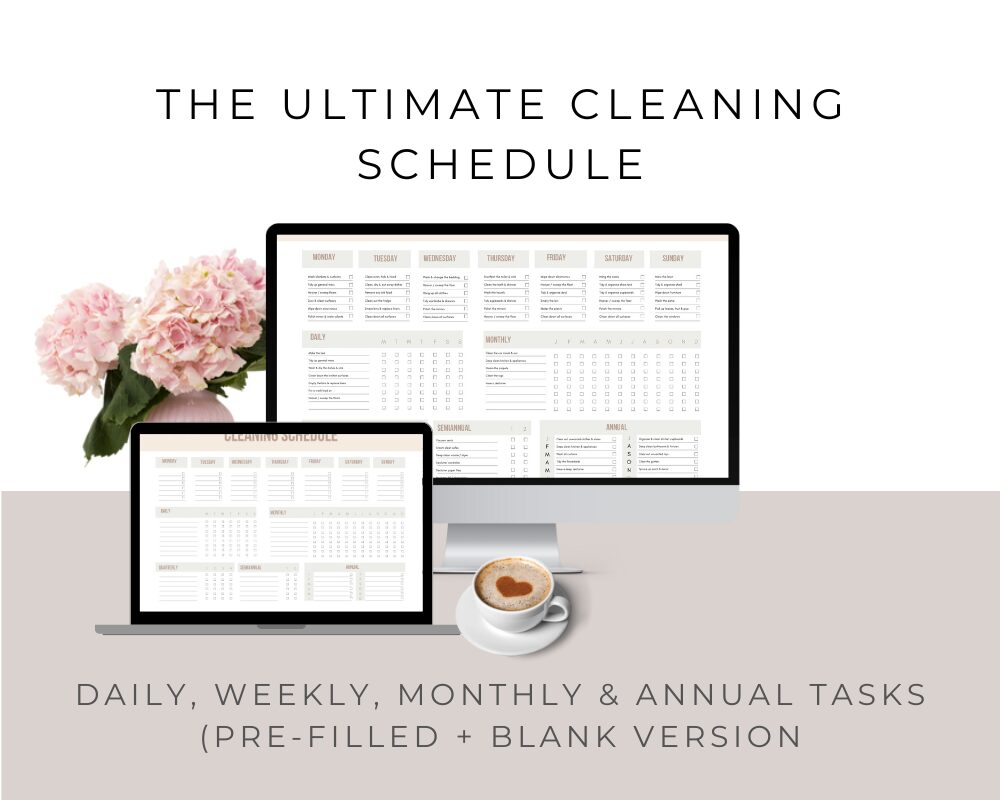
That’s exactly why I created my free Daily, Weekly, and Monthly Cleaning Checklists.
These are not overwhelming.
They’re not rigid.
They’re designed specifically for busy, exhausted moms who want clarity without pressure.
When you subscribe, you’ll get:
- ✅ A Daily Minimum Cleaning Checklist
- ✅ A Weekly Reset Checklist
- ✅ A Monthly Home Reset Checklist
No perfection.
No shame.
Just simple guidance you can lean on when your brain is tired.
👉 Subscribe below and get instant access to the checklist for free.
This is me reaching through the screen and saying:
You don’t have to figure this out alone anymore.
You’re doing better than you think.
And your home can support you—even in the hardest seasons. 💛
Frequently Asked Questions
How do I clean my house when I feel overwhelmed?
Start with the areas that affect your daily life the most. Focus on dishes, laundry, trash, and visible clutter first. Small wins create momentum and help reduce stress.
What is the bare minimum cleaning routine?
For most busy moms, the bare minimum cleaning routine includes washing dishes, running one load of laundry, taking out the trash, clearing kitchen counters, and doing a quick floor pickup.
How can busy moms keep a clean house?
Consistency matters more than intensity. Spending 10 to 15 minutes cleaning every day is often more effective than waiting for one big cleaning day.
How do I find motivation to clean when I’m exhausted?
Instead of waiting for motivation, choose one small task that takes less than 5 minutes. Once you start moving, it’s often easier to keep going.
Is it okay to have messy days?
Absolutely. Every home goes through messy seasons. The goal isn’t perfection. The goal is creating a home that supports your family and your peace of mind.
A reset is sometimes needed. Doing one rooms at a time. Or maybe 2. Laundry day or days. Good steps to focus on to stay on track. Thank i can use this.
Thank you so much, Karen 💛 I completely agree—those small resets at night make such a big difference in the morning. I’m so glad the tips resonated with you!