
Chores for Boys by Age: 60+ Age-Appropriate Chores for Kids Ages 2-9
As an Amazon Associate, I earn a small commission from qualifying purchases.
If you had told me a few years ago that my toddlers could actually help around the house, I would have laughed.
Like many moms, I believed it was faster and easier to do everything myself. After all, when a 2-year-old “helps” unload groceries, it usually takes twice as long. When a preschooler folds laundry, the clothes somehow end up looking worse than before. And when older boys clean their room, there’s always a suspicious pile of toys shoved under the bed.
But something changed when I stopped looking at chores as a way to get work done and started looking at them as a way to teach life skills.
I realized chores aren’t really about having a perfectly clean house.
They’re about raising capable kids.
They’re about teaching responsibility, independence, teamwork, and confidence.
Today my boys help with many small tasks around the house. Are they perfect? Absolutely not. Do I still occasionally find socks hidden in strange places? Yes. But they’re learning skills they’ll use for the rest of their lives, and that’s what matters most.
If you’ve ever wondered what chores are appropriate for different ages, this guide will walk you through realistic chores for boys from ages 2 through 9.
The goal isn’t perfection.
The goal is participation.

Why Chores Matter More Than a Clean House
One mistake I used to make was assuming chores were only about helping me.
I thought chores were something kids did so parents had less work.
Now I see them differently.
When kids help around the house, they’re learning valuable lessons every single day.
They learn that being part of a family means contributing. They learn that homes don’t magically stay clean. They learn that everyone has responsibilities. Most importantly, they learn that they are capable.
I’ve noticed that when my boys successfully complete a task on their own, they stand a little taller afterward. They feel proud of themselves.
That confidence matters.
Research consistently shows that children who regularly participate in household chores often develop stronger responsibility and independence skills as they grow older.
The key is making sure chores match a child’s age and abilities.
Giving a 2-year-old the same expectations as a 9-year-old is frustrating for everyone.
But giving each child responsibilities they can actually succeed at helps build confidence and cooperation.
Chores for 2-Year-Old Boys
Toddlers love helping.
The funny thing is that many 2-year-olds actually want to help more than older kids do.
At this age, everything feels exciting and new.
The secret is keeping expectations extremely simple.
Your toddler isn’t doing chores to get results.
They’re doing chores to build habits.
Age-Appropriate Chores for 2-Year-Olds
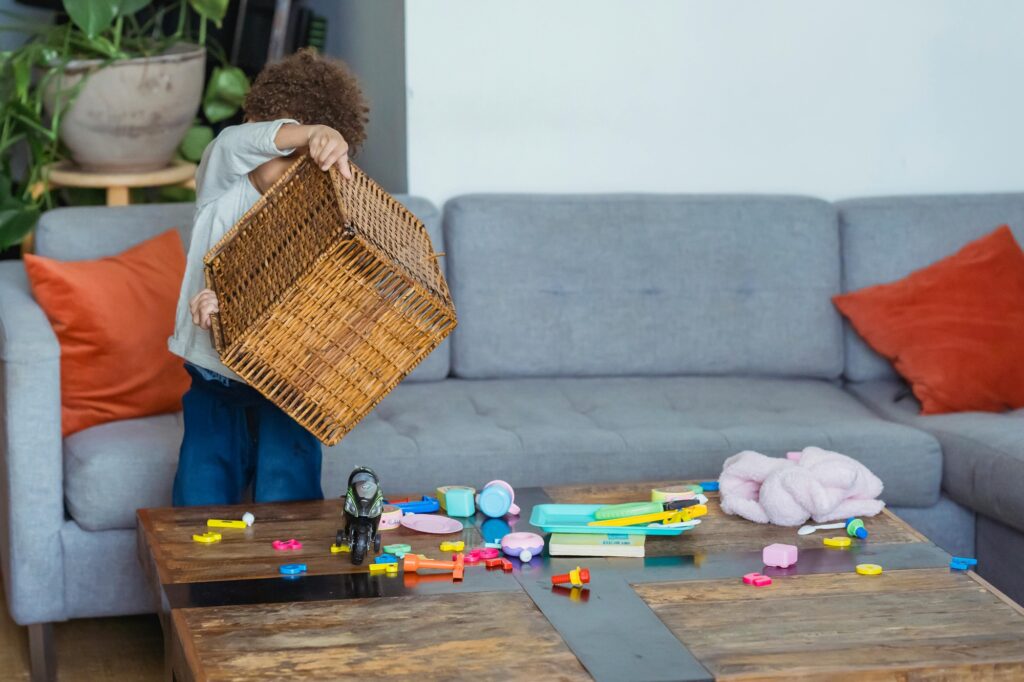
- Put toys into a toy basket
- Throw diapers into the trash
- Carry lightweight laundry to a basket
- Put books back on shelves
- Help wipe spills with a cloth
- Bring shoes to the entryway
- Place dirty clothes in a hamper
- Help feed pets with supervision
- Carry small items to another room
- Put stuffed animals away
When my youngest helps clean up toys, I often turn it into a game.
“Let’s see how many blocks we can pick up before the song ends!”
Toddlers respond much better to fun than lectures.
Tips for Chores at Age 2
Keep chores under 5 minutes.
Offer lots of encouragement.
Work alongside them.
Focus on effort, not results.
A toddler who puts three toys away is succeeding.
Chores for 3-Year-Old Boys
Three-year-olds often become much more independent.
They enjoy feeling capable and usually love having “big kid jobs.”
This is the age when many boys start insisting on doing things themselves.
While that can sometimes test our patience, it’s actually the perfect opportunity to introduce more responsibility.
Age-Appropriate Chores for 3-Year-Olds
- Make their bed with help
- Pick up toys independently
- Water outdoor plants
- Wipe tables after meals
- Put clean socks into drawers
- Help sort laundry colors
- Put books away
- Throw trash away
- Carry plastic dishes to the sink
- Help unload lightweight groceries
One thing I’ve learned is that consistency matters more than complexity.
A few simple chores done regularly are far more effective than a long list that nobody remembers.
Chores for 4-Year-Old Boys
This age is one of my favorites for introducing responsibility.
Four-year-olds are often eager to prove they’re capable.
My almost 4-year-old loves having jobs that make him feel grown up.
The challenge is remembering that attention spans are still short.
Simple tasks work best.
Age-Appropriate Chores for 4-Year-Olds
- Make bed with minimal help
- Set napkins on the dinner table
- Match socks after laundry
- Dust low surfaces
- Water indoor plants
- Put away clean clothes
- Organize books
- Feed pets with supervision
- Clear their plate after meals
- Pick up outdoor toys
At this age, boys often love checklists because they can physically see what they’ve accomplished.
That’s one reason chore systems tend to become much more successful around age 4.
If you’re looking for a way to organize chores visually, check out my post on Kids Chore Charts That Actually Work, where I share the system that helped my boys understand their responsibilities without constant reminders.
Chores for 5-Year-Old Boys
Five-year-olds can do far more than many parents realize.
They’re capable of handling multiple-step tasks and often enjoy having responsibilities that feel important.
This is where chores start becoming true contributions rather than simple practice.
Age-Appropriate Chores for 5-Year-Olds
- Make their bed independently
- Empty small trash cans
- Sort laundry
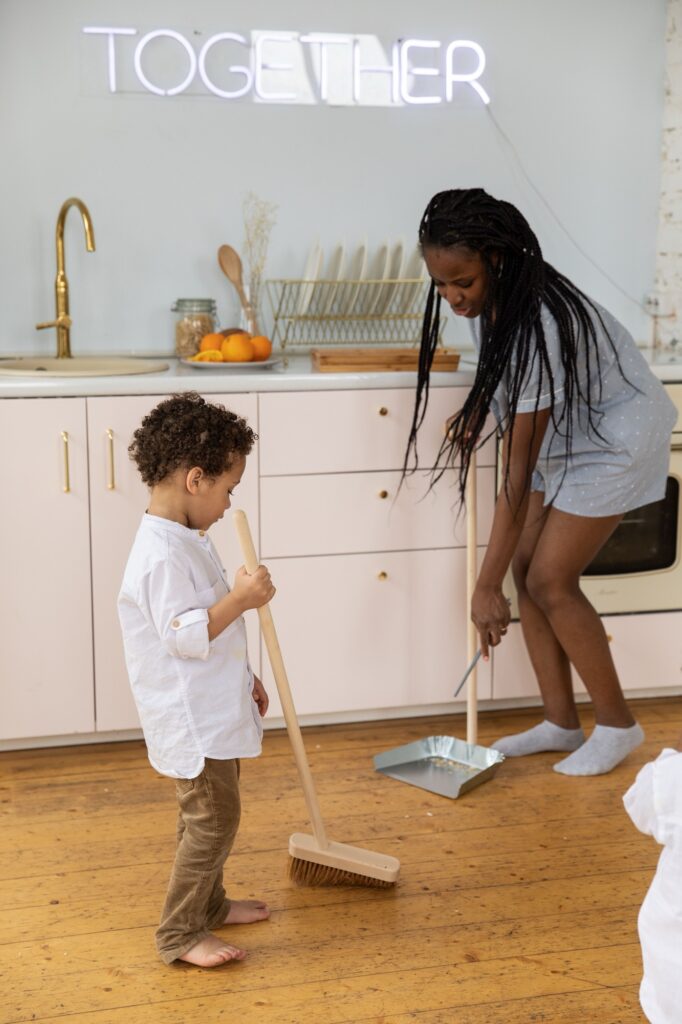
- Sweep small areas
- Help pack school bags
- Put away groceries
- Clean up after crafts
- Wipe bathroom counters
- Organize shoes
- Help prepare simple snacks
I still supervise many tasks at this age, but I try not to jump in too quickly.
Sometimes kids need space to figure things out.
And honestly, their version of success might not look exactly like ours.
Chores for 6-Year-Old Boys
Around age 6, I start noticing a shift.
Kids begin understanding that chores aren’t just random tasks Mom invents to make life difficult. They start connecting their actions to the way the household functions.
My second son is almost 7 now, and this age was when I really began seeing the benefits of giving him regular responsibilities. He became more confident, more independent, and surprisingly proud when he could complete jobs without needing constant reminders.
The key is giving chores that are challenging enough to feel important but not so difficult that they become frustrating.
Age-Appropriate Chores for 6-Year-Olds
- Make their bed every morning
- Fold simple laundry items
- Sweep kitchen floors
- Help load the dishwasher
- Empty lunch boxes after school
- Wipe down tables
- Help prepare simple breakfasts
- Refill water bottles
- Organize sports equipment
- Clean up bedrooms independently
One thing I’ve learned is that boys this age often respond well when they understand why a chore matters.
Instead of saying, “Pick up your shoes,” I might say, “Let’s keep the hallway clear so nobody trips.”
Kids are much more cooperative when they understand the purpose behind a task.
Chores for 7-Year-Old Boys
By age 7, many boys are capable of handling real household responsibilities.
This doesn’t mean they always want to.
It simply means they can.
At this age, I focus on teaching ownership. If a child is responsible for a certain task, I try not to immediately rescue them when they forget.
Natural consequences can be powerful teachers.
Age-Appropriate Chores for 7-Year-Olds
- Vacuum small rooms
- Fold and put away laundry
- Unload parts of the dishwasher
- Pack school lunches with guidance
- Clean bedroom thoroughly
- Water outdoor plants
- Take out light trash bags
- Help wash the car
- Organize toys and books
- Clean bathroom sinks
I also like introducing occasional seasonal chores.
During summer, kids can help gather beach supplies, organize outdoor toys, or prepare for family outings.
For more ways to encourage independence during summer break, check out my post on How to Keep Your House Clean With Kids Home All Summer.
Chores for 8-Year-Old Boys
Eight-year-olds are often capable of handling surprisingly grown-up responsibilities.
This is where many parents accidentally underestimate their children.
Kids at this age can contribute meaningfully to household routines when expectations are clear.
I like assigning a few consistent jobs rather than constantly changing responsibilities.
Consistency builds habits.
Habits build independence.
Age-Appropriate Chores for 8-Year-Olds
- Vacuum larger rooms
- Load and unload the dishwasher
- Fold all laundry types
- Change pillowcases
- Sweep outdoor areas
- Help prepare simple meals
- Take care of pet responsibilities
- Empty trash and recycling
- Clean mirrors
- Organize closets and drawers
This age is also a great time to introduce simple planning skills.
For example, I might ask one of my older boys to make sure all sports gear is ready the night before practice.
That responsibility teaches organization while reducing morning chaos for everyone.
Chores for 9-Year-Old Boys
Nine-year-olds can handle many household tasks independently.
My oldest is 9, and while he certainly doesn’t enjoy every chore, he’s capable of doing far more than he was just a few years ago.
The goal at this age is preparing children for increasing independence.
Not perfection.
Not adult-level cleaning.
Just growing responsibility.
Age-Appropriate Chores for 9-Year-Olds
- Vacuum entire rooms
- Clean bathroom counters and sinks
- Wash windows
- Change bed sheets
- Help prepare family meals
- Wash dishes
- Take trash bins outside
- Organize garage items with supervision
- Help younger siblings clean up
- Maintain their bedroom independently
One thing I remind myself often is that competence takes practice.
If we never let our kids try, they’ll never learn.
Yes, they might miss spots.
Yes, they might fold towels differently than we would.
But every time they complete a task, they’re building skills they’ll use long after they leave our homes.
Chores I Don’t Force My Boys to Do
This might be unpopular, but I don’t believe every chore has to become a battle.
There are some things I intentionally avoid turning into daily power struggles.
For example, I don’t expect perfection.
If a bed is made but not perfectly smooth, that’s okay.
If toys are picked up but not arranged exactly how I would do it, that’s okay too.
I also try not to overload my boys with responsibilities.
They’re children.
Their primary job is still learning, growing, playing, and being kids.
Chores should support family life, not consume childhood.
Sometimes I see chore charts online with 15 or 20 daily tasks listed for young children.
Honestly, that feels overwhelming to me.
A handful of meaningful responsibilities is usually enough.
I would rather my boys consistently complete three chores than ignore a list of fifteen.
How We Make Chores Easier in Our House
I’m not naturally organized.
And with four boys, keeping a perfectly tidy home isn’t realistic anyway.
I’ve learned to focus on systems instead.
One thing that helps tremendously is pairing chores with existing routines.
For example:
- Toys get picked up before bedtime.
- Dirty clothes go directly into hampers.
- School items are reset every evening.
- Bedrooms get a quick tidy before screen time.
When chores become part of everyday life, they stop feeling like punishment.
We also use timers frequently.
Five-minute cleanup races work surprisingly well.
Music helps too.
Even my older boys clean faster when upbeat music is playing.
And sometimes, if life feels especially chaotic, I give myself permission to lower the standard.
That’s true for parenting and cleaning.
I occasionally hire housekeeping help once or twice a month for deeper cleaning tasks because I’ve learned that asking for help isn’t failure.
It’s simply using available tools to keep family life manageable.
The goal isn’t perfection.
The goal is creating a home that functions well for the people living in it.
Common Chore Mistakes Parents Make
After years of trial and error, I’ve noticed several mistakes that make chores harder than they need to be.
Expecting Perfection
Kids are learning.
Their work won’t look like adult work.
That’s normal.
Doing Everything Yourself
It often feels faster in the moment.
But constantly stepping in prevents kids from developing independence.
Giving Too Many Responsibilities
A shorter list usually works better.
Being Inconsistent
Children thrive on routine.
When chores happen consistently, resistance often decreases.
Using Chores Only as Punishment
If chores are always connected to consequences, kids may start viewing household responsibilities negatively.
Instead, I try to present chores as a normal part of family life.
Everyone contributes because everyone lives here.
A Simple Daily Chore Routine for Boys Ages 2-9
One thing I wish someone had told me sooner is that kids don’t need complicated chore systems.
As moms, we sometimes make things harder than they need to be.
I’ve downloaded elaborate chore charts, printed colorful reward systems, bought stickers, and created schedules that looked amazing on paper.
Most of them lasted about a week.
What has worked much better in our house is keeping things simple.
Instead of assigning dozens of responsibilities, I focus on a few basic daily habits that help our home run more smoothly.
Here’s what that looks like for us.
Morning Chores
Before breakfast or school:
- Make the bed
- Put pajamas away
- Place dirty clothes in the hamper
- Clear breakfast dishes
These chores take only a few minutes, but they immediately make the house feel calmer.
I’ve noticed that when bedrooms are reset first thing in the morning, the entire day feels less chaotic.
Afternoon Chores
After school:
- Empty lunch boxes
- Put shoes away
- Hang backpacks
- Tidy bedrooms
This prevents clutter from building up throughout the week.
Without these small habits, backpacks, papers, socks, water bottles, and random treasures seem to multiply everywhere.
Evening Chores
Before bedtime:
- Pick up toys
- Return books to shelves
- Put dirty clothes in the hamper
- Reset shared spaces
This routine pairs perfectly with our bedtime rhythm and helps everyone wake up to a cleaner home.
If bedtime is a struggle in your house too, you might enjoy my post about The Best Bedtime Bath Routine for Kids, where I share how we create calmer evenings without turning bedtime into a nightly battle.
Should Boys Get Paid for Chores?
This question comes up all the time.
And honestly?
Every family handles it differently.
Some parents pay for chores.
Some don’t.
Some use allowance systems.
Others focus solely on family responsibility.
In our home, I generally separate expected chores from extra work.
Basic household responsibilities are simply part of being a member of the family.
Things like:
- Cleaning bedrooms
- Picking up toys
- Making beds
- Helping with dishes
These aren’t paid jobs.
They’re contributions.
However, larger optional tasks can sometimes earn money.
Examples might include:
- Washing the car
- Helping with yard work
- Organizing storage areas
- Extra cleaning projects
I like this approach because it teaches both responsibility and the connection between work and earning money.
The exact system matters less than consistency.
Whatever approach you choose, stick with it long enough for kids to understand expectations.
What If My Child Refuses to Do Chores?
If you’re reading this while mentally picturing your child dramatically collapsing on the floor because you asked them to pick up three toys, you’re definitely not alone.
Resistance is normal.
Especially with strong-willed kids.
I’ve learned that the way chores are introduced often matters more than the chore itself.
A few things that help:
Give Choices
Instead of:
“Clean your room.”
Try:
“Would you rather pick up toys first or books first?”
Kids often cooperate more when they feel some control.
Work Together
Sometimes my boys are far more willing to clean when I stay nearby.
Connection often comes before cooperation.
Keep Expectations Realistic
A tired child who just came home from school might not be ready for a lengthy chore session.
Timing matters.
Focus on Progress
Small improvements add up.
Consistency beats intensity every time.
How Chores Help Boys Build Confidence
One unexpected benefit of chores is the confidence they create.
When children regularly contribute to family life, they begin seeing themselves as capable.
They stop viewing adults as the only people who can solve problems.
Instead, they start thinking:
“I can do this.”
That mindset carries over into so many other areas of life.
School.
Friendships.
Sports.
Future jobs.
Daily responsibilities.
Every time a child successfully completes a task, they’re strengthening that belief in themselves.
I’ve watched this happen with my own boys.
The same child who proudly unloads the dishwasher today may become the teenager who confidently manages responsibilities later.
The chores themselves aren’t the goal.
The confidence is.
Making Chores Fun Without Turning Everything Into Entertainment
I don’t believe children need constant rewards to contribute to family life.
At the same time, I also understand that repetitive tasks can feel boring.
Over the years, I’ve found a few ways to make chores more enjoyable without relying entirely on prizes.
Use Music
A quick cleanup playlist can completely change the mood.
Set Timers
Kids often enjoy racing the clock.
Work as a Team
Family cleanup sessions feel less overwhelming than sending kids off alone.
Celebrate Progress
Simple encouragement goes a long way.
Kids love feeling noticed.
Create Mini Challenges
Questions like:
“How many toys can we put away in two minutes?”
often work better than lengthy reminders.
For more screen-free ways to keep boys engaged, don’t miss my post on Indoor Activities for Boys to Beat Summer Boredom.
Chore Tools That Make Life Easier
You definitely don’t need special products to teach responsibility.
However, a few simple tools can make chores easier and more enjoyable.
(AD) Storage bins
(AD) Open toy organizers
(AD) Laundry baskets for each child
You can also browse my favorite family organization finds in my Amazon storefront
The best chore tool isn’t necessarily the most expensive one.
It’s the one your family actually uses consistently.
Why I Care More About Responsible Kids Than a Perfect House
There was a time when I believed good parenting meant having everything under control.
A spotless house.
Perfect routines.
Perfect behavior.
Perfect systems.
Four boys later, I’ve learned that’s not realistic.
What matters more is raising children who know how to contribute.
Children who understand responsibility.
Children who can care for themselves and help others.
Some days my living room still looks like a toy store exploded.
Some days chores happen later than planned.
Some days everyone is tired and we simply do the best we can.
That’s okay.
Because success isn’t measured by perfectly folded laundry.
Success is measured by the skills our children are learning along the way.
And every toy picked up, every bed made, every table wiped, and every responsibility completed is helping build those skills one small step at a time.
Free Printable: Age-Appropriate Chores for Boys (Ages 2-9)
To make chores easier for busy moms, I created a simple printable that lists age-appropriate chores for boys from ages 2 through 9.
You can hang it on the refrigerator, keep it in your family command center, or use it when creating a chore chart for your children.
Sometimes the hardest part isn’t getting kids to help. It’s knowing what they’re actually capable of doing at their age.
This printable takes away the guesswork.
Want a simple reference guide for age-appropriate chores?
Grab my free Chores for Boys by Age Printable and keep it on your fridge for quick inspiration whenever you’re assigning new responsibilities.
Inside you’ll get:
✔ Chores for ages 2-9
✔ Daily and weekly chore ideas
✔ Easy-to-read format
✔ Perfect for busy moms
✔ Refrigerator-friendly layout
Enter your email below and I’ll send it straight to your inbox.
Frequently Asked Questions
At What Age Should Boys Start Doing Chores?
Children can begin helping with simple household tasks as early as age 2.
At this age, chores should focus on participation rather than results. Putting toys into a basket, carrying laundry, and helping wipe spills are great starting points.
What Are Good Chores for a 4-Year-Old Boy?
Four-year-olds can often:
- Put toys away
- Make their bed with minimal help
- Water plants
- Match socks
- Clear plates after meals
- Organize books
The best chores are simple, consistent, and easy to complete successfully.
How Many Chores Should a Child Have?
Most children don’t need a long list of responsibilities.
One to three daily chores plus a few weekly responsibilities is usually enough for younger children.
The goal is consistency, not quantity.
Should Chores Be Daily or Weekly?
A combination of both works well.
Daily chores help build habits.
Weekly chores teach responsibility for larger tasks.
Examples of daily chores:
- Making beds
- Picking up toys
- Putting dirty clothes in hampers
Examples of weekly chores:
- Vacuuming
- Changing sheets
- Cleaning bedrooms
Do Chores Teach Responsibility?
Yes.
Chores help children develop responsibility, independence, confidence, time management, and problem-solving skills.
They also help children understand that maintaining a home is a shared family responsibility.
What Chores Can a 9-Year-Old Boy Do?
Many 9-year-olds can:
- Vacuum rooms
- Change bed sheets
- Load and unload dishwashers
- Wash dishes
- Help prepare meals
- Take out trash
- Organize bedrooms independently
The exact responsibilities will depend on maturity and experience.
Final Thoughts
If there’s one thing motherhood has taught me, it’s that kids are often capable of far more than we expect.
Not because they’re trying to impress us.
But because they genuinely want to contribute.
I’ve watched my boys grow from toddlers who could barely carry a toy basket into children who can help make our home run more smoothly.
Did it happen overnight?
Not even close.
It happened one small responsibility at a time.
One toy picked up.
One bed made.
One table wiped.
One habit repeated over and over again.
That’s why I encourage moms to start small.
You don’t need a complicated system.
You don’t need perfect routines.
And you definitely don’t need perfectly completed chores.
What you need is consistency.
Choose one or two age-appropriate responsibilities, teach them patiently, and allow your child to practice.
Over time those small tasks become habits.
Those habits become skills.
And those skills become independence.
Before you know it, you’ll have children who aren’t just helping around the house, but learning valuable life lessons they’ll carry into adulthood.
And that’s worth far more than a perfectly clean living room.
Related Posts
If you enjoyed this post, continue reading:
- Kids Chore Chart That Actually Works
- How to Keep Your House Clean With Kids Home All Summer
- The 10-Minute-a-Day Cleaning Routine That Actually Works for Moms
- How to Declutter Your Home in One Weekend With Kids
- Indoor Activities for Boys to Beat Summer Boredom
- Summer Bucket List for Boys: 50 Fun Ideas (Ages 2-9)
- The Best Bedtime Bath Routine for Kids
- Calm Morning Routine for High-Energy Kids
SEO Title
Chores for Boys by Age: 60+ Age-Appropriate Chores for Kids Ages 2-9
URL Slug
chores-for-boys-by-age
Meta Description
Looking for age-appropriate chores for boys? Discover 60+ chores for kids ages 2-9, plus tips for teaching responsibility and a free printable chore list.
Pinterest Pin Titles
Pin 1
Chores for Boys by Age (Ages 2-9) + Free Printable
Pin 2
60+ Age-Appropriate Chores for Boys That Actually Work
Pin 3
What Chores Can Kids Really Do? Ages 2-9 Guide
Pinterest Descriptions
Pin 1
Wondering what chores your child can actually do? This age-by-age guide includes chores for boys ages 2-9, practical parenting tips, and a free printable chore list for busy moms. #kidschores #momlife #parentingtips #organizedhome #familylife
Pin 2
Teach responsibility without overwhelm. Discover realistic chores for toddlers, preschoolers, and school-age boys with this complete age-appropriate chore guide. #choresforkids #parentinghacks #raisingboys #familyroutines #momblog
Pin 3
Looking for age-appropriate chores for kids? This helpful guide shares chore ideas for boys ages 2-9, printable resources, and simple ways to build independence. #kidsactivities #momtips #organizedmom #raisingresponsiblekids #homemanagement
Image Placement Suggestions
Image 1: Hero image directly under introduction.
Image 2: Boy putting away toys after the “Chores for 3-Year-Old Boys” section.
Image 3: Child making a bed after the “Chores for 5-Year-Old Boys” section.
Image 4: Family cleaning together after “How We Make Chores Easier in Our House.”
Image 5: Boy carrying folded laundry after “How Chores Help Boys Build Confidence.”
Excerpt
Not sure what chores your child can handle? This age-by-age guide shares realistic chores for boys ages 2-9, tips for teaching responsibility, common mistakes to avoid, and a free printable for busy moms.
One Comment