
How to Keep Brothers From Fighting All Summer Long
If you’re searching for how to keep brothers from fighting all summer long, you’re probably hearing things like:
“Mom! He took my toy!”
“Mom! He’s annoying me!”
“Mom! He won’t leave me alone!”
And if you’re anything like me, by lunchtime you’re already tired of being the referee.
As a mom of four boys, I’ve learned that sibling fighting isn’t a sign that something is wrong. It’s actually normal when kids spend long days together, especially during summer break.
The problem isn’t that brothers fight.
The problem is when the fighting becomes constant and leaves everyone frustrated.
The good news is that you don’t need a perfect parenting system or a house full of expensive activities to make summer more peaceful.
A few simple changes can make a huge difference.

Why Brothers Seem to Fight More During Summer
During the school year, siblings naturally get breaks from each other.
They spend time in different classrooms, play with different friends, and have separate activities.
Then summer arrives.
Suddenly they’re together all day, every day.
The things that usually trigger summer arguments include:
- Boredom
- Too much unstructured time
- Hunger
- Lack of sleep
- Too much screen time
- Sharing toys and spaces
- Competing for attention
Understanding the cause of the fighting is important because it helps you prevent problems instead of constantly reacting to them.
Don’t Expect Them to Entertain Each Other All Day
One mistake I used to make was assuming my boys would naturally play together all day.
Sometimes they do.
But even brothers who love each other need breaks.
Imagine spending every waking hour with the same people for months.
Most adults would get annoyed too.
That’s why I no longer expect my boys to be together all day.
Instead, I plan for both:
- Together time
- Separate time
Giving kids permission to enjoy their own interests often reduces arguments dramatically.
Create a Simple Summer Routine
One of the biggest causes of fighting is having no structure at all.
Kids don’t need a strict schedule every minute of the day.
But they do benefit from knowing what comes next.
A simple summer routine might look like:
Morning
- Breakfast
- Get dressed
- Quick chores
- Outdoor play
Afternoon
- Lunch
- Quiet time
- Reading
- Independent activities
Evening
- Family time
- Dinner
- Baths
- Bedtime routine
The more predictable the day feels, the less chaos tends to appear.
If you haven’t already, read my post about Summer Morning Routine for Moms here.
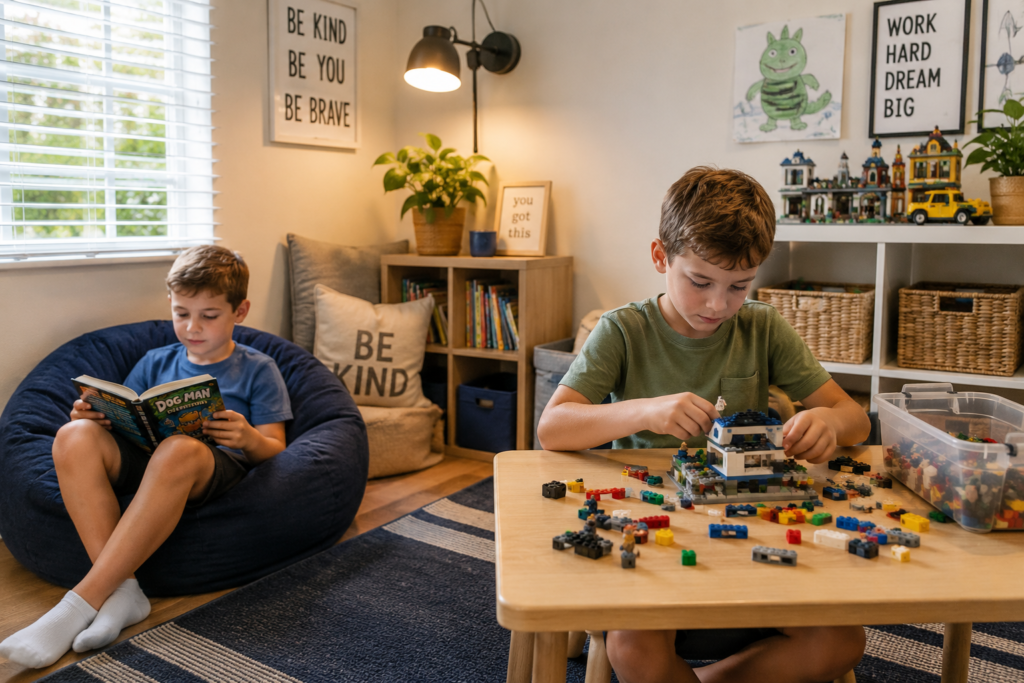
Schedule Daily Quiet Time
This might be my favorite tip.
Every person in the house benefits from a break.
And yes, that includes older kids.
Quiet time doesn’t have to mean sleeping.
It can mean:
- Reading books
- Drawing
- Building LEGO creations
- Listening to audiobooks
- Journaling
- Playing independently
When my boys spend an hour apart during the afternoon, they almost always get along better afterward.
Sometimes they simply need space.
Stop Solving Every Argument
This one is hard.
When you hear yelling, it’s tempting to jump in immediately.
But I’ve noticed something interesting.
The more I solve every little disagreement, the more my boys depend on me to fix their problems.
Now, before stepping in, I often ask:
“What do you think would solve this problem?”
“Can you work this out together?”
“What’s a fair solution for both of you?”
Not every disagreement requires Mom’s involvement.
Sometimes brothers need the opportunity to practice conflict resolution on their own.
Of course, if someone is being unsafe, hurtful, or aggressive, step in immediately.
But for small arguments, giving them space to solve it themselves can be surprisingly effective.
Teach Them a Few Simple Conflict Rules
Instead of making new rules every time a fight happens, create family rules ahead of time.
Ours might include:
- No hitting
- No name-calling
- No grabbing
- Use respectful words
- Walk away when angry
- Ask before borrowing
The goal isn’t perfection.
The goal is giving kids clear expectations.
When arguments happen, you can calmly refer back to the rules instead of starting a long lecture.
Make Sure They Get Plenty of Physical Activity
One thing I’ve learned from raising boys is that a lot of arguments disappear after they’ve had a chance to move their bodies.
When kids are stuck inside, sitting around, or spending too much time on screens, their energy has to go somewhere.
Unfortunately, it often comes out as fighting.
Try to include active play every day:
- Bike rides
- Scooter races
- Water balloon games
- Backyard soccer
- Obstacle courses
- Playground trips
- Swimming
- Nature walks
You don’t need elaborate plans.
Even 30 to 60 minutes of active play can improve everyone’s mood.
If you’re looking for more ideas make sure to read these posts:
- 50 Outdoor Games for Boys That Burn Energy Fast
- Summer Bucket List for Boys
- Activity Day Ideas for Boys
Feed Them Before They Become Hangry
This sounds simple, but it’s surprisingly powerful.
Sometimes what looks like a sibling conflict is actually hunger.
Kids who are hungry become impatient, emotional, and easily frustrated.
I notice far more arguing when my boys need a snack.
Some easy summer snack ideas include:
- Watermelon
- Apples and peanut butter
- Cheese sticks
- Yogurt
- Crackers
- Smoothies
- Trail mix
- Frozen grapes
Keeping snacks ready can prevent a lot of unnecessary battles.
Give Each Child Some One-on-One Attention
Brothers don’t just compete over toys.
Sometimes they’re competing for Mom.
When children feel disconnected from you, they often seek attention in less helpful ways.
The good news is that individual time doesn’t need to be complicated.
Even ten minutes can help.
Ideas include:
- Reading together
- Going for a walk
- Playing a card game
- Talking before bed
- Running a quick errand together
When children feel seen and connected, they usually have less need to compete with their siblings.

Encourage Teamwork Instead of Competition
Brothers naturally compete.
Who’s faster.
Who’s stronger.
Who’s better.
Who’s first.
A little competition can be healthy, but too much often creates tension.
That’s why I try to create opportunities for cooperation.
Some teamwork activities include:
- Building a fort together
- Cleaning the playroom together
- Completing a scavenger hunt
- Cooking with Mom
- Creating a backyard obstacle course
- Building something with LEGO
Working toward a shared goal helps siblings see each other as teammates.
Be Careful With Screen Time
I know screens can be helpful during long summer days.
I use them too.
But I’ve noticed that excessive screen time often leads to more arguments afterward.
Kids become overstimulated, irritable, and frustrated when it’s time to stop.
Instead of unlimited access, consider:
- Screen time after chores
- Screen time after outdoor play
- Family movie nights
- Educational games
- Clear daily limits
A balanced approach usually works better than extremes.
Create Separate Spaces
Not every child needs his own room.
But every child benefits from having a small space that’s his.
This could be:
- A desk
- A reading corner
- A bean bag
- A shelf
- A small section of a bedroom
When children have a place to retreat, they’re less likely to feel crowded by their siblings.
This is especially helpful for brothers sharing bedrooms.
Teach the Difference Between Annoying and Dangerous
This lesson has saved my sanity.
Many kids run to tell Mom about every little annoyance.
But not every problem is an emergency.
I often teach children to ask:
“Is someone in danger?”
“Is someone hurt?”
“Can I solve this myself?”
If the answer is no danger and no injury, I encourage them to try solving it first.
This reduces tattling and builds independence.
Don’t Force Constant Togetherness
Sometimes parents feel guilty separating siblings.
But breaks are healthy.
If brothers have been arguing all morning, it may be time for:
- Separate activities
- Different rooms
- Quiet reading
- Independent play
A little space often prevents bigger conflicts later.
Remember, healthy sibling relationships include both connection and independence.
What to Do When a Fight Actually Happens
Even with the best routines and strategies, brothers will still argue sometimes.
That’s normal.
The goal isn’t to eliminate every disagreement. The goal is to teach your children how to handle conflict in a healthy way.
When a fight breaks out, try to stay calm and avoid immediately deciding who is right and who is wrong.
Instead:
- Separate children if needed.
- Allow everyone to calm down.
- Listen to both sides.
- Encourage problem-solving.
- Help them agree on a solution.
Many arguments lose their intensity once everyone has a chance to cool off.
I’ve learned that responding calmly usually works much better than reacting emotionally.
Focus on Progress, Not Perfection
One thing that helped me tremendously was adjusting my expectations.
For a long time, I thought a successful day meant no fighting.
With four boys, that’s simply not realistic.
Now I look for progress instead.
Questions I ask myself include:
- Did they solve a disagreement on their own?
- Did they spend time playing together?
- Did they show kindness?
- Did they recover quickly after an argument?
Those are the moments that matter.
Some of my boys’ biggest arguments have happened in the morning, only for them to spend the afternoon building forts together and laughing like best friends.
Sibling relationships are complicated.
A rough moment doesn’t define the entire day.
Things That Have Helped Most in Our House
Every family is different, but these are the strategies that have made the biggest difference for us:
- Daily outdoor play
- Consistent meal and snack times
- Quiet time every afternoon
- Less stepping into every argument
- Simple summer routines
- Teamwork activities
- One-on-one time with each child
- Clear family rules
None of these completely eliminate sibling conflict.
But together they create a calmer home.
A Simple Summer Peace Plan
If your boys have been fighting constantly lately, don’t try to change everything at once.
Start with three things:
Week 1
Add daily quiet time.
Week 2
Increase outdoor activity.
Week 3
Create family conflict rules.
Small changes are easier to maintain and often lead to lasting results.
Want fewer sibling arguments this summer?
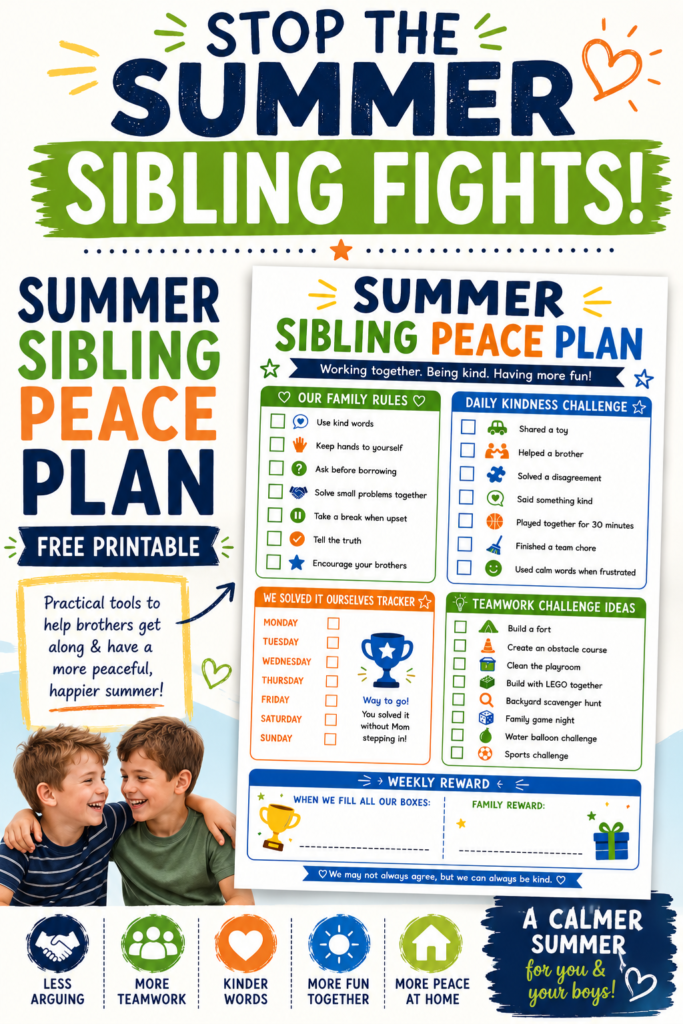
Grab my FREE Summer Sibling Peace Plan Printable and give your boys simple rules, kindness challenges, and teamwork activities that help create a more peaceful home.
Frequently Asked Questions
Is it normal for brothers to fight every day during summer?
Some disagreements are completely normal when siblings spend long days together. However, constant fighting often signals boredom, lack of structure, hunger, fatigue, or too much togetherness.
Should parents always step in?
Not always. If children are safe and respectful, allowing them to work through small disagreements helps them develop conflict-resolution skills.
Why do my boys fight more during summer break?
Summer removes many natural breaks siblings get during the school year. More time together often means more opportunities for conflict.
Will sibling fighting ever stop?
Probably not completely. But as children mature and learn communication skills, many conflicts become less frequent and less intense.
Final Thoughts
If you’re wondering how to keep brothers from fighting all summer long, remember that the answer isn’t finding the perfect parenting trick.
It’s creating an environment where kids can succeed.
A little routine, plenty of movement, opportunities for independence, and realistic expectations can go a long way.
As a mom of four boys, I’ve learned that brothers don’t need to get along perfectly every minute of the day.
They just need the tools to work through disagreements and reconnect afterward.
And honestly, some of the same boys who drive each other crazy today will probably be the first ones defending each other tomorrow.
That’s the beautiful thing about brothers.
They fight.
They forgive.
They play.
They grow.
And with a little guidance, they can make some incredible summer memories together.
4 Comments