
30 Screen-Free Activities for Toddlers With Little Prep
As an Amazon Associate, I earn a small commission from qualifying purchases.
Screen-free activities for toddlers are easier to use when you can start with something already in the room. A few stacking cups, a board book or a basket of clean socks can be enough to get going.
As a mom of four boys, I want ideas that fit around family life without another shopping list. I’d pick one activity from this list, try it alongside my toddler and move on if it isn’t holding his attention.
Most of these ideas need little or no preparation. A few need a minute to clear the floor or put water on a tray. You don’t need to set up all 30, and you don’t need to buy a toy for every idea.
Choose an activity for your toddler’s stage
For a younger toddler, start with a board book, nesting cups or a soft toy game. A child who walks steadily may enjoy a short floor path or sock toss. Match the activity to what your child can manage today, rather than expecting every toddler to play the same way.
Stay nearby during play and use toys labelled for your child’s age. The CPSC advises keeping small balls and toys with small parts away from children under three. For children who still put objects in their mouths, skip loose rice, beans, craft pom-poms and other small-item play.
- Need something quiet? Try washcloth sorting, nesting cups or a board book.
- Need movement? Try follow-the-leader, dancing or rolling a soft ball.
- Need a quick start? Choose an activity using a toy already out.
- Have older children joining in? Give them a harder version while an adult supervises.
For more ideas across different ages, browse my quiet-time activities for boys.

Easy toddler activities with everyday items
1. Make a short tape road
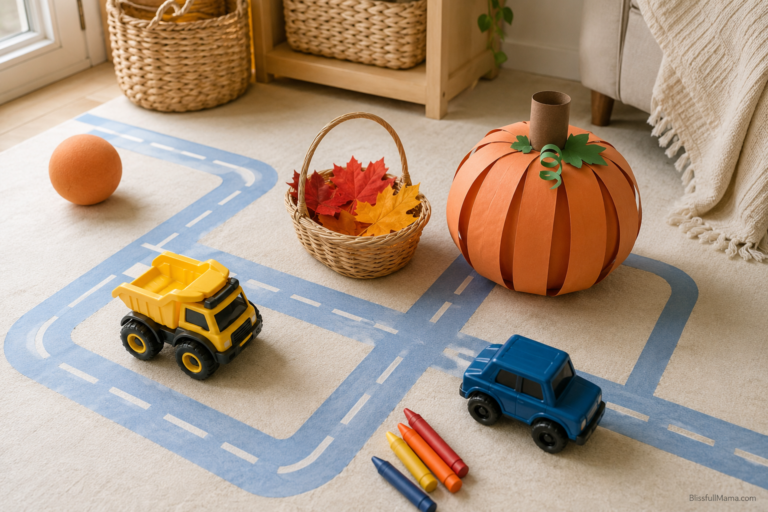
An adult can place a few strips of painter’s tape on a suitable floor to make a road. Give your toddler an age-labelled vehicle and show them how to drive along the line.
Keep the route short. Test the tape on the surface first, remove loose pieces promptly and take it up after play. (AD) See painter’s tape on Amazon.
2. Scoop and tip with stacking cups
Put a few large, age-labelled stacking cups in an empty tray. Let your toddler place one inside another, tip them out and start again.
This gives a younger child something to fill and empty without using rice or dried beans. You can add a second cup when they want to copy your movements.
3. Sort clean washcloths
Put several clean washcloths beside a shallow basket. Show your toddler how to put them in, take them out or sort two different colors.
I’d keep this loose and playful. Matching one cloth or carrying it across the room is enough; the activity doesn’t need to turn into a lesson.
4. Drop soft toys into a basket
Set a low basket on the floor with a few age-appropriate soft toys beside it. Your toddler can drop them in and dump them out.
Keep the basket stable and on the floor. Start with two or three soft toys so your toddler can reach in and take them out easily.
5. Start a kitchen band
Choose a lightweight pot or sturdy plastic container and a smooth wooden spoon. Tap gently, then pause so your toddler can copy you.
Try slow taps, fast taps or taking turns. Keep heavy cookware and utensils with sharp or detachable parts out of the game.
6. Draw with chunky toddler crayons
Offer a sheet of paper and a few crayons labelled for your child’s age. Tape the paper down yourself if it keeps sliding.
Sit beside them and make a few marks too. Keep crayons out of mouths, remove broken pieces and put the supplies away when drawing turns into chewing.
7. Help with a basket of clean laundry
Put a few clean socks and small towels in a basket on the floor. Your toddler can move them to a second basket or hand you one item at a time.
Keep the basket on the floor. An older sibling can look for matching socks while the younger child fills and empties.
8. Squish and stack soft toys
Choose a couple of washable soft blocks or fabric toys made for your toddler’s age. Show them how to squeeze one, place it on another or tuck it into a basket.
For a child who mouths everything, I’d choose these over an open tub of playdough. Check the toys for loose seams or damaged parts before handing them over.
9. Paint cardboard with water
An adult can dampen a chunky brush and offer a flat piece of plain cardboard. Let your toddler brush across it and notice the darker marks.
Use a small amount of water on a tray and stay within reach. Remove cardboard if your child starts tearing off and mouthing pieces, then dry the floor.
10. Nest cups from biggest to smallest
Show your toddler how a smaller stacking cup fits inside a larger one. Let them take the cups apart and try their own combinations.
There’s no need to correct every attempt. (AD) See the linked stacking-cup set on Amazon; its listing gives an age range starting at 12 months. Check the package label for the exact set you receive.
Movement and pretend play without a big setup
11. Turn an open box into a garage
Use a clean, open cardboard box without staples, plastic wrapping or loose tape. Your toddler can park a large toy vehicle inside or make a bed for a soft toy.
Leave the box open and on the floor. If it becomes soggy or starts shedding pieces, recycle it and choose another activity.
12. Build a small soft-block tower
Put two or three large, age-labelled soft blocks on the floor. Build a low tower and let your toddler add a piece or knock it over.
One successful stack is enough to begin with. You can move the blocks slightly farther apart to add a little walking or crawling between turns.
13. Step around floor cushions
Lay one or two firm cushions flat on a clear floor. Invite a steady walker to step around them or over a low edge with your help.
Keep everything at floor level and clear of furniture corners. Skip tall piles, unstable stacks and any setup your child needs to jump down from.
14. Play follow-the-leader
Walk slowly across a clear room, clap your hands or take a few big steps. Pause and give your toddler time to copy.
Let them choose the next movement once they understand the game. I’d keep the first round short so it ends while everyone is still interested.
15. Toss rolled socks into a basket
Roll adult-size socks into large soft bundles and place a low basket close by. Show your toddler how to drop or gently toss one inside.
Move the basket closer if the game feels frustrating. Use intact socks without loose threads, and keep throwing away from faces and breakable objects.
16. Post washcloths into a container
Choose a wide, open, unbreakable container and a few clean washcloths. Your toddler can push a cloth inside, pull it out and repeat.
Keep the opening large enough for their hand to move freely. There’s no need for pipe cleaners, string or a homemade slot with rough edges.
17. Go on a looking walk
Take a short walk together and look for a tree, a bird or something red. Point things out and let your toddler decide what deserves a closer look.
Leave stones, sticks and small seed pods on the ground. Looking and pointing gives you a nature activity without collecting small objects to bring inside.
18. Have a short dance break
Put on one familiar song and dance together in a clear space. Try swaying, clapping or marching according to what your toddler can comfortably do.
Stop the music for a simple freeze game with an older toddler. A younger child can keep moving or sit with you and clap.
19. Stack and knock down cups
Build a short tower with large cups made for children’s play. Let your toddler knock it down with their hand or a large soft ball.
Start with three cups and rebuild together. Use the same age-labelled cups you already have rather than adding disposable cups that can crack.
20. Find a partly hidden soft toy
Place a familiar soft toy behind a cushion with part of it still visible. Ask where it went and let your toddler find it.
Keep hiding places low and easy to reach. Make the game harder by hiding more of the toy, rather than sending your child to climb or search inside cupboards.
Quiet play, water play and simple games
21. Pour a little water between cups
Put a small amount of water in a shallow tray with two unbreakable cups. Show your toddler how to tip one cup into the other.
Give water play your full attention, stay within arm’s reach and empty everything immediately afterward. The AAP’s toddler water-safety guidance explains why even shallow water needs close supervision.
22. Choose a board book basket
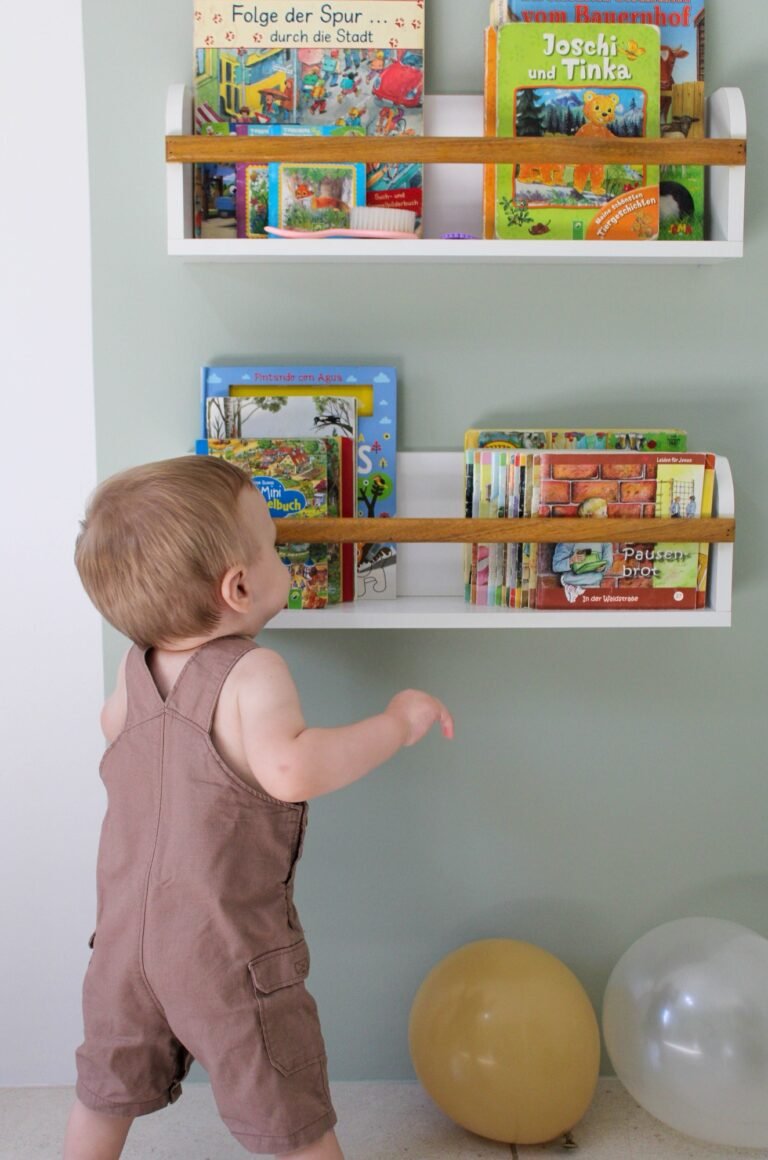
Put two or three sturdy board books in a low basket and sit together while your toddler chooses one. They can turn pages, point to pictures or return to the same page several times.
If you need ideas for a younger child, start with my board books for one-year-olds. Let your toddler choose the book, even if they want the same one again.
23. Try one chunky puzzle
Offer a puzzle specifically labelled for your child’s age, with large intact pieces. Put out one or two pieces first if the full board is too much.
Show where a piece belongs, then give them time to try. Avoid small pegs, loose knobs or a puzzle intended for an older sibling.
24. Put a soft toy to bed
Give your toddler an age-appropriate doll or soft toy and a small washcloth to use as its blanket. They can tuck it in, pat it gently or offer a pretend cuddle.
The cloth stays with the toy during play. Skip scarves, cords and anything tied around your child’s neck.
25. Wash a suitable plastic toy
Choose an age-labelled, washable toy without electronics or openings that trap water. Offer it on a tray with a damp washcloth.
Your toddler can wipe it, turn it over and dry it with another cloth. This gives them a hands-on activity without shaving cream or a tub full of water.
26. Make a plain sock puppet
An adult can put a clean sock on their own hand and make it wave or talk. Let your toddler copy a sound, point to it or offer it a pretend snack.
Keep the puppet plain. Buttons, glued-on eyes and other decorations can come loose, and the game works without them.
27. Follow a flashlight beam
Hold a flashlight yourself and move the light slowly across a wall or floor. Your toddler can point to the spot or walk toward it in a clear room.
Use a light with a securely fastened battery compartment and keep it in your hand. Don’t shine it into anyone’s eyes or use a laser pointer.
28. Roll a soft ball toward a target
Sit opposite your toddler and roll a large soft ball between you. Add a lightweight, stable target if they want something to aim at.
Choose a ball labelled for their age and keep it on the floor. Start close together, then move a little farther apart if your toddler enjoys rolling it back.
29. Match containers with their lids
Choose two large, clean, unbreakable food-storage containers and their lids. Your toddler can place each lid on top or try fitting a smaller container inside a larger one.
Remove clips or small detachable parts first. Avoid tight seals that trap fingers, and let an adult handle any lid your child cannot open easily.
30. Make faces together in a child-safe mirror
Sit with your toddler in front of a securely fixed mirror or an unbreakable mirror made for their age. Smile, open your mouth or touch your nose and see what they copy.
Keep glass handheld mirrors out of the activity. You can finish with a familiar song that names eyes, ears or hands.
A few play supplies to choose by age
You can use the household ideas without buying a new set of toys. If you want one ready-made option, I’d choose it for the child who will use it now and keep older siblings’ supplies separate.
For younger toddlers: nesting and stacking cups
The linked cup set’s Amazon details list a minimum age of 12 months. Check the package age label, inspect the cups for damage and use them for nesting, stacking or dry scooping. (AD) View the stacking cups.
For children aged three and up
Melissa & Doug’s Under the Sea Water WOW! pad is listed for ages three to five. Keep it for children who meet that age guidance and can use the pen as intended. (AD) View the Water WOW! activity pad.
The linked Coodoo magnetic-tile set is listed for ages three and up. It belongs with the older-child options, away from children under three; check for damage before each use. (AD) View the Coodoo magnetic tiles.
Follow each product’s age label rather than treating “toddler-friendly” as a safety guarantee. The CPSC’s magnet guidance explains the danger of swallowing magnets.
(AD) You can also browse my Amazon storefront for toys and family finds. Check the age guidance on each item before choosing it.
(AD) If you’re comparing delivery options, review the current terms of Amazon Prime before signing up.
What if my toddler loses interest quickly?
Offer one small change before bringing out another activity. Move the basket closer, put out fewer puzzle pieces or sit beside your child and take a turn.
If they still want to move on, put the activity away. There’s no need to make them finish a game because it appears on a list.
Can my toddler do these activities while I do something else?
Plan to stay nearby, and give water play your full attention. Choose an age-appropriate dry activity for a time when you can remain close, watch what your child is doing and stop to help.
An older sibling can join the game, but an adult remains responsible for supervision.
Choose one idea for today
I’d start with a book basket for a quieter moment or sock toss when there’s energy to burn. If you need a seasonal variation, my low-mess fall activities for toddler boys give you another set of ideas to choose from.
Which activity would fit your afternoon? Tell me in the comments.



One Comment