
A Winter Break Routine for Kids That Leaves Room to Breathe
A winter break routine for kids needs to leave room for slow mornings while giving everyone an idea of what happens next.
As a mom of four boys, I want school breaks to feel like a break. But the snack requests, arguments, screen-time negotiations, and “I’m bored” moments can fill a day before we’ve decided what to do.
Then there’s the house. Everyone is home using it, and I’m still trying to keep up with it.
This winter break, I want to protect time for reading and keep screens from taking over. Most of our days will be at home, with family visits and outings mixed in, so a strict timetable wouldn’t fit us.
I’d rather follow a familiar order and move things around as needed. Breakfast can happen later. A family visit can take up the afternoon. We can still come back to the same few habits.
This post contains affiliate links. As an Amazon Associate, I earn from qualifying purchases.
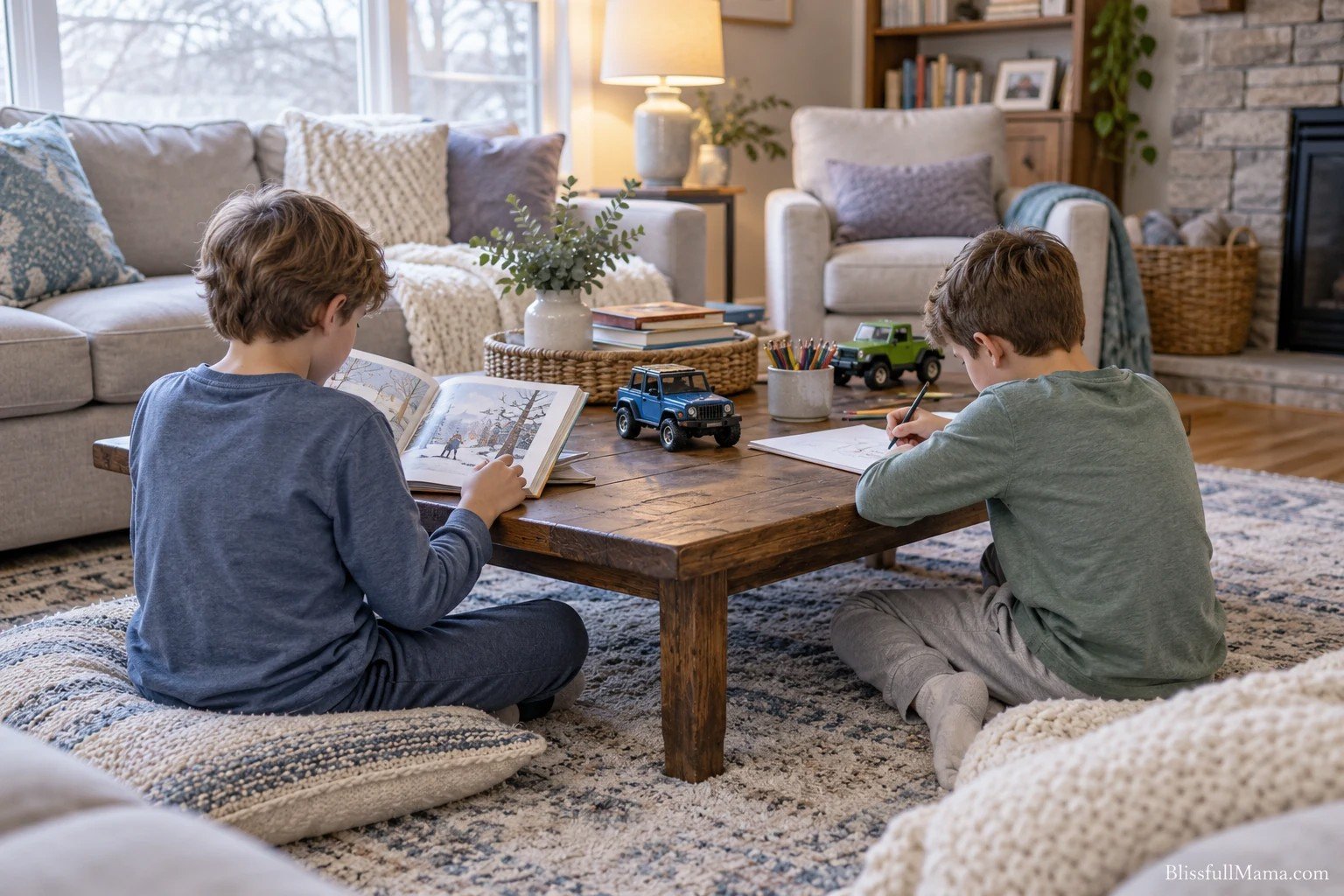
Put Your Winter-Break Plan Where Everyone Can See It
A simple page on the fridge can give you something to point to when someone asks, “What are we doing now?”
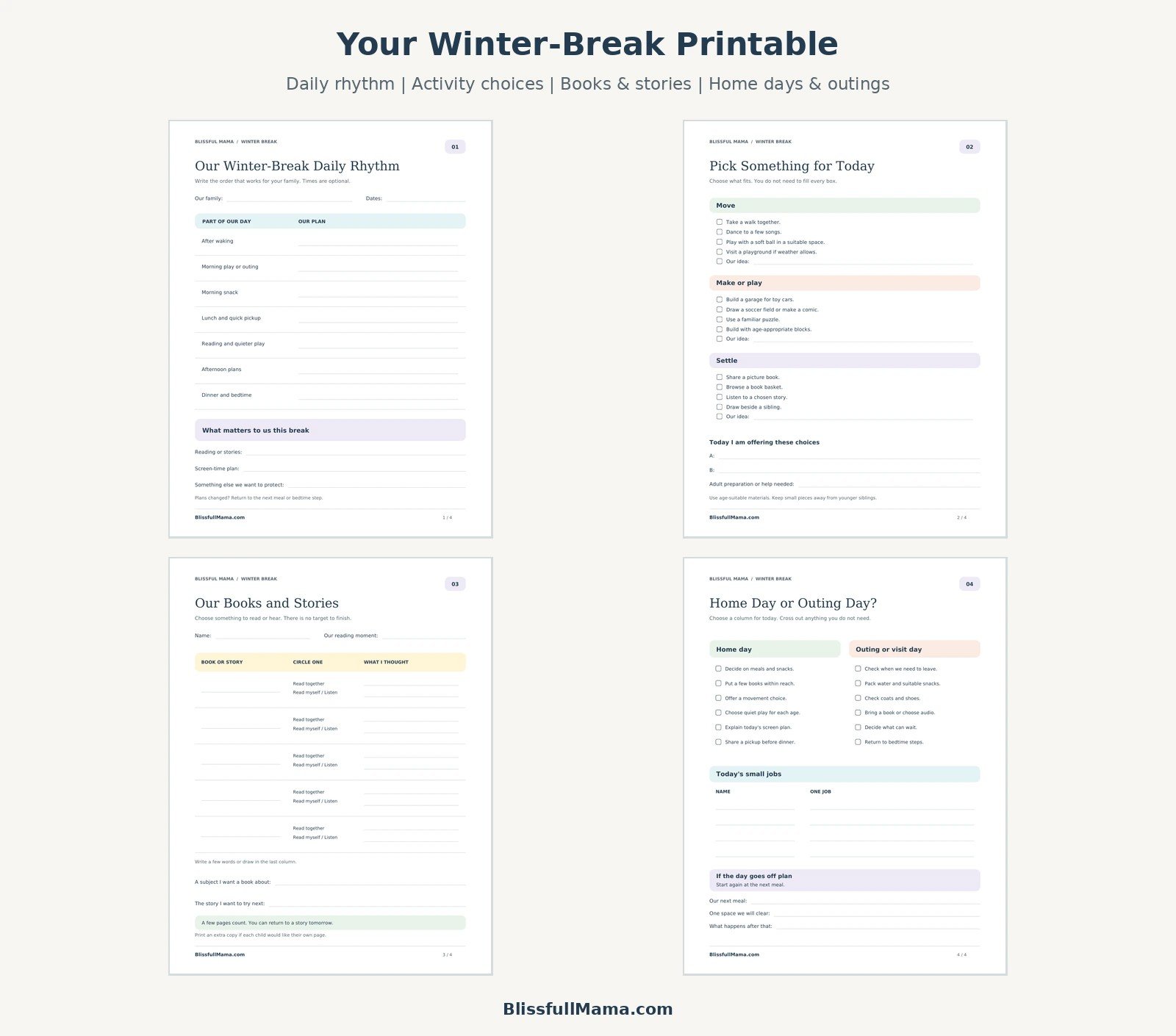
The Winter-Break Daily Rhythm and Activity Picker is designed for that job. It includes a flexible daily plan, a space to choose today’s reading, and activity choices for home days.
You can leave the times blank and tick off each part as you go.
Start With a Daily Order You Can Repeat
A winter break routine for kids can follow a flexible order: breakfast and getting dressed, active play, a morning snack, lunch, reading and quiet time, afternoon play, dinner, and bedtime. Keep the sequence familiar, adjust it for outings, and decide in advance where any screen time will fit.
I wouldn’t plan every hour of the break. I’d choose an order for the parts of the day that tend to need the most help.
For our family, that means meals, something active, reading, and a predictable point for screens. Everything else can fit around them.
Here’s a winter-break daily routine you can adapt:
| Part of the day | What happens |
|---|---|
| After waking | Breakfast, get dressed, and put pajamas away |
| Morning | Active play, outside time, or an outing |
| Midmorning | Snack, followed by free play or one chosen activity |
| Around midday | Lunch and a quick shared cleanup |
| After lunch | Books, read-aloud time, and a quieter activity |
| Afternoon | Free play, a family visit, or a planned screen window |
| Evening | Dinner, toy pickup, and the usual bedtime steps |
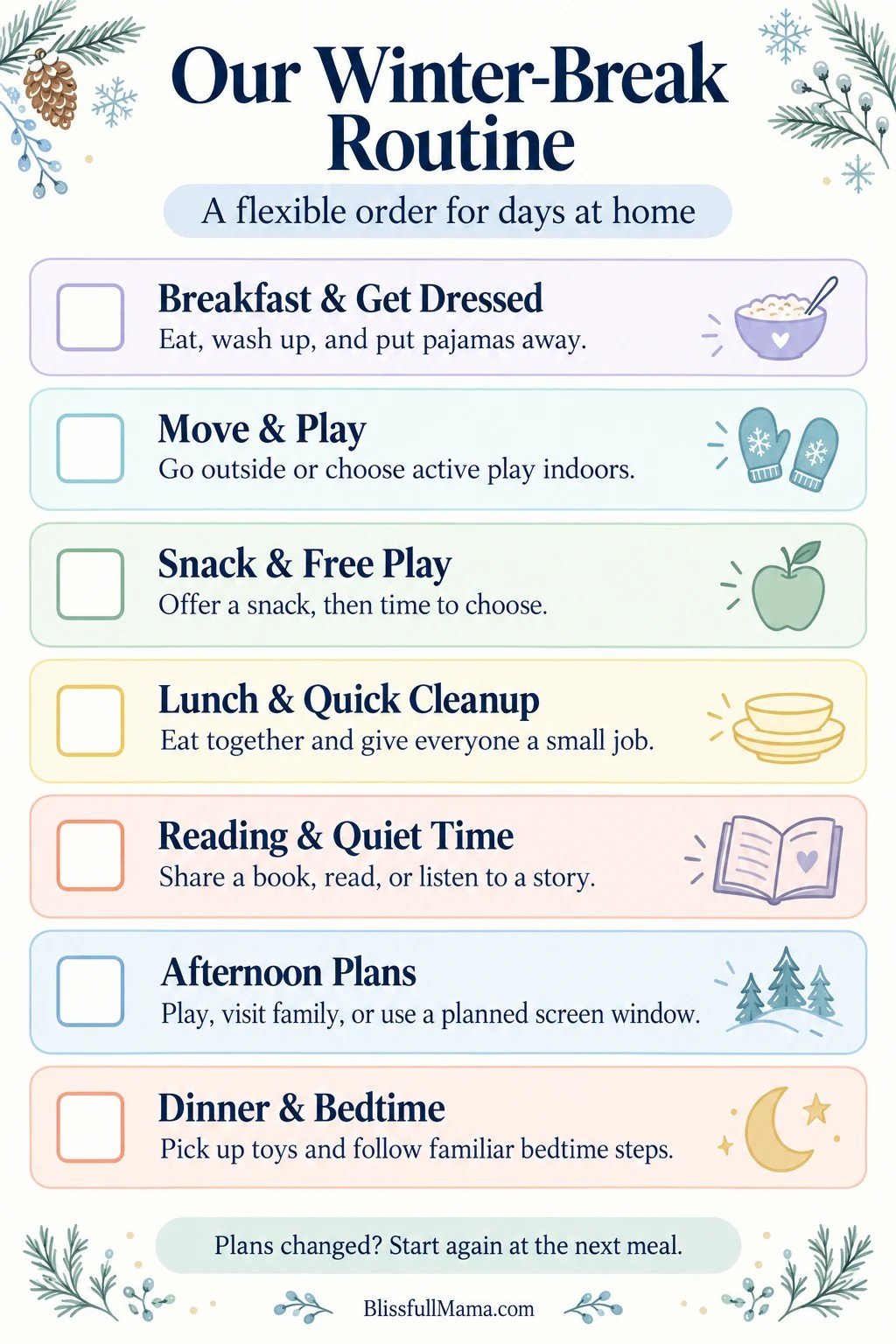
These are suggested places in the day. If your children wake hungry, feed them before asking them to get dressed. If an outing takes the whole morning, skip the activity you would have offered at home.
I’d also leave plenty of time between the planned parts. Children need room to keep building the thing they’ve started without being moved along because a chart says so.
Give the Morning a Small Starting Point
Without the school run, it’s easy for the first part of the day to drift. I’d keep the morning expectations small enough that I can repeat them without a long discussion.
After breakfast, everyone gets dressed and puts their pajamas away. Older children can take their dishes to the kitchen; younger ones will need help.
That’s enough to begin. I wouldn’t make a full bedroom clean the price of starting winter break.
Then I’d offer one choice: “Do you want to play with the cars or go outside first?”
Open-ended questions can turn into requests I can’t manage that morning. Two options I’m comfortable with give my boys a say while keeping the decision manageable.
On a slow day, getting dressed might happen later. I’d still follow the same order when we get to it.
Give Active Play a Place Before the Long Indoor Stretch
With four boys at home, I want space in the day for movement before expecting everyone to settle with books.
Depending on the weather and the space available, that might mean a walk, a playground visit, or dancing to a few songs in the living room.
At home, I’d clear a safe patch of floor and choose something that suits the children playing. A younger child rolling a soft ball needs a different setup from older brothers practicing soccer skills.
I wouldn’t plan several activities back to back. One active part of the morning, followed by time to choose their own play, is a reasonable starting point.
If we’re heading out later, I’d keep this short. There’s no need to fit in a separate activity just to complete the chart.
Make Reading a Familiar Part of the Day
Reading is one habit I want to keep during winter break. I also don’t want to spend the afternoon reminding four children that we haven’t done it yet.
I’d place it after lunch, when we’re already coming back together. Start with about 10 minutes and adjust to the child and the day. That’s a practical starting suggestion, not a reading requirement.
My older boys both love Minecraft, so I’d offer books connected to their interests alongside other choices. A funny illustrated book or a comic may be easier to pick up than a chapter book chosen only by me.
For younger children, I’d offer a picture book together. They can point, ask questions, and turn pages. Everyone doesn’t need to sit through the same book at the same time.
A basket near the sofa can hold a few choices:
- Picture books to read together.
- Comics or illustrated books for independent browsing.
- A longer story we can return to.
- Books about a current interest, such as cars or soccer.
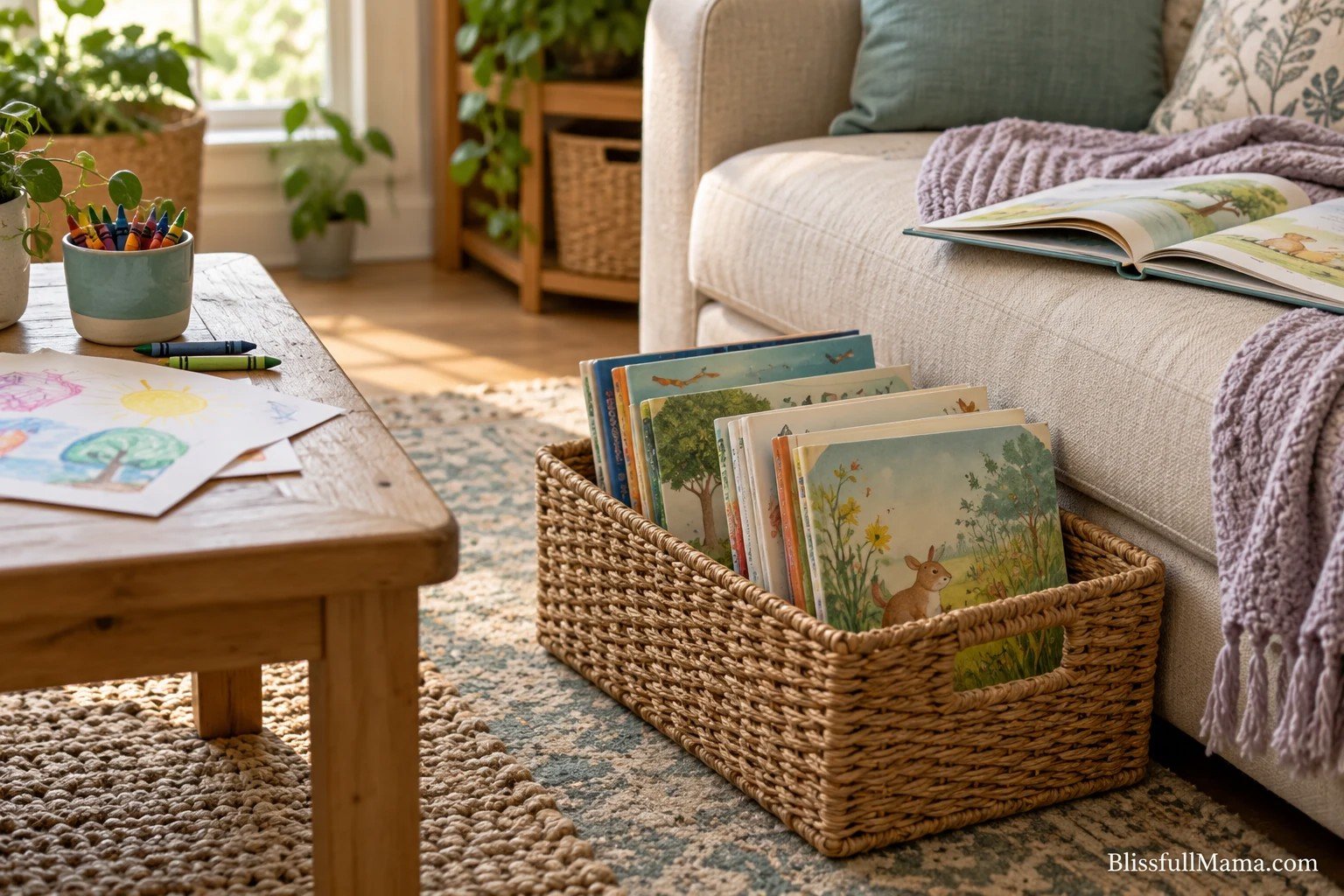
I’d keep the selection small enough to see what’s there.
For a child who enjoys listening, an audiobook can be another way to spend time with a story. My audiobooks for kids who don’t like reading yet post has options to explore.
Listening can sit alongside reading practice. It doesn’t need to replace the time an older child spends reading printed words.
Decide Where Screens Fit Before the Requests Start
I’m trying to keep screen time down, and I’d rather make that decision once than reopen it every time someone asks.
On a home day, I’d put any planned screen window after lunch, reading, and some time away from devices. I’d explain the order in the morning: “We’ll have lunch, spend time with books, and then it’ll be time for your planned show or game.”
Reading stays part of our day even when screens aren’t planned. I don’t want every book to become a task my boys rush through to reach a game.
The American Academy of Pediatrics recommends making a family media plan that leaves room for reading, play, and other offline activities. Its family media plan guide is a useful place to review your own rules.
Before a screen session starts, agree on the stopping point. Depending on the activity, that could be the end of one episode or a clear point in a game, with a reminder before it’s time to finish.
I’d have the next step ready, too: a snack at the table, a building activity, or getting ready to visit family. “Screen time is finished; your snack is ready” gives us a specific next move.
Give Snacks a Predictable Place in the Day
Four children at home can make the kitchen feel permanently open. I’d choose a morning and afternoon snack window, with meals in between, so I’m preparing food for everyone together.
That still leaves room to respond to hunger. If a child is hungry earlier, offer food and consider whether breakfast or lunch needs to be more filling.
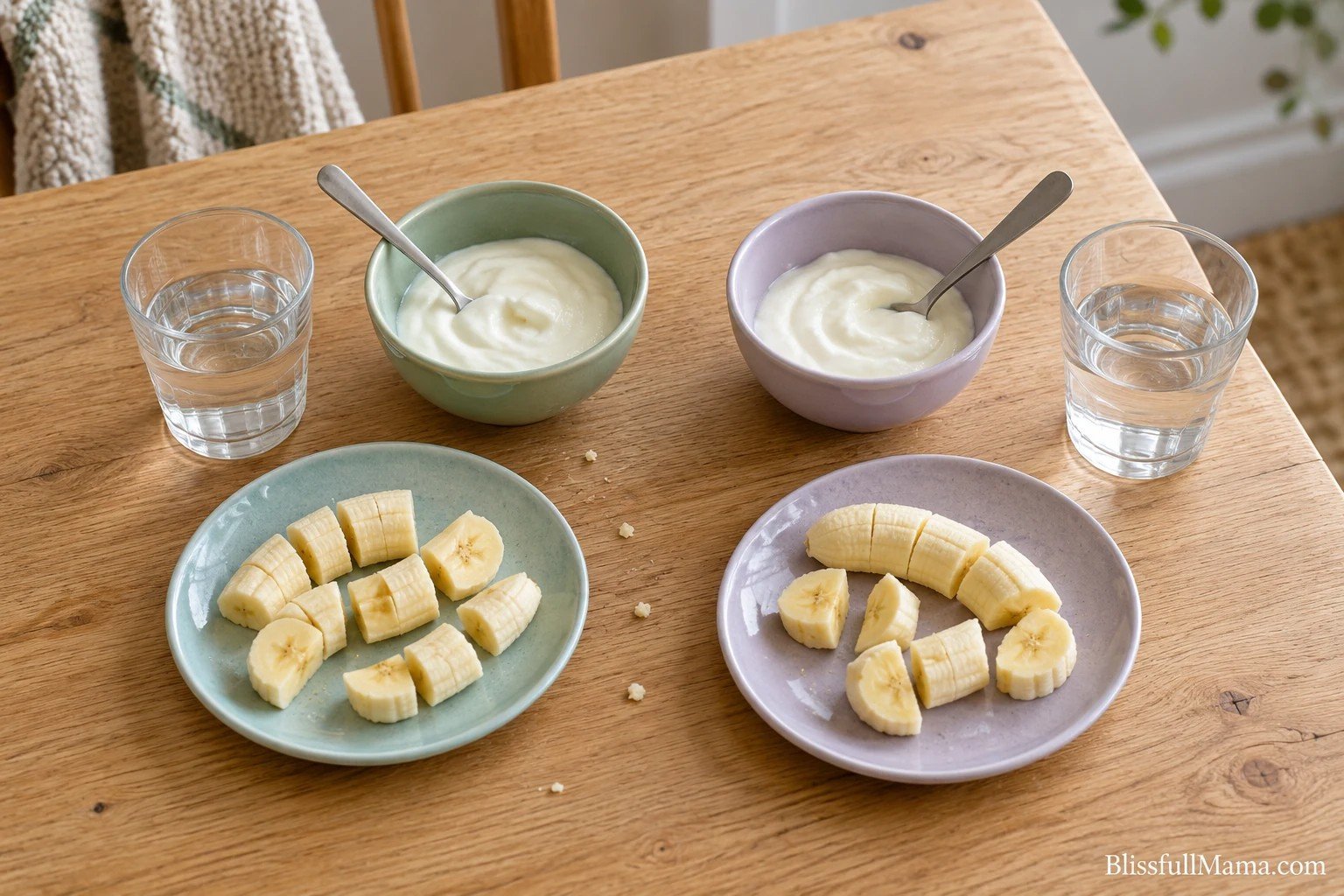
The part I’d limit is the constant choosing. “We have yogurt or a banana” is easier to manage than opening the pantry for another round of requests.
Serve younger children seated, with food prepared for their age. Older children can help bring cups to the table and clear their own plates afterward.
Plan Quiet Time That Fits Different Ages
After lunch and books, I’d offer a quieter stretch before the afternoon gets going.
In a family with a toddler, a preschooler, and school-age children, everyone won’t need the same thing. A child who still naps can keep their usual nap; older siblings can choose something nearby that won’t disturb them.
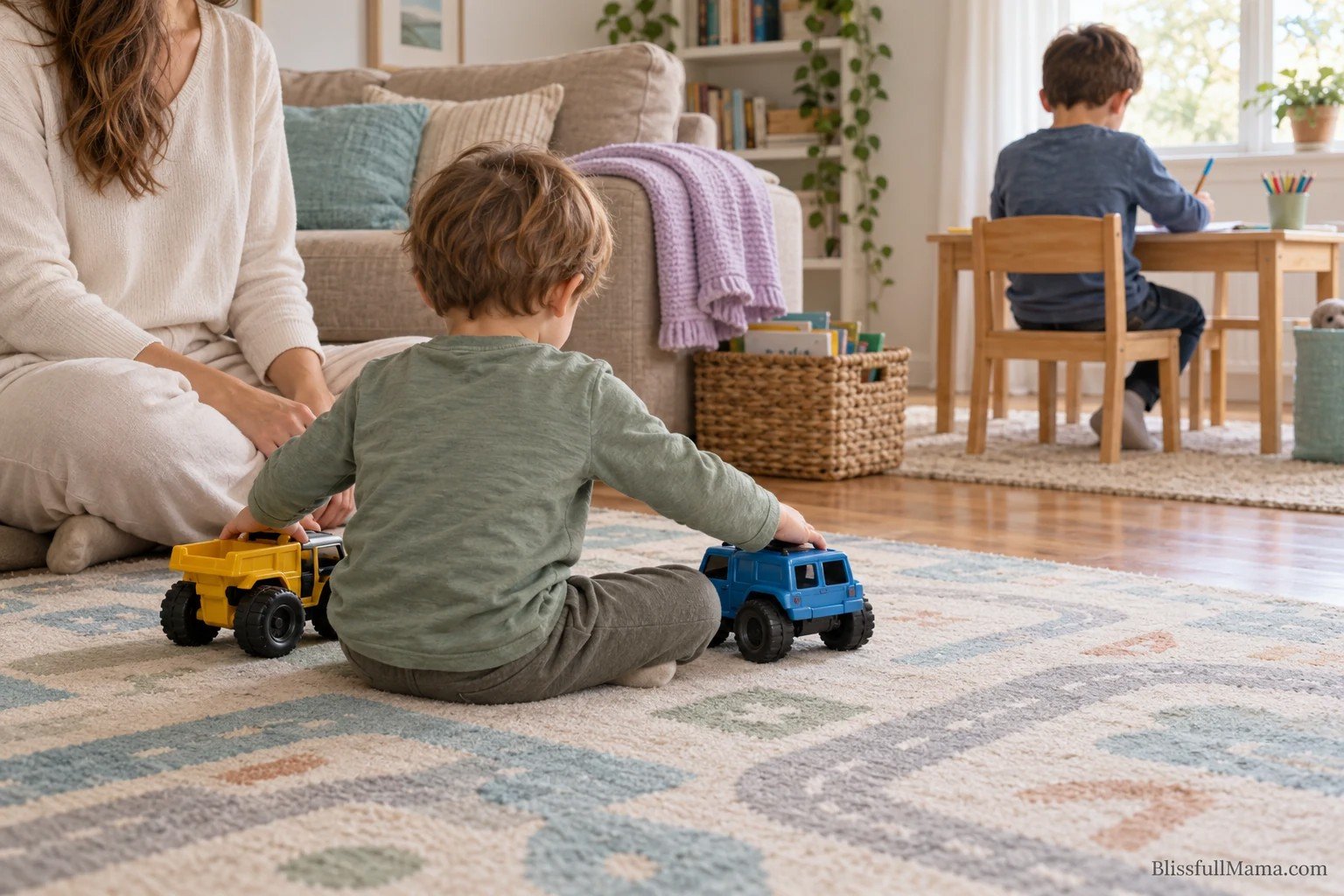
For my younger two, who love cars, I’d consider a few large vehicles on a play mat. My older boys could draw, read, or build with pieces kept away from their younger brothers.
Begin with a short stretch you can support. If that’s 10 minutes with you sitting beside the youngest, start there.
Quiet time also doesn’t guarantee uninterrupted work time for Mom. I’d save anything that needs full concentration for a time when another adult can help.
A Few Optional Reading and Play Tools
I’d begin with books and toys we already own. If there’s a specific gap, these are options I’d consider:
- Melissa & Doug Reusable Sticker Pad: Vehicles: Reusable vehicle scenes give a preschooler something to arrange at the table. Check the current age label and keep loose stickers away from younger siblings who mouth objects.
- Yoto Player: A higher-priced option for families who regularly listen to stories. Children can choose audio using physical Yoto Cards; compare the player and the cost of the stories you want before buying.
- Audible Premium Plus: An option to compare if you already have a device for listening. Choose the story together, then put the screen away while it plays.
(AD) Browse books and play finds in my Amazon storefront.
(AD) View Audible Premium Plus options and current membership terms.
Make Tomorrow’s Winter-Break Plan Easier
Get my free Winter-Break Daily Rhythm and Activity Picker. Choose a flexible order, put a few activities on paper, and leave room for family visits.
You’ll also get emails from Blissful Mama with practical routines and ideas for family life. Unsubscribe anytime.
Give Siblings Permission to Play Separately
With four boys, I wouldn’t build the whole routine around everyone playing together.
If an older child wants to protect a construction from a toddler, give him a suitable place to work. If two brothers keep arguing over one toy, help them agree on turns or put it aside while they choose something else.
I’d use a specific instruction: “You can build at the table. Your brother can play with his cars beside me.”
Separate play needs adult help and supervision suited to each child. It doesn’t mean sending the youngest away or asking an older sibling to manage him.
For “I’m bored,” I’d offer two available choices before suggesting something new. “You can draw a soccer field or build a garage” gives them somewhere to start without promising an afternoon of entertainment.
Attach Small Cleanups to Meals
I don’t want to spend winter break picking up behind everyone. I’d attach short cleanups to moments when we’re already changing activities.
Before lunch, clear enough toys to use the table and walk safely. Before dinner, put away the main activity and take dishes to the kitchen.
Give each child a job they can understand:
| Child | A possible job |
|---|---|
| Toddler, with help | Put a few large cars in an open bin |
| Preschooler | Return books to their basket |
| Younger school-age child | Collect crayons and paper |
| Older child | Clear their place and wipe a small table area |
Adjust the jobs to your child’s abilities. “Put these cars in this bin” is easier to follow than “Clean this room.”
My 10-minute-a-day cleaning routine can help you choose one small cleaning task around the family pickups.
Use a Shorter Routine on Outing and Visit Days
A family visit may take up the time you usually spend reading or playing at home. I wouldn’t try to squeeze the entire home-day routine around it.
Choose what fits before you leave. That might be breakfast, getting dressed, and one picture book together.
For a longer drive, choose a familiar audiobook before you leave.
When you get home, return to the next useful step. If it’s nearly bedtime, move into pajamas and teeth brushing without making up the activities you missed.
Keep the Bedtime Order Familiar
I’d keep the usual bedtime steps even when the day has been different.
Dinner, a quick pickup, washing, pajamas, teeth, and a story give everyone a familiar way to finish. Bedtime may shift for a family gathering, but I wouldn’t automatically move it later for the whole break.
A few days before school returns, begin bringing wake-up and bedtime back toward your school routine if they’ve drifted.
You can also check clothes and school bags during the day, so those jobs aren’t waiting until the last evening. My nightly reset routine for busy moms includes preparation ideas you can adapt.
Winter-Break Routine FAQs
Does a winter-break routine need set times?
No. You can follow the same order without starting each activity at a fixed time. Keep appointments and family plans on the clock, then let home activities fit around them.
How do I reduce screen time without planning activities all day?
Choose when screens will be available and keep a few familiar alternatives accessible. Books, drawing supplies, and toys your children already enjoy give them something to choose without a new project each day.
If screens currently fill much of the day, change one stretch first and see what support your children need.
What if my child refuses reading time?
Offer to read together, try an easier book, or let your child choose something connected to an interest. Avoid turning every story into questions or a worksheet.
If reading is regularly upsetting or difficult, talk with their teacher about suitable books and support.
How do I manage a toddler and older children together?
Use the same broad order with different activities. Older children might read independently while you share a picture book with the toddler.
Keep small building pieces and other unsuitable materials separate. You don’t need everyone doing an identical activity.
What should I do when the whole day goes wrong?
Start again at the next meal. Feed everyone, clear one usable space, and choose what needs to happen next.
An argument-filled morning doesn’t mean you need to abandon the plan for the rest of the break.
Choose Tomorrow’s Reading Tonight
Before bed, I’d ask each boy to choose a book or story for tomorrow. Then I’d leave the books where we’ll see them after lunch.
That gives me one less decision to make when everyone is home and asking for something.
Get Your Free Winter-Break Routine Printable
Use the Winter-Break Daily Rhythm and Activity Picker to write down your family’s daily order and choose a few activities for home days.
Leave room for visits, cross out what doesn’t fit, and keep the page somewhere your children can see it.
Put Your Winter-Break Routine on the Fridge
Download the free four-page pack to plan your daily rhythm, choose activities, and make room for reading. There’s a shorter plan for outing days, too.
You’ll also get emails from Blissful Mama with practical routines and ideas for family life. Unsubscribe anytime.


