
Boys’ Winter Wardrobe Checklist for Busy Moms
As an Amazon Associate, I earn from qualifying purchases.
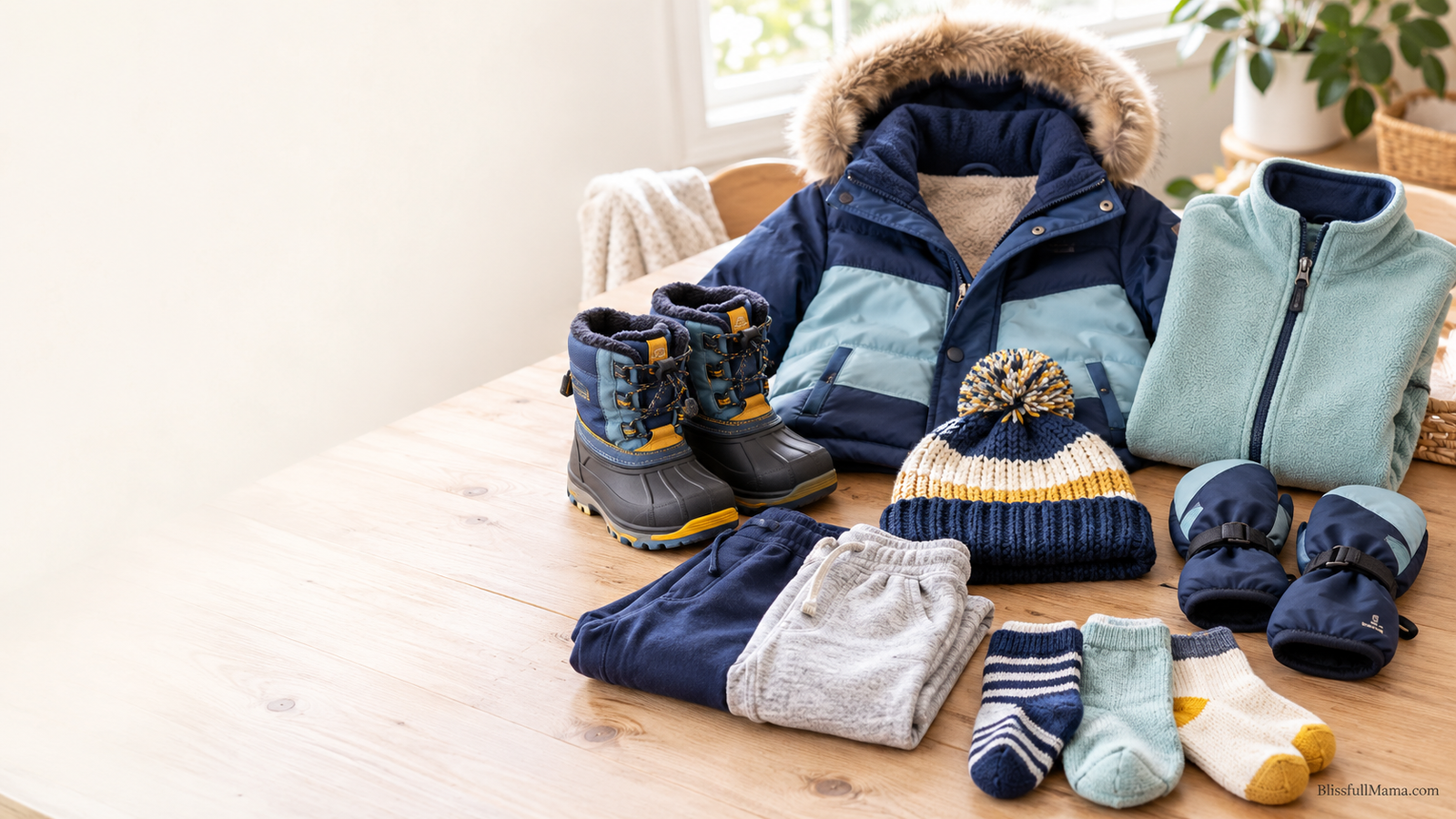
A boys’ winter wardrobe checklist is much easier to use when you start with what your children already own.
With four boys, I can’t just ask, “Do we have winter coats?” I need to know whether each boy has one that fits, whether his boots still work with warm socks, and where his mittens went after last winter. Otherwise, I end up shopping while trying to remember four different clothing sizes.
This checklist is for busy moms preparing for a cold, snowy winter. We’ll start with everyday clothes and realistic quantities, then get into coats, boots, and snow gear. The goal is to make one useful shopping list without filling the closet with extras.
Get Your Free Boys’ Winter Wardrobe Checklist
Check their closets before you shop. Get my free two-page Boys’ Winter Wardrobe Checklist to track what fits, record sizes and hand-me-downs, and make one shopping list for all your boys.
Sign up for my emails to get the checklist and practical family routines.
First, check what still fits
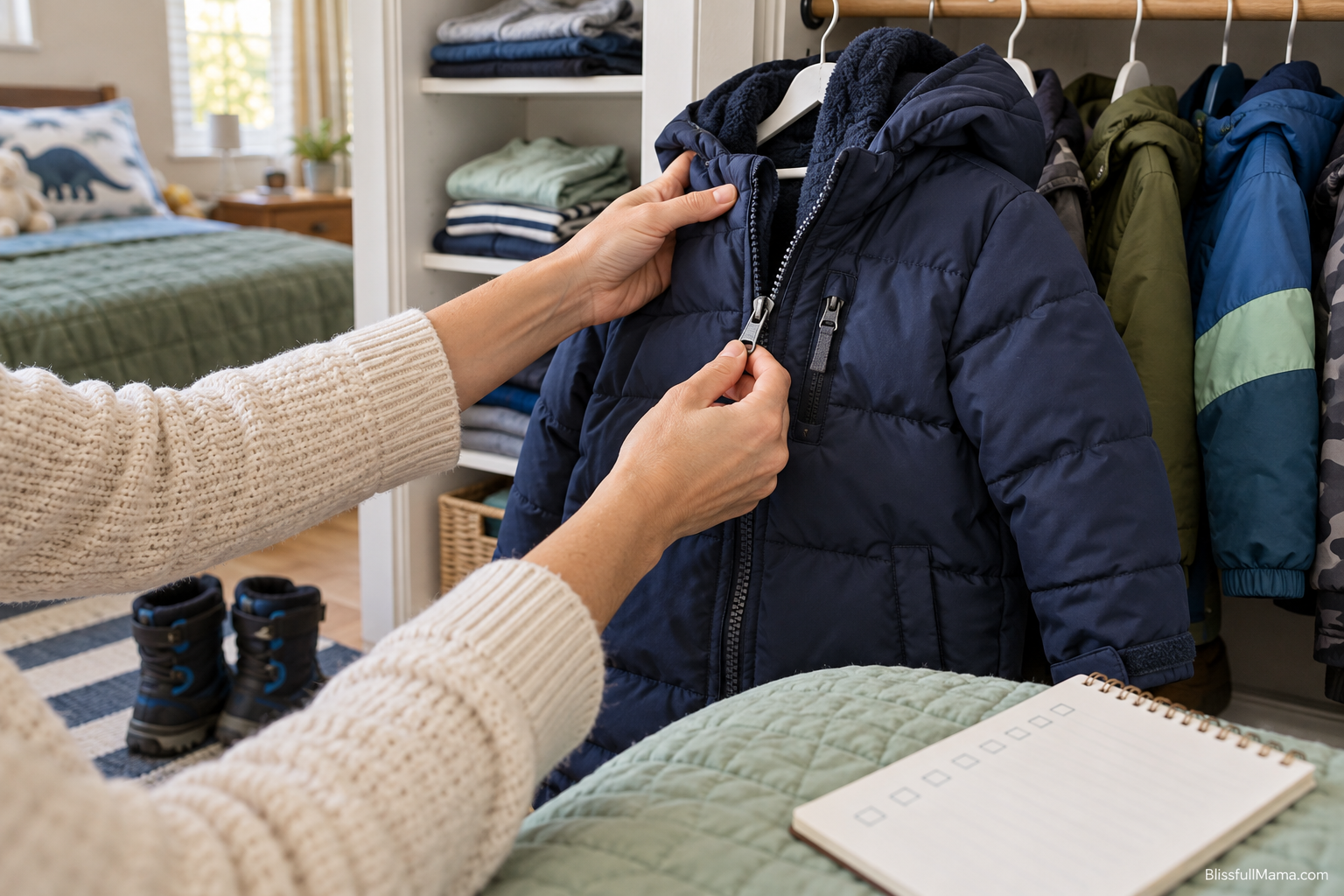
Before opening a shopping app, pull out last winter’s clothes for one boy at a time. Start with the items that cost the most to replace: his coat, boots, snow pants, and warm layers.
Have him try them on together. A coat might fit over a thin shirt but feel too tight over a fleece. Boots might seem fine until he puts on the socks he would wear in the snow.
Ask him to zip his coat, lift his arms, sit down, squat, and walk around in his boots. For a younger child, check whether he can manage the zipper and pull on his boots with the amount of help you’ll realistically have on a school morning.
Make four piles as you go:
- Fits now
- Save for a younger brother
- Donate
- Replace
Check hand-me-downs for worn knees, damaged boot soles, broken zippers, and missing mitten partners. Passing something down helps the budget when it still fits and works well.
If this sort reveals a bigger pile of outgrown clothes, my fall decluttering checklist can help you clear space before bringing anything new home.
How many everyday winter clothes does a boy need?
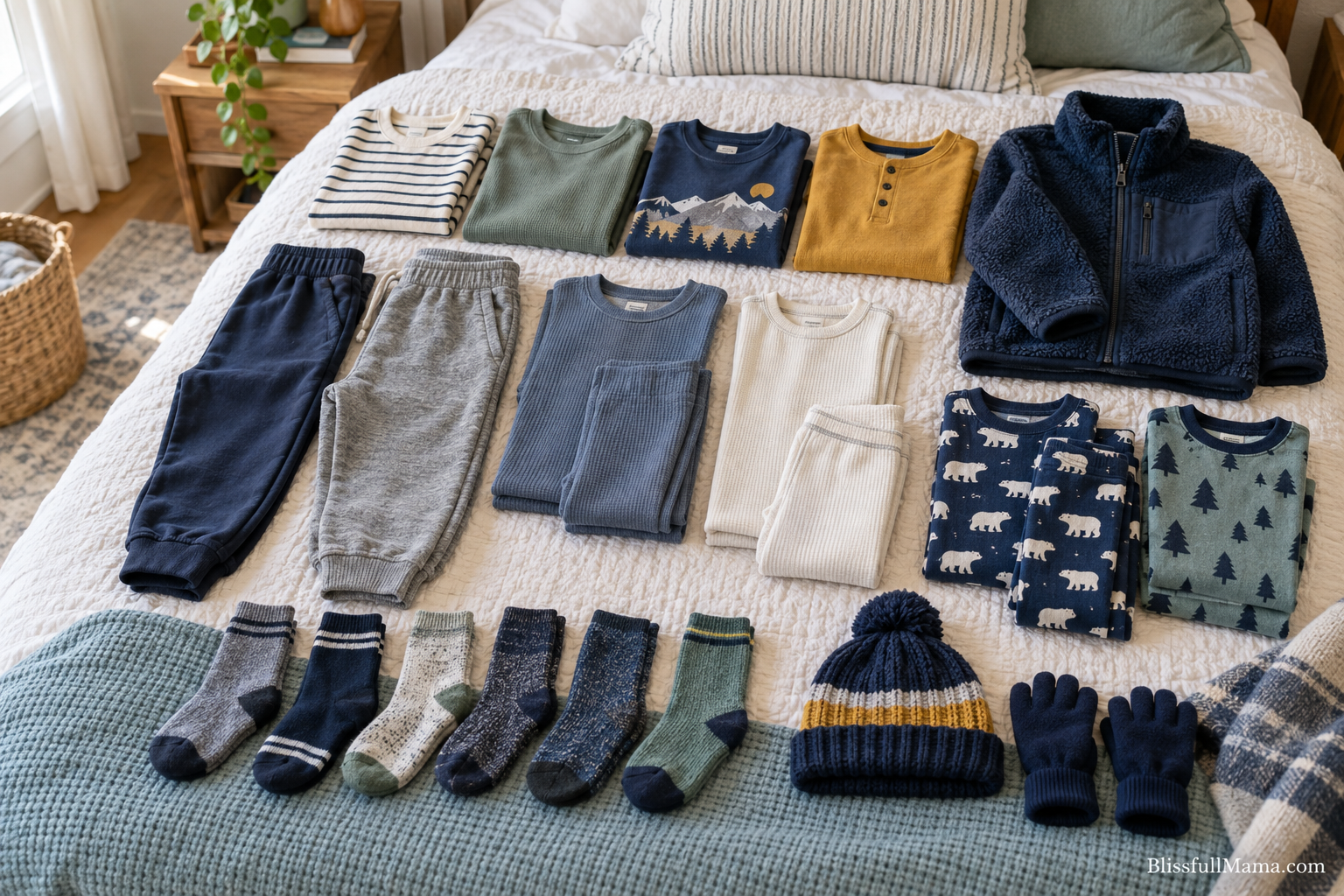
The answer depends on your laundry routine. Since I wash clothes during the week, I’d start with enough everyday outfits to cover the days between loads, plus a little room for spills and unexpected changes.
These are starting quantities per child, not a list of things you must buy. Count the clothes that already fit first.
| Everyday item | Starting quantity | Check before buying |
|---|---|---|
| Long-sleeve tops | 5–7 | Can he also layer a fleece over shirts he already owns? |
| Pants or joggers | 5–7 pairs | Are they comfortable for school and active play? |
| Fleeces, sweatshirts, or sweaters | 2–3 total | Do they fit beneath his coat? |
| Thermal tops and bottoms | 1–3 sets | How often does he spend a long time outdoors? |
| Underwear | 7–10 pairs | Will this cover your laundry schedule? |
| Everyday socks | 7–10 pairs | Which pairs still fit and stay up? |
| Warm socks for boots | 2–4 pairs | Do his boots fit comfortably with them? |
| Pajamas | 2–3 sets | Are they comfortable at your home’s indoor temperature? |
A boy who wears a school uniform may need fewer casual outfits and more uniform pieces. A toddler who regularly needs a change of clothes may need an extra top and pair of pants. Your routine should decide the numbers.
You also don’t need a separate “winter” version of every shirt. Comfortable everyday clothes become more useful when they work with the warm layers your child already likes to wear.
Make a shopping list for each boy
Once you’ve counted what fits, write down the gaps by child. Keep it specific: “two pairs of pants for my seven-year-old” is far more helpful than “buy winter clothes.”
Now that you know which everyday clothes fit, it’s time to check the gear that keeps your boys comfortable outside. This is where I’d spend the most time comparing fit and features, especially if a coat or pair of boots may later be passed down to a younger brother.
The Cold-Weather Gear Checklist
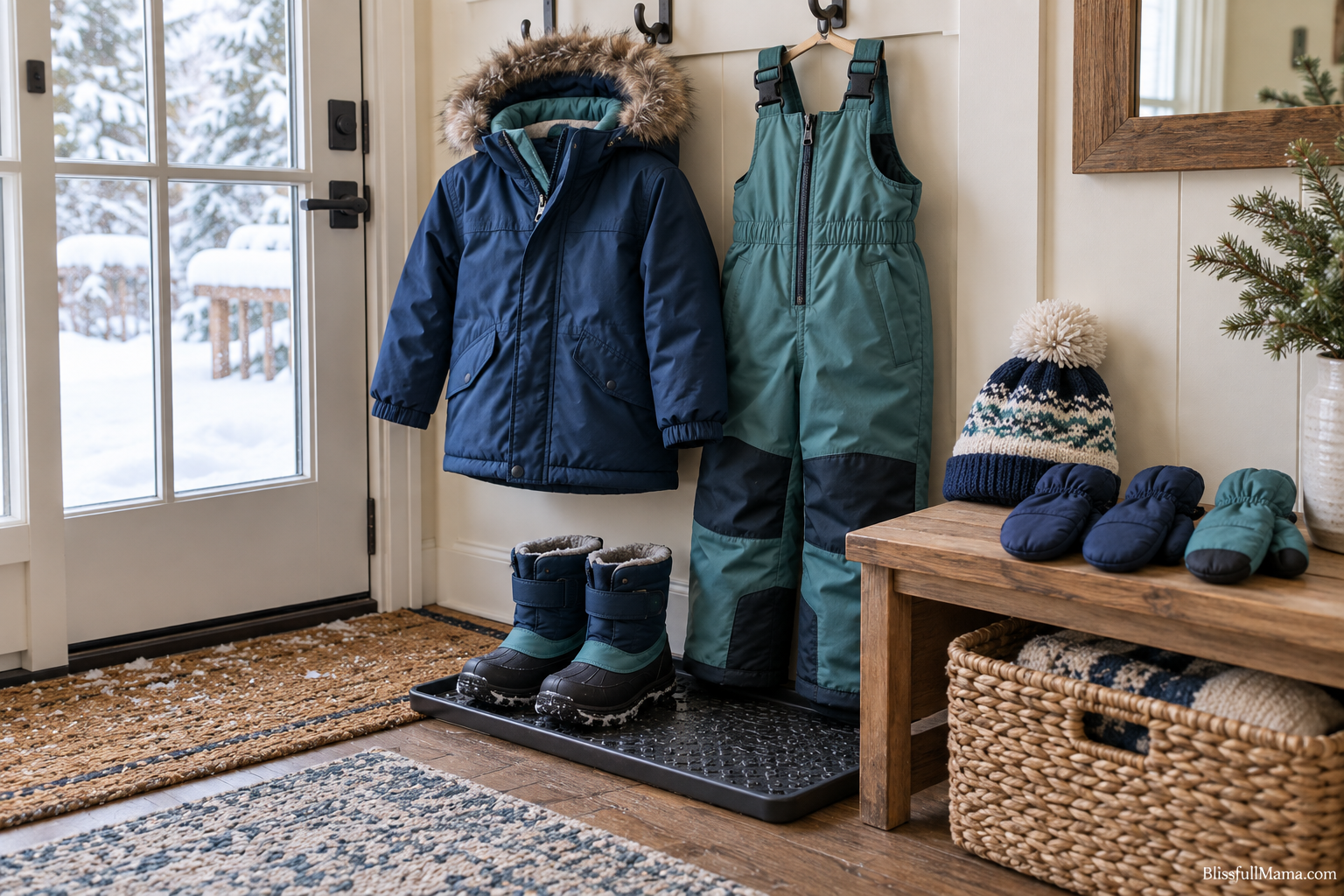
For a boy who regularly plays outdoors in a cold, snowy winter, start here:
| Item | Starting quantity | What to check |
|---|---|---|
| Winter coat | 1 | Fits over layers and allows easy movement |
| Waterproof snow pants or bib | 1 | Covers the tops of his boots and is easy to manage |
| Insulated winter boots | 1 pair | Fits comfortably with warm socks |
| Warm hats | 2 | Covers his ears and stays on |
| Waterproof mittens or gloves | 2 pairs | One pair can dry while the other is ready |
| Neck warmer | 1, if needed | Comfortable enough that he’ll wear it |
These are starting quantities. If snow is rare where you live, you may be able to borrow snow pants for an occasional trip. If your child plays outside in snow almost every day, a second pair of mittens becomes especially useful.
Choose a coat for the weather your child actually faces
Before buying a coat, try it over the fleece or sweatshirt your child normally wears. Ask him to raise his arms, bend down, and zip it himself if he’s old enough.
Look closely at the product description, too. A coat can feel warm while offering limited protection from wet snow. If your child frequently plays outdoors in snowy or slushy conditions, check the stated water protection and washing instructions.
One well-fitting winter coat is a sensible place to start. You may already have a lighter jacket for milder days.
For a child who needs both a coat and snow bib, the (AD) Columbia Kids’ Buga IV Set on Amazon is a substantial option to compare. There is also a (AD) toddler Buga IV Set on Amazon.
Add snow pants if your boy plays in snow
If your child sits, kneels, or rolls around in snow, waterproof snow pants or a bib can help keep his everyday pants dry.
Have him practice moving in them before the first snow day. Can he squat? Do the legs still cover his boots when he sits? Can he manage the fastenings when he needs the bathroom?
A single pair is enough to start for many families. See how quickly it dries after outdoor play before deciding whether you need a second.
Check winter boot fit with the right socks
Bring the warm socks your child will wear when trying on boots. Follow the brand’s sizing guidance and have him walk around. His toes need comfortable room, and his heel shouldn’t slip so much that walking becomes awkward.
For younger boys, an easy-to-pull-on boot can make getting out the door less of a struggle. The (AD) BOGS Classic II kids’ boots on Amazon are one option to compare: they are waterproof and insulated, with pull-on handles. Check the current model and sizing before buying.
If your family sees more rainy days than snow, my rain boots for boys guide can help you compare footwear for wet weather.
Buy a backup pair of mittens
Mittens have a talent for disappearing just when everyone needs to leave.
I’d start with two hats and two pairs of waterproof mittens or gloves per boy. Keep one set in its usual spot and the backup somewhere you can find it quickly. Label the individual pieces if your boys have similar sizes or colors.
After outdoor play, hang damp gear to dry and change wet socks or clothing. The American Academy of Pediatrics recommends dressing children in several thin layers and changing wet clothing promptly during cold weather.
Remember the Car Seat Rule
A warm coat is for the walk outside, but bulky coats and snowsuits should not sit underneath the car seat straps. The American Academy of Pediatrics explains that the padding can compress during a crash, leaving the straps too loose.
Dress a child in thinner layers under the straps, buckle him snugly, and place his coat or a blanket over the secured straps for warmth.
Make Winter Gear Easy to Find Tomorrow
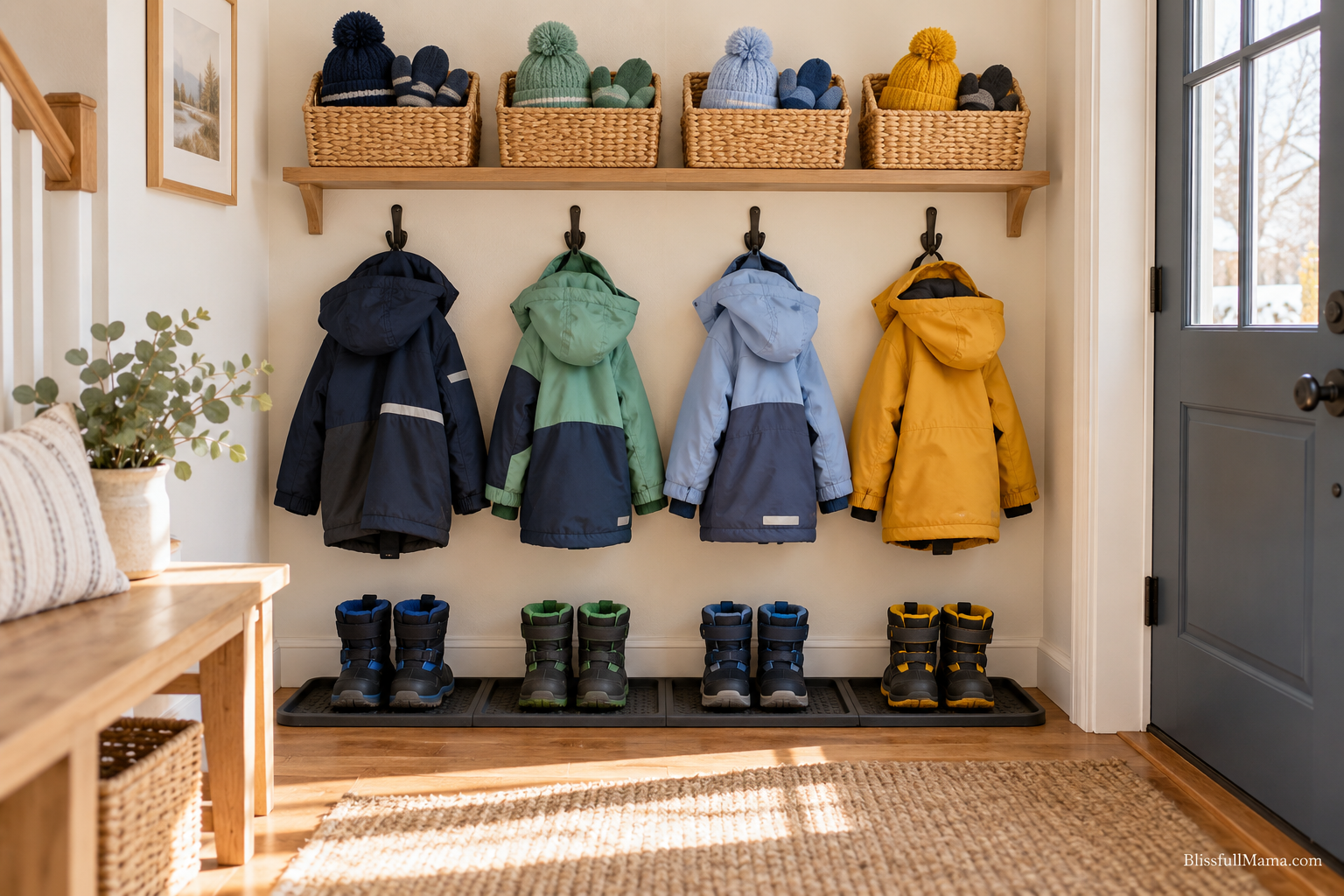
You don’t need a large mudroom. Give each boy a reachable coat hook, a place for his boots, and a small basket for his hat and mittens. Set wet gear out to dry before it goes back into the basket.
Before bed, check the forecast and set out the clothes needed for the next day. If someone’s snow pants are damp or his boots were left in the car, you’ll find out while there’s still time to fix it. I include this kind of preparation in my nightly reset routine for busy moms.
And before you place a final order, look over your list one more time. Which items can be handed down? Which boy needs a replacement now? Which extras can wait until you know whether he’ll use them?
You can browse (AD) my Amazon storefront for more boy-mom and family finds, but keep your own checklist beside you while shopping. The most useful winter wardrobe is the one that fits your boys, your weather, and your laundry routine.
Planning several winter clothing orders? (AD) Check the current Amazon Prime membership options and compare the cost with the benefits your family would use before signing up.
A few minutes checking clothes now can mean fewer missing-boot and wet-mitten surprises on cold school mornings.
Get Your Free Boys’ Winter Wardrobe Checklist
Ready to check each boy’s wardrobe? Get my free two-page checklist to count what fits, track all four boys’ sizes, and decide which purchases can wait.
Sign up for my emails to get the printable and practical routines for busy family days.