
Toy Organization for Small Spaces: A System Kids Can Help Maintain
As an Amazon Associate, I earn from qualifying purchases.
Toy organization for small spaces gets frustrating when you have baskets and shelves, but the toys still end up across the floor.
With four boys, I have several different toy collections to think about. What my older boys want to keep together isn’t always something my younger boys can safely use. We also have a mix of storage, and although the boys help put things away, they still need reminders.
Living in a small apartment has made me pay attention to where things go. We’re preparing to move into our own house, and I want to take better storage habits with us instead of carrying the same overflowing bins into more rooms.
The question I keep coming back to is: can the boys put this away without needing me to rearrange everything first?
A basket may look lovely beside the sofa, but if it’s too full to fit the last truck, someone still has to solve that problem. Usually, it’s Mom.
These ideas focus on the toys families actually have: vehicles, building pieces, games, pretend-play sets, and the larger toys that need somewhere to go between play sessions.
You can choose a setup for one corner or use several across a shared bedroom and living room.
My free My Toys Have a Home kit includes eight picture-and-word labels, a toy-home map, a cleanup checklist, and six small-job cards. Use it alongside whichever storage idea fits your home.
Pick the Toy Problem Before Buying the Organizer
Before shopping, look at the category that keeps ending up on the floor.
Does it need a wider container? Is the basket too heavy for your child? Are several unrelated sets mixed together? Is the storage so far from the play area that returning things becomes another trip?
Measure the space you have, including the room needed to pull a container out. A bin might fit under the bed but be awkward to reach because the bedside table blocks it.
Then choose one of the setups below. You don’t need to copy every idea.
Want to see the toy storage options in one place?
I’ve gathered the baskets, shelves, game pouches, and other organizers from this post into one list. Measure your space first, then compare options for the toy category you want to tackle.
(AD) Shop my Small-Space Toy Organization list
1. Make a Low Shelf Your Everyday Toy Station
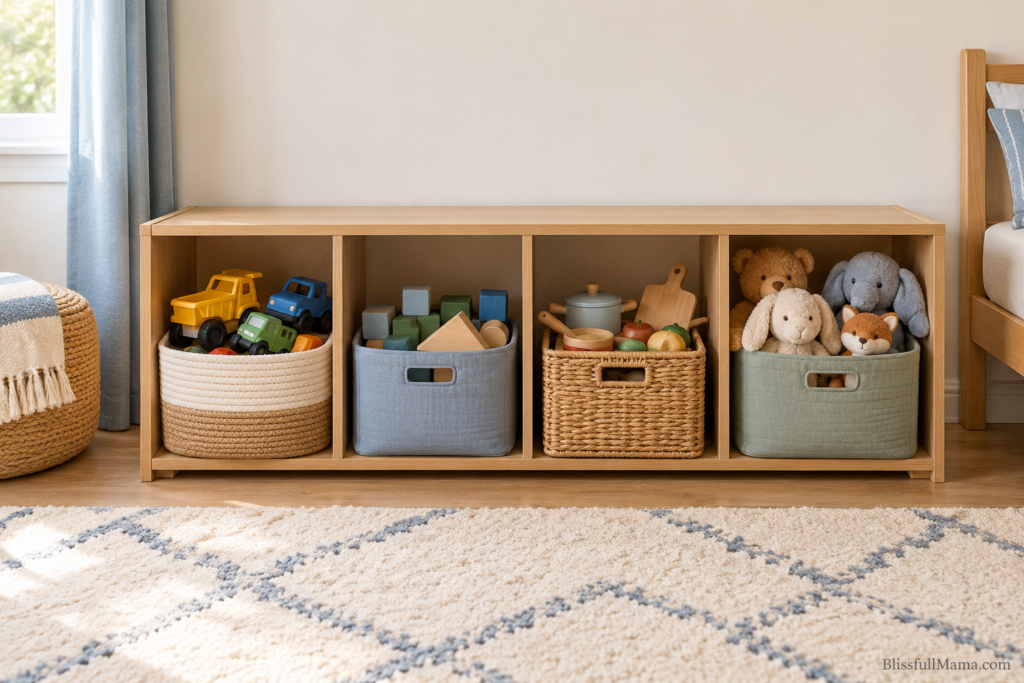
A low shelf gives frequently used toys a visible place to return to. I’d start here if your everyday toys are currently divided between several overloaded baskets.
Use a few broad categories. For example, one compartment could hold vehicles, another large building blocks, and another pretend-play toys. Keep complete activities together.
Leave enough room that a child can slide a basket back without turning it sideways or moving another toy.
For a larger furniture purchase, the Guidecraft EdQ 2-Shelf 5-Compartment Storage with Bins is worth comparing with your available space. The 24-inch-high model measures 42 inches wide and 13 inches deep, includes three fabric bins, and is listed for ages 3 and up.
(AD) Compare Guidecraft EdQ storage shelves on Amazon
Child’s cleanup job: put one category into its bin, then return that bin to its compartment.
2. Give Cars and Trucks a Wide, Shallow Basket
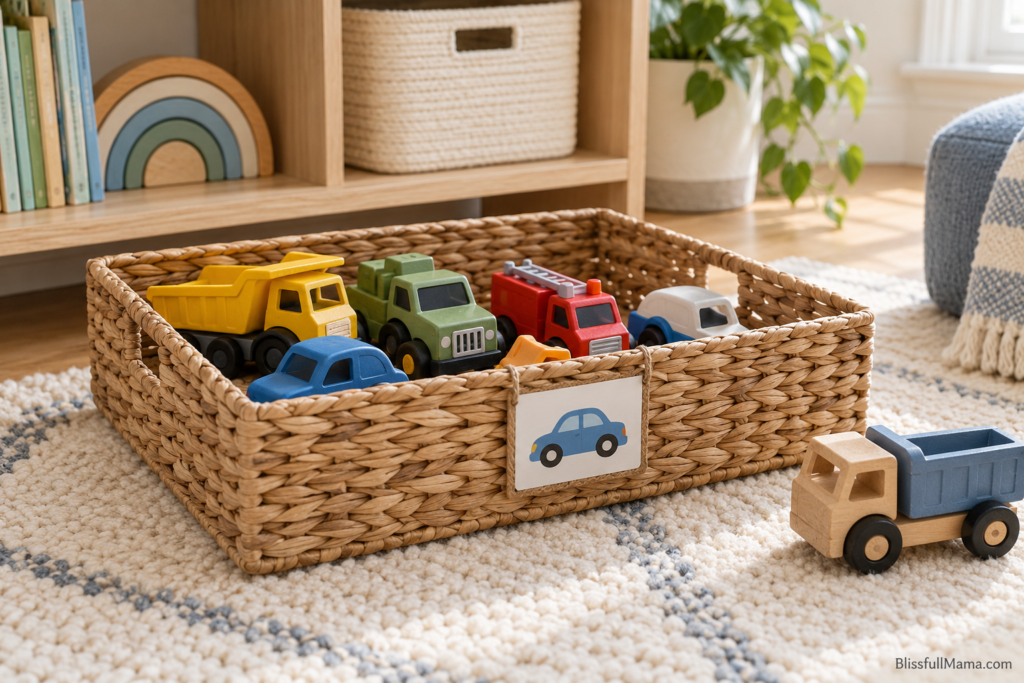
For everyday vehicle play, I’d choose a basket a child can look into without emptying it.
A deep toy chest can hide the car your child wants beneath everything else. A shallow basket makes the collection easier to see and gives small hands somewhere to place the vehicles.
Choose a size that holds the current selection without a careful stacking routine. If tracks are taking up most of the basket, give them their own container beside it.
Use your vehicle picture label on the front.
(AD) Shop shallow toy-storage baskets on Amazon
Child’s cleanup job: collect the vehicles from the play area. An older child can handle tracks while a younger sibling returns chunky cars.
3. Put Big, Flat Toys Under the Bed
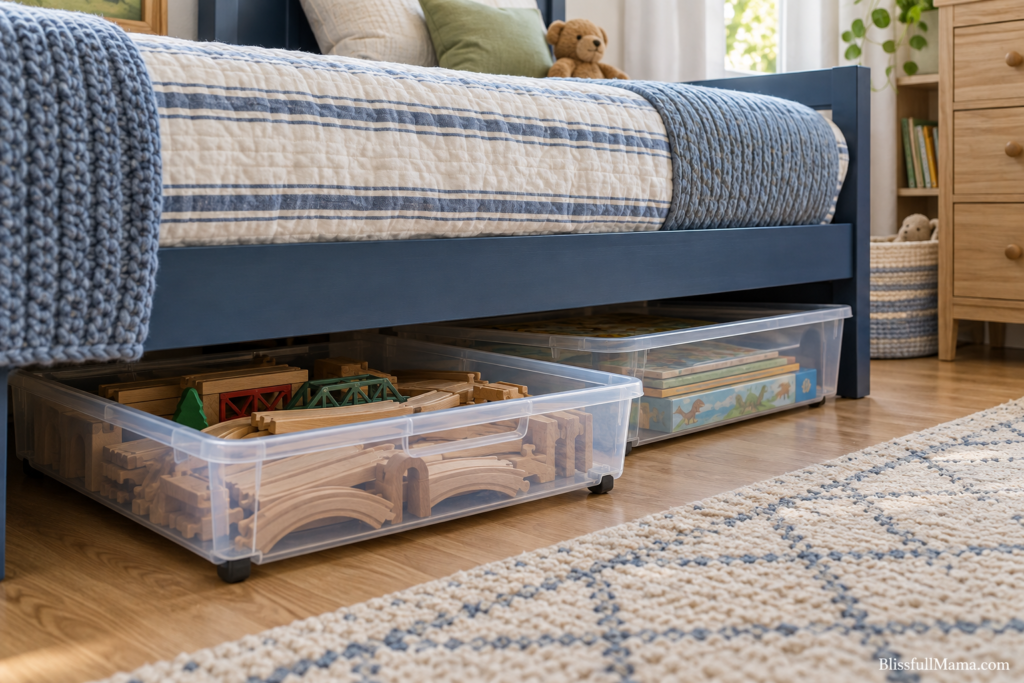
Under-bed storage can work for train tracks, board games, or large puzzle boards that don’t fit neatly into a cubby.
Measure the clearance at the lowest point of the bed frame. Also check whether a container can pull out fully from the side you plan to use.
Choose one shallow container for a clear purpose. A mixed bin of forgotten toys under the bed can become difficult to use quickly.
(AD) Shop low-profile under-bed storage on Amazon
Keep the container light enough for the child using it, and store only toys appropriate for anyone who can reach it. Under a bed is accessible storage, so it won’t keep older children’s small pieces away from a toddler.
Child’s cleanup job: return the track pieces, close the container if needed, and slide it back with help until the movement is familiar.
4. Use Clear Containers for Sets That Need to Stay Together
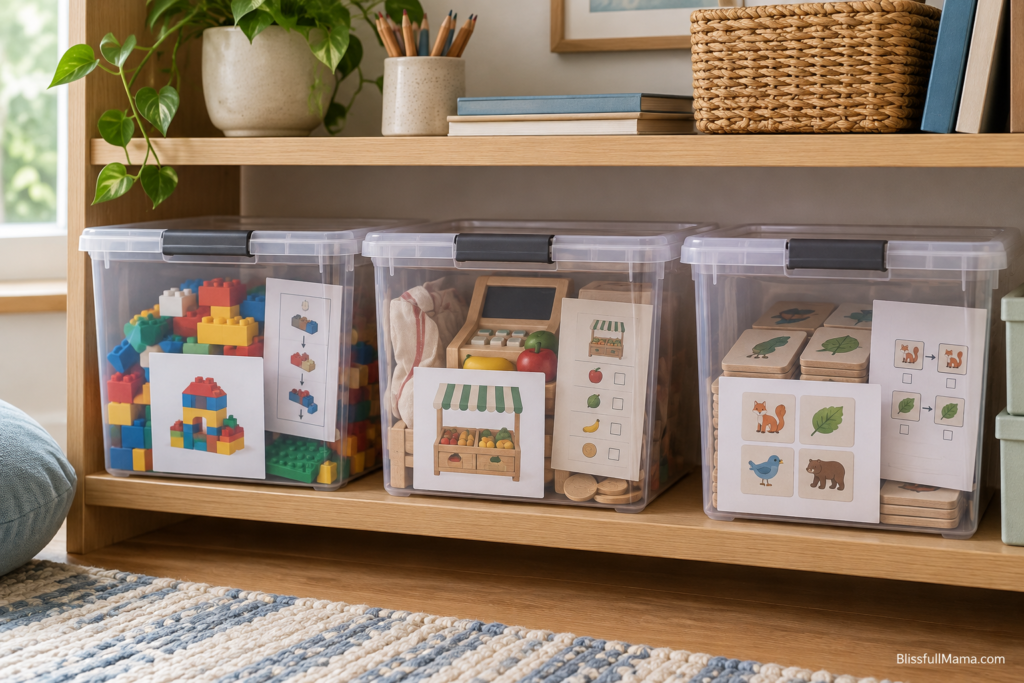
Small playsets become frustrating when their pieces disappear into several baskets.
A clear container can keep a particular set together: an older child’s building kit, a pretend shop set, or the figures and accessories used for one game.
Add a picture of the complete activity and keep its instructions inside. Before choosing the container, test whether the main pieces fit without taking apart something your child wants to preserve.
(AD) Shop clear toy-set containers on Amazon
I’d use open baskets for loose everyday toys and fitted containers for activities that need their pieces together.
Store small-part sets somewhere younger siblings cannot access. An ordinary lid doesn’t make a container childproof.
Child’s cleanup job: collect the set’s pieces and return the instructions before closing it.
5. Make One Living-Room Basket Look Like It Belongs There
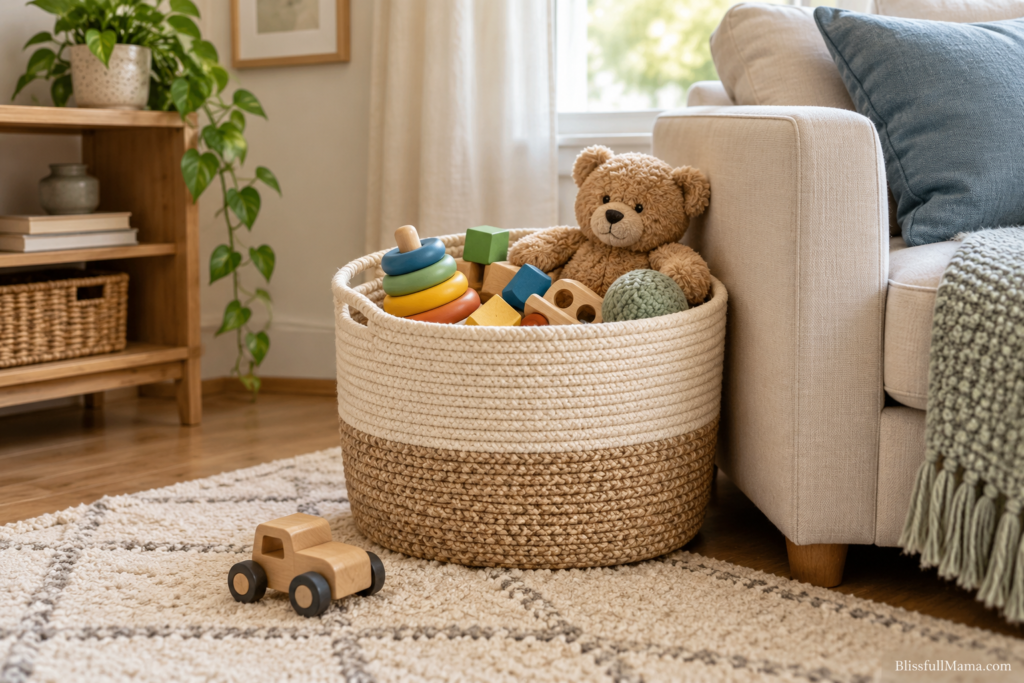
If the children regularly play beside you, a toy basket near the sofa can save repeated trips to another room.
Choose a basket that fits the spot and is easy to reach. A soft-sided bin may suit plush toys, while a washable open container may be more practical for chunky toddler toys.
Limit the basket to the toys used in that room. When its contents keep spilling over, choose what stays rather than automatically adding another basket.
(AD) Shop living-room toy baskets on Amazon
Child’s cleanup job: return that room’s toys to the basket before starting the next activity.
For calm activities to keep nearby, see my quiet-time activities for boys.
6. Store Slim Games and Puzzles Upright in Pouches
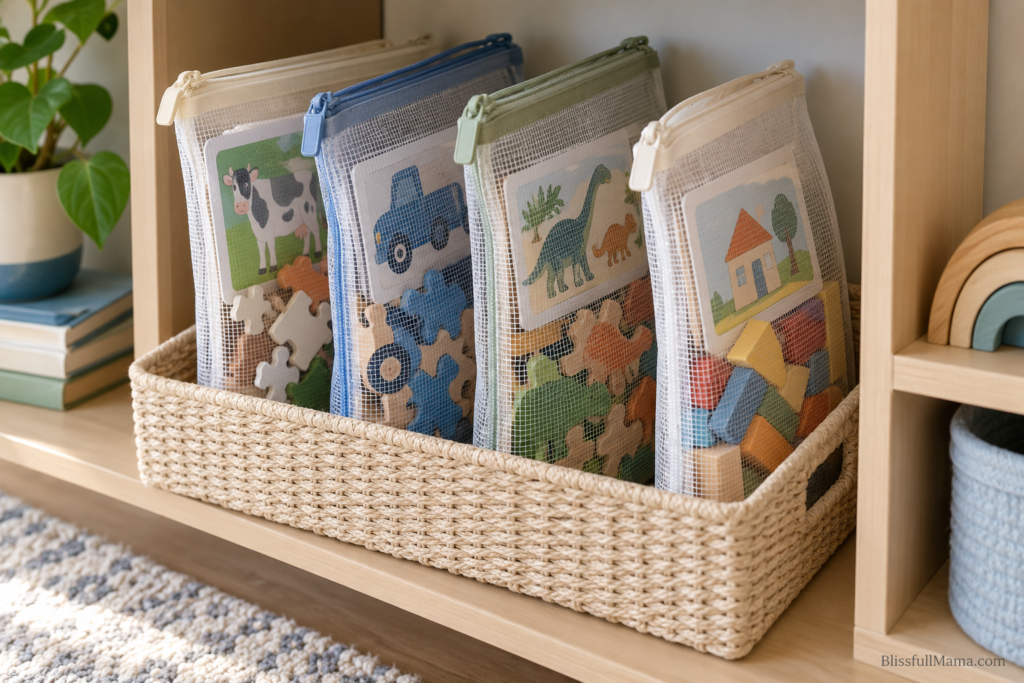
A damaged puzzle box can take up more shelf space than the puzzle inside it needs.
A zippered pouch may work for a small puzzle, matching game, or card activity. Include a picture of the finished puzzle, its instructions, and any useful age information from the packaging.
Stand the pouches upright in one basket, with their labels visible. Check that the zipper opens easily and the pouch is large enough for all the pieces.
(AD) Shop zippered game-storage pouches on Amazon
Keep sturdy boxes when they protect a game board or help organize an activity. You don’t need to repackage everything.
Child’s cleanup job: gather the pieces from the play surface, zip the pouch, and return it upright.
7. Choose a Storage Seat With Pull-Out Bins
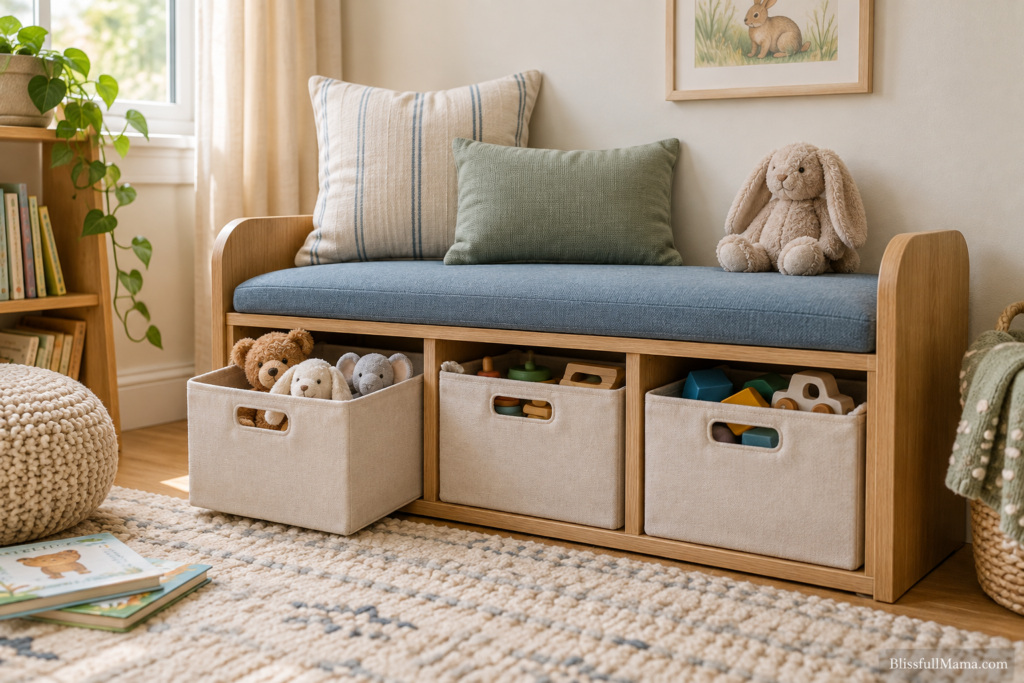
If you need somewhere to sit as well as somewhere to put toys, compare purpose-built children’s storage benches with accessible bins beneath the seat.
I’d look for a seat rated for the intended use, bins that pull out without scraping the floor, and a height that suits the children using it.
This could hold a basket of reading toys, dress-up items, or a small plush collection. Check the seat and storage limits before buying.
(AD) Shop children’s storage benches with bins on Amazon
Use furniture designed for seating. Adding a cushion to an ordinary shelf doesn’t establish that it can hold someone’s weight.
Child’s cleanup job: fill the assigned bin and slide it back into its space.
8. Give Books a Narrow Home Beside the Play Area
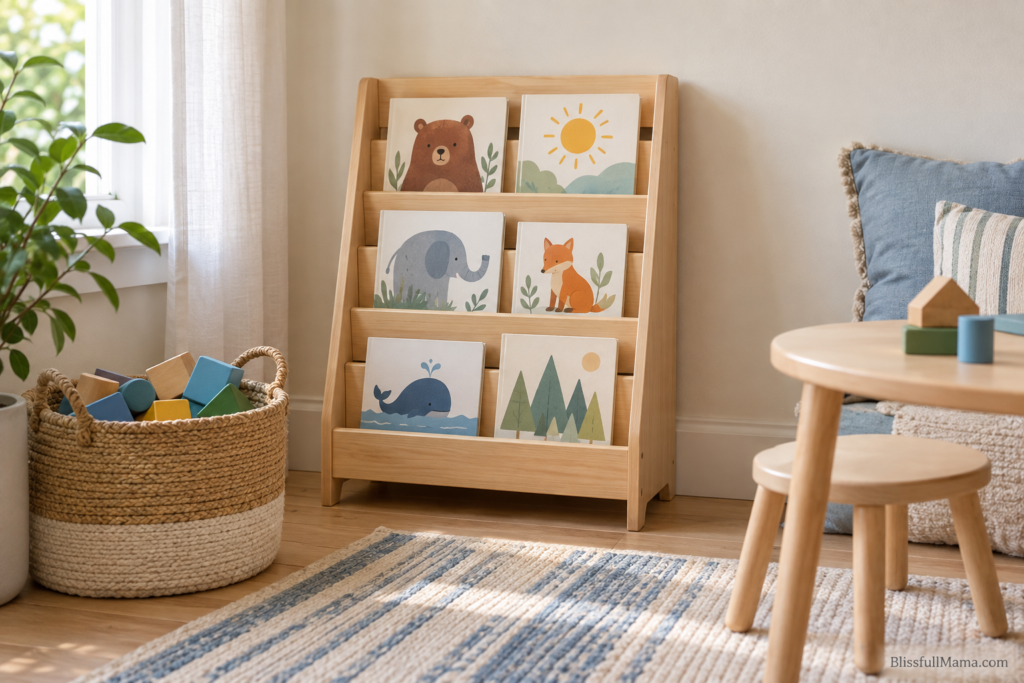
Books can disappear behind toys when both share a deep shelf.
A small front-facing rack makes covers visible. If you already have a suitable shelf, a book basket can also work without adding furniture.
Keep a manageable selection nearby and store the rest elsewhere. Leave space to return a book without forcing it into a tight row.
(AD) Shop narrow children’s book racks on Amazon
Place it where children can reach safely and install or anchor it as directed.
Child’s cleanup job: collect books and return them to the rack or basket.
9. Keep Creative Supplies in a Carry Caddy
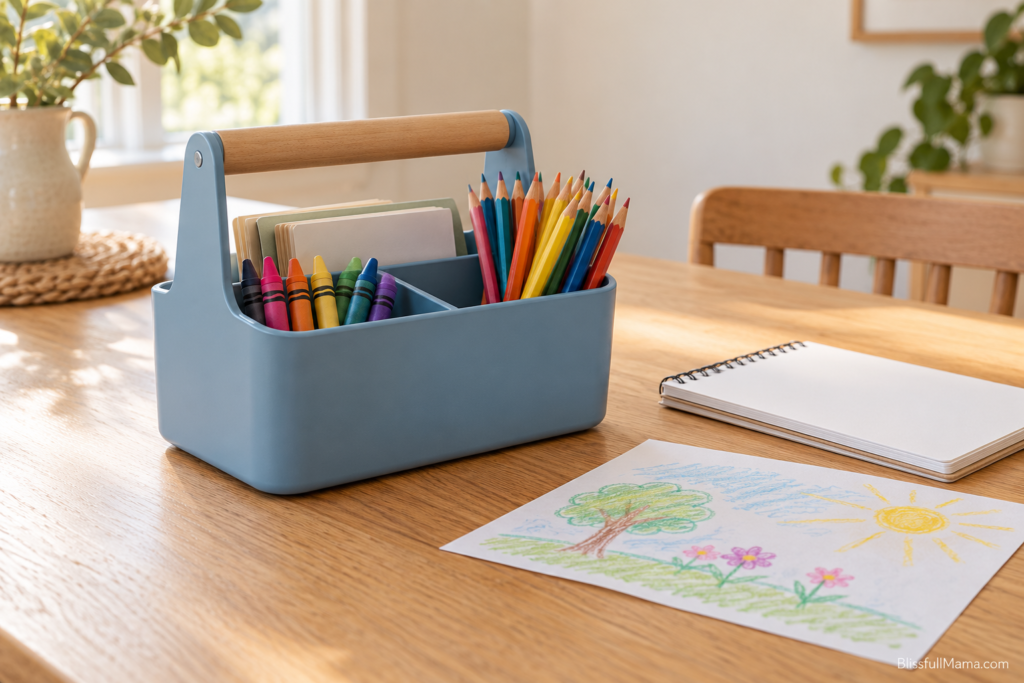
When children draw at the dining table, a small caddy gives the supplies a route back to storage.
Put paper alongside it and use a few easy-to-recognize sections. A caddy that holds crayons and pencils may be enough; the whole craft cupboard doesn’t need to travel to the table.
Choose something light enough to carry when full.
(AD) Shop children’s art-supply caddies on Amazon
An adult can manage scissors, glue, and other supplies according to the children’s ages. If you’re considering a rolling cart for an older child’s hobby supplies, check its stability and follow the loading instructions. I’d keep a carry caddy as the first choice for a small shared area.
Child’s cleanup job: return the drawing tools to their sections and carry the caddy back with help if needed.
10. Use One Closet Shelf for Rotation Toys
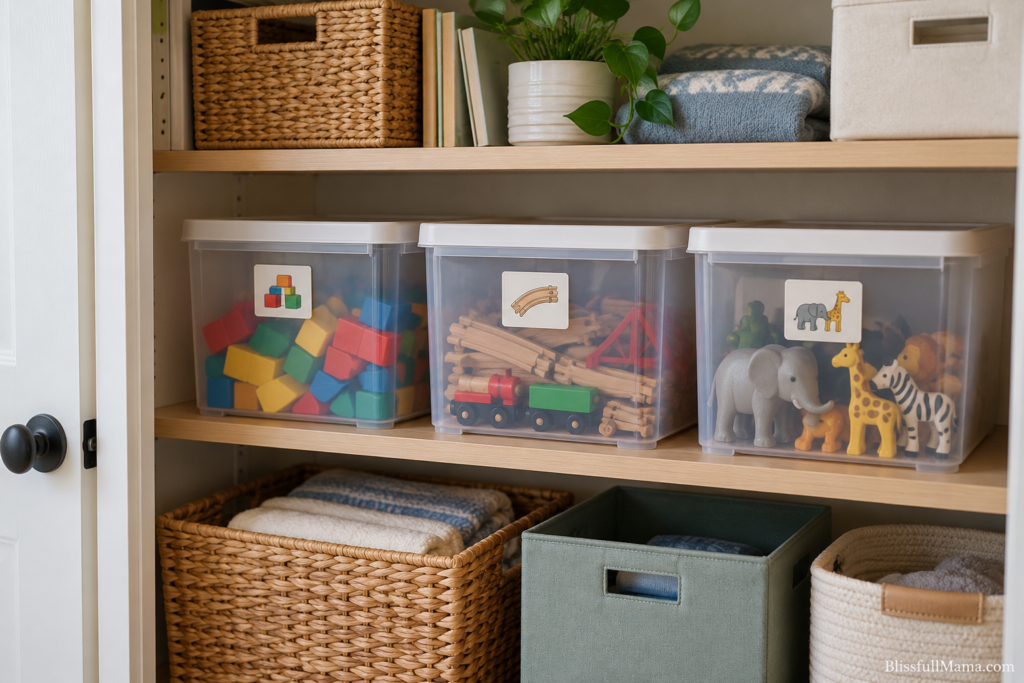
Rotation storage can help when you want to keep an activity without having every toy available at once.
Choose one adult-managed shelf or a limited number of containers. Label the contents so you can find them without unloading the closet.
Keep favorite comfort toys available. For other activities, try swapping one set when the children lose interest or ask for something different.
The storage boundary matters. If the rotation shelf fills up, review its contents before buying more boxes.
(AD) Shop lidded toy-rotation containers on Amazon
Child’s cleanup job: help pack the outgoing activity and choose between suitable options for the replacement. Adults handle lifting and access to stored toys.
For larger play equipment, my indoor active toys for kids guide includes options to compare with the room you have. Decide where the toy will go between play sessions before bringing it home.
11. Reserve a Tray for an Older Child’s Unfinished Build
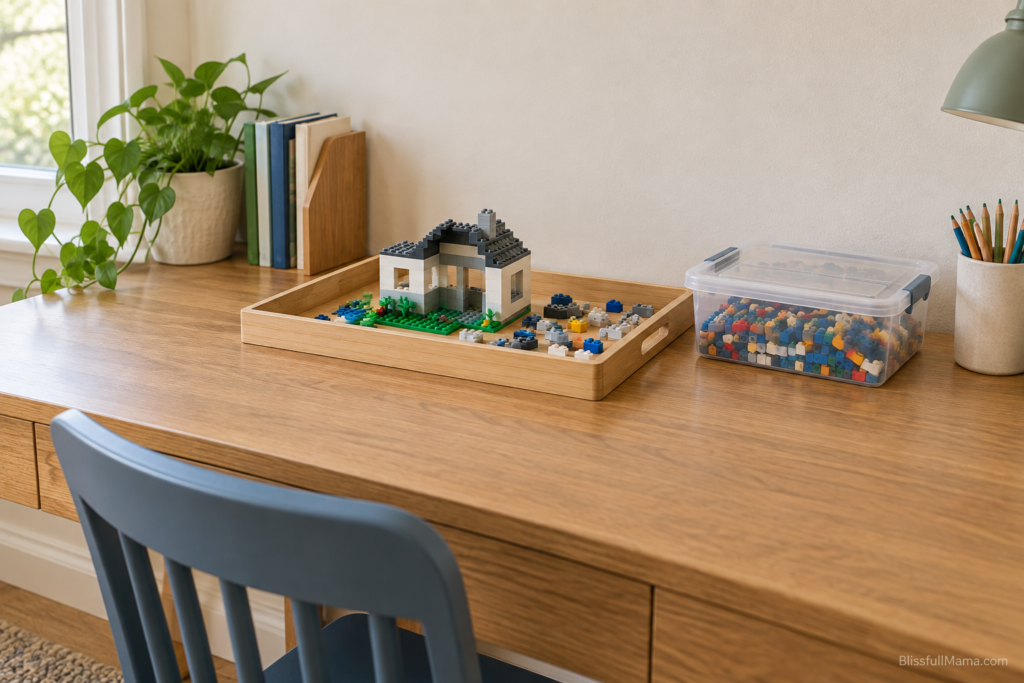
Packing away every piece of an unfinished build can make cleanup feel unfair to the child who worked on it.
A project tray gives that build a defined space. Choose a tray that fits the desk or protected storage spot where the project will stay.
Agree on what happens when it fills. The child might finish a build, photograph it, or choose one project to keep while returning loose pieces.
(AD) Shop shallow building-project trays on Amazon
Keep small-piece projects inaccessible to younger children. Avoid relying on a high shelf alone, especially where a child could climb.
Child’s cleanup job: move the project to its agreed spot and return unused pieces to their container.
12. Keep a Temporary Return Basket for Traveling Toys
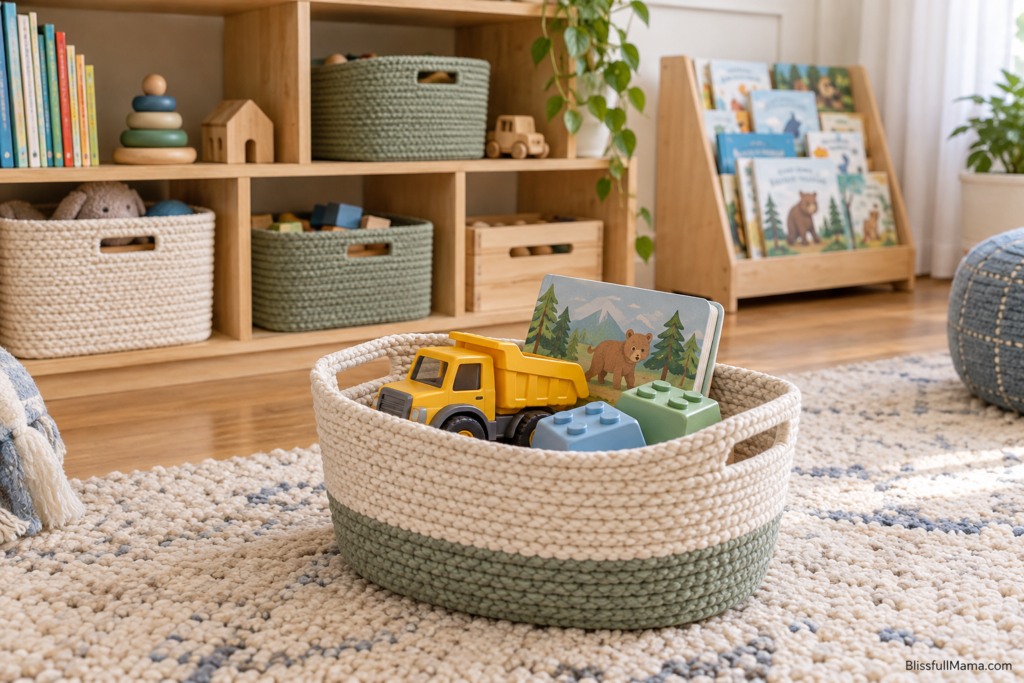
Toys will still move between rooms, even with a good storage setup.
Use one small return basket to collect items that belong elsewhere. Empty it during the family pickup so toys arrive back at their usual homes.
Give a child a manageable delivery job: take the books to their basket or return the chunky vehicles. Adults handle anything unsafe for that child.
If the same toys keep coming back to the return basket, consider moving their permanent home closer to where they’re played with.
Child’s cleanup job: return one category from the basket, then check whether the basket is empty.
This pickup can fit alongside my nightly reset routine for busy moms.
Help Kids Learn Where Everything Goes
Once you choose a setup, attach the picture label and show your child how to use it.
Try “Put the cars beside the car picture” instead of asking for the whole room to be tidied.
With my boys, reminders are still part of cleanup. I’d rather make the job clearer and practice it than expect a new basket to fix that overnight.
A toddler might return a few large toys beside you. A preschooler could collect one familiar category. An older child may be ready to pack away a complete activity.
Adjust the job to what your child can do now. A full bin may be heavier than it looks, and a lid that feels simple to you may need practice.
Practice the Five-Minute Toy Reset
Choose a familiar point in the day, such as before dinner. Give the children a short warning so they have time to finish what they’re doing.
Then follow the same steps:
1. Save one unfinished project in its agreed spot.
2. Give everyone one small cleanup job.
3. Return the toys and their containers.
4. Check the floor together.
Five minutes is a starting point. A big play session may need longer, and younger children may need you beside them throughout.
When you’re finished, point to the completed job: “The vehicles are back in their basket. There’s room to play here tomorrow.”
Get the My Toys Have a Home Kit
The free printable includes a toy-home map, eight picture-and-word labels, a five-minute cleanup checklist, and six small-job cards.
Choose one label for the storage setup you’re trying. Show your child the picture, practice returning that category together, and leave the next basket for another day.