
Back-to-School Supply List by Grade: Preschool Through 5th Grade
As an Amazon Associate, I earn a small commission from qualifying purchases.
Back-to-school shopping becomes a completely different project when you are preparing more than one child.
This year, I am shopping for boys entering second and fourth grade while also organizing preschool supplies for my four-year-old at home. Some items can be reused, some somehow disappeared before the last school year ended, and others need to wait until the teacher confirms the exact color, size, brand, or quantity.
That is the most important thing I have learned: a back-to-school supply list by grade should be a helpful starting point—not a replacement for your child’s official school list.
Use this guide to check what you already own, plan your budget, and buy the safe basics early. Then compare it with the list from your child’s teacher before purchasing classroom-specific folders, notebooks, binders, headphones, or technology.
Table of Contents
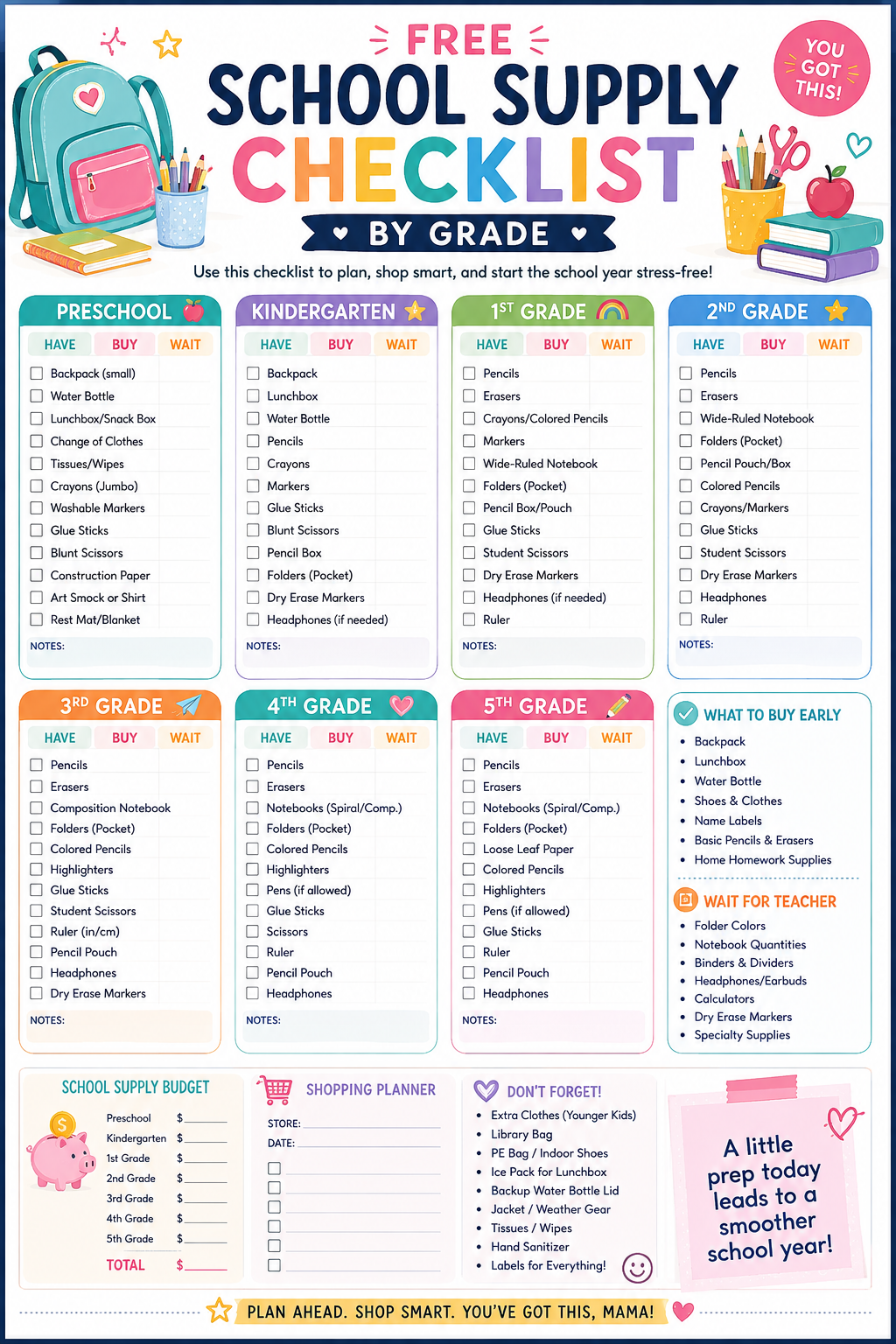
Download the Free School Supply Checklist by Grade
Trying to organize several school lists at once?
Download my free Back-to-School Supply Checklist by Grade to track what you already own, what you still need to buy, and which items should wait until the teacher confirms them.
Download the Free School Supply Checklist
Before You Buy Anything
Before adding new supplies to your cart, check these three things.
1. Read the school’s official list
Teachers may request particular folder colors, notebook sizes, pencil brands, headphone styles, or quantities. Buying everything too early can mean buying it twice.
2. Shop your home first
I always check our drawers, school bins, backpacks, and homework supplies before ordering anything new.
We can often reuse:
- Scissors
- Rulers
- Pencil cases
- Headphones
- Water bottles
- Lunch containers
- Unused notebooks
- Folders that are still in good condition
- Art supplies kept at home
3. Separate school supplies from home supplies
Not every pencil, glue stick, or notebook needs to go to school. I keep a small supply caddy at home for homework so my boys do not need to remove classroom supplies from their backpacks every afternoon.
My guide to creating a simple homework station for kids explains what we keep nearby and how we organize supplies in our small apartment.
Preschool Supply List
Preschool requirements vary widely. Some programs provide almost everything, while others ask families to send art supplies, cleaning products, or a daily lunch.
Common preschool essentials
- Small child-sized backpack
- Leak-resistant water bottle
- Lunchbox or snack container
- Complete change of clothes in a labeled bag
- Comfortable shoes your child can manage
- Waterproof name labels
- Tissues or wipes, when requested
Supplies the teacher may request
- Jumbo crayons
- Washable markers
- Glue sticks
- Blunt-tip scissors
- Construction paper
- Paint or art smock
- Rest mat or small blanket
Do not assume your preschooler needs every craft supply on this list. Ask whether classroom supplies are shared before purchasing large multipacks.
(AD) Shop a child-sized preschool backpack
(AD) Shop waterproof labels for school gear
Kindergarten Supply List
Kindergarten supplies need to be simple enough for little hands to open, carry, and put away independently.
Common kindergarten supplies
- Standard or beginner-size pencils
- Large erasers
- Crayons
- Washable markers
- Glue sticks
- Blunt-tip scissors
- Plastic pencil box
- Pocket folders
- Dry-erase markers, when requested
- Child-sized headphones, when requested
Personal school gear
- Elementary-size backpack
- Lunchbox
- Water bottle
- Ice pack
- Change of clothes
- Labels for removable items
Wait for the teacher before buying folders or notebooks in specific colors.
(AD) Shop an easy-open kindergarten pencil box
(AD) Shop adjustable children’s headphones
First-Grade Supply List
First grade usually adds more writing, folders, and independent responsibility, but children still need supplies that are easy to identify and manage.
Common first-grade supplies
- Sharpened number-two pencils
- Large erasers
- Crayons or colored pencils
- Washable markers
- Wide-ruled notebooks
- Pocket folders
- Pencil box or zippered pouch
- Glue sticks
- Student scissors
- Dry-erase markers
- Headphones, when requested
Label the headphones, pencil case, lunchbox, water bottle, and backpack. Small items can become difficult to identify once several children own the same style.
Second-Grade Supply List
My second grader needs more writing supplies than he did in first grade, but he still does best with a simple system. Too many loose supplies make it harder, not easier, for him to find what he needs.
Common second-grade supplies
- Sharpened number-two pencils
- Erasers
- Wide-ruled composition notebooks
- Pocket folders
- Pencil box or pouch
- Colored pencils
- Crayons or markers
- Glue sticks
- Student scissors
- Dry-erase markers
- Headphones
Items to confirm first
- Exact number of notebooks
- Folder colors
- Binder requirements
- Personal pencil sharpener
- Highlighters
- Classroom cleaning supplies
(AD) Shop a durable zippered pencil pouch
Third-Grade Supply List
Third graders begin managing more papers and subjects, so organization becomes more important.
Common third-grade supplies
- Number-two pencils
- Erasers
- Composition notebooks
- Pocket folders
- Colored pencils
- Highlighters
- Glue sticks
- Student scissors
- Ruler with inches and centimeters
- Pencil pouch
- Headphones
Wait for the teacher before buying
- Binder and divider sizes
- Loose-leaf paper
- Pens
- Planner
- Calculator
- Device case or charger
A small amount of color coding can help. Give each subject a folder or notebook color rather than buying everything in one identical design.
Fourth-Grade Supply List
For my fourth grader, the biggest difference is organization. He needs fewer basic craft supplies than he did in the early grades, but he has more notebooks, folders, longer assignments, and papers to keep track of.
Common fourth-grade supplies
- Number-two pencils
- Good erasers
- Composition or spiral notebooks
- Pocket folders
- Colored pencils
- Highlighters
- Black or blue pens, when allowed
- Ruler
- Glue sticks
- Scissors
- Zippered pencil pouch
- Headphones
Items to confirm first
- Binder size
- Dividers
- Wide- or college-ruled paper
- Planner
- Calculator
- Chromebook or tablet accessories
Do not purchase expensive technology or a calculator unless the school confirms the exact model required.
(AD) Shop a binder-compatible pencil pouch
(AD) Shop durable over-ear school headphones
Fifth-Grade Supply List
Fifth-grade students may begin using more subject-specific notebooks and organizational tools as they prepare for middle school.
Common fifth-grade supplies
- Pencils and erasers
- Pens, when allowed
- Highlighters
- Composition or spiral notebooks
- Pocket folders
- Loose-leaf paper
- Ruler
- Colored pencils
- Pencil pouch
- Headphones
Ask the teacher about
- Binders and dividers
- Planner
- Calculator
- Index cards
- Sticky notes
- USB drive
- Laptop or tablet sleeve
- Specific notebook quantities
Resist the temptation to buy every organizational tool at once. Start with the teacher’s system and add extras only when your child needs them.
School Gear You Can Usually Buy Early
Although classroom supplies vary, these personal items can usually be purchased before the final teacher list arrives.
Backpack
Choose a backpack that fits your child’s body and holds folders without overwhelming them. Younger children generally need a smaller bag than older elementary students.
For specific options, read my guide to the best backpacks for elementary boys that actually last all school year.
Lunchbox
Look for a lunchbox your child can open independently and that fits inside, or attaches securely to, the backpack.
Water bottle
Choose a leak-resistant bottle that fits the backpack’s side pocket. Practice opening and closing it before school starts.
Name labels
Label items that leave the house, especially lunchboxes, water bottles, jackets, headphones, pencil cases, and reusable containers.
Shoes and school clothes
Check fit before shopping. Children can outgrow shoes and uniform pieces surprisingly quickly over summer.
My guide to organizing kids’ clothes for school shows how to sort sizes and prepare complete outfits for the week.
What to Buy Now, and What Should Wait
Usually safe to buy early
- Backpack
- Lunchbox
- Water bottle
- Labels
- Basic pencils
- Erasers
- Shoes
- School clothes
- Extra home homework supplies
Wait for the teacher
- Folder colors
- Notebook quantities
- Binder sizes
- Dividers
- Headphones or earbuds
- Calculators
- Dry-erase markers
- Technology accessories
- Classroom tissues, wipes, or sanitizer
- Specialty art supplies
This one step can save money and prevent a second shopping trip.
How I Organize Shopping for Several Kids
When I am shopping for several boys, I do not place every item into one giant pile.
I create a separate list for each child, then divide it into:
- Already own
- Buy now
- Wait for teacher
- Clothing and shoes
- Lunch gear
I also assign each child a color when possible. Their folders, labels, or storage pouches do not need to match perfectly, but color coding helps everyone identify belongings quickly.
When orders arrive, I place each child’s supplies in a separate bag or basket until it is time to label and pack them.
For everything beyond shopping, including forms, routines, clothes, lunches, and first-day preparation, use my complete back-to-school checklist for moms of elementary kids.
Supplies Moms Often Forget
These are the items I am most likely to remember only after school begins:
- Replacement water-bottle lid or straw
- Extra lunch ice pack
- Headphones labeled with the child’s name
- Library book bag
- Change of clothes for younger children
- PE bag or indoor shoes, when required
- Spare pencils and glue sticks for home
- Weather-appropriate jacket
- Tissues or hygiene supplies requested by the teacher
- Backpack or lunchbox labels
Complete emergency forms through the school’s official system. Avoid placing visible personal contact information in an outer backpack pocket.
Create a Midyear Restock Bin
School supplies do not only disappear in August.
Keep a small home bin with:
- Pencils
- Erasers
- Glue sticks
- One spare folder
- Notebook paper
- Dry-erase markers
- An extra ice pack
- A few lunch containers
Check the bin at the end of each quarter rather than waiting for a child to announce at bedtime that every pencil has vanished.
Frequently Asked Questions
When should I start back-to-school shopping?
Start by checking what you already own and buying personal gear once you know school dates and requirements. Wait for the teacher’s official list before purchasing classroom-specific quantities or colors.
Do I need to buy every item on a general grade-level list?
No. This guide is a planning tool. Your child’s official school or teacher list should always take priority.
Is it cheaper to buy supplies online or in stores?
It depends on the item and current promotion. Compare unit prices, shipping costs, and pack sizes. Shopping in person can also help when you need to check backpack, lunchbox, clothing, or shoe sizes.
How can I avoid overspending?
Reuse supplies, separate needs from optional items, wait for the official list, and avoid large multipacks unless the quantity will genuinely be used.
Final Thoughts
Back-to-school shopping feels much lighter when you stop trying to buy everything in one day.
Begin with what you already own. Buy the personal essentials your child can use regardless of teacher. Then wait for the official classroom list before purchasing the rest.
Once the shopping is finished, my realistic back-to-school routine for busy moms can help you turn all that new gear into a morning and evening system that actually works.
And when you need lunch inspiration, save these healthy lunchbox ideas kids will actually eat for the first weeks of school.
5 Comments