
Fall Decluttering Checklist: 50 Things to Get Rid of Before Cozy Season
As an Amazon Associate, I earn from qualifying purchases at no additional cost to you.
My fall decluttering checklist is less about creating a perfectly organized home and more about making everyday family life feel lighter before cozy season arrives. With four boys, limited storage, school supplies coming through the door, clothes constantly being outgrown, and toys migrating from the playroom into every other room, clutter builds up surprisingly fast in our apartment.
The hardest part for me is not recognizing the clutter. It is deciding what should go when part of me keeps thinking, What if we need this later? I can also spend so much time wondering where to begin that I use up the small window I had available without actually finishing anything.
That is why this is not an unrealistic “declutter your entire house this weekend” plan. These are 50 specific things you can sort in short, 15-minute sessions. Choose one category, set a timer, and stop when it rings. Even removing five unnecessary things creates more breathing room than waiting for a free weekend that may never come.
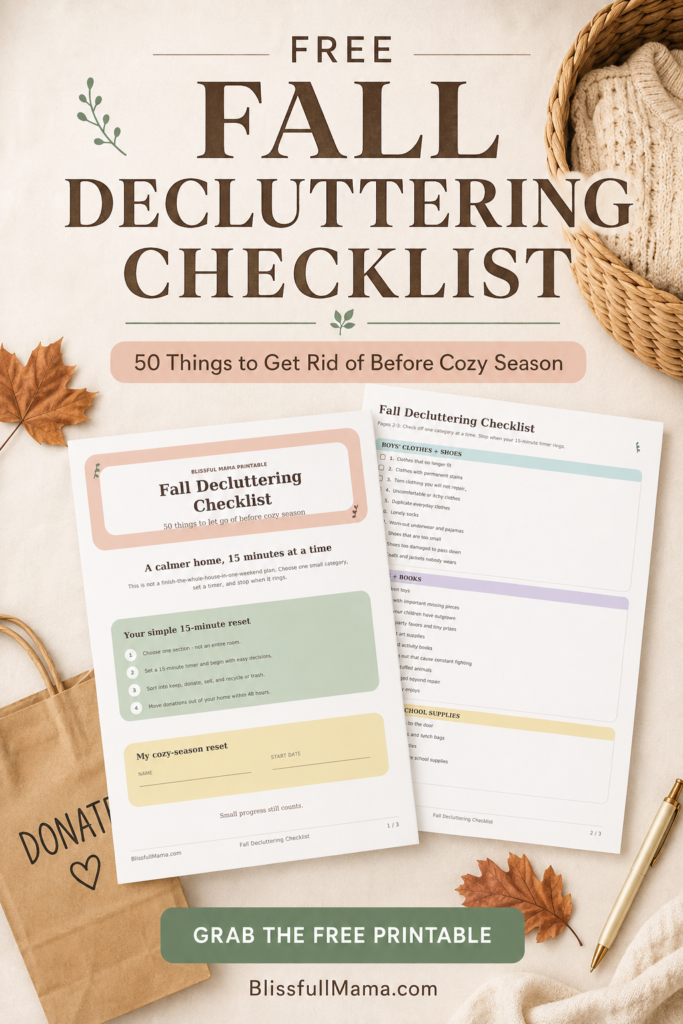
Free Fall Decluttering Checklist: Download the printable version of this checklist and work through it at your own pace. Keep it on the refrigerator, check off one small category each day, and enjoy watching your home feel lighter before fall.
Before You Begin: Use the Four-Container Method
Before opening a closet or pulling every toy onto the floor, gather four containers, baskets, or bags and label them:
- Keep
- Donate
- Sell
- Trash or recycle
I also recommend keeping a small “decide later” basket, but only one. This gives you somewhere to place items that genuinely require more thought without allowing indecision to stop the entire session. Write a date on the basket. If you have not needed or thought about those items within 30 days, you will probably feel more comfortable letting them go.
My other problem is allowing donation bags to sit by the door for far too long. To prevent that, choose the donation destination before you begin and give yourself a deadline. Put the bags directly into the car or schedule a local pickup within 48 hours. Decluttering is not finished until the unwanted items have actually left your home.
Boys’ Clothes and Shoes
Children’s clothing is one of the fastest-growing clutter categories in our home. With four boys ages 2, 4, 7, and 9, I am constantly deciding what can be passed down, what has survived its final child, and what is taking up valuable drawer space for no good reason.
1. Clothes That No Longer Fit
Check waistbands, sleeve lengths, pajama legs, and shirts that have become too short. Do not keep uncomfortable clothes in active drawers simply because they can technically still be squeezed on.
2. Clothes With Permanent Stains
A small stain on play clothes is one thing. A drawer filled with shirts nobody wants to wear is another. Keep a sensible number of messy-play outfits and recycle or discard the rest.
3. Torn Clothing You Will Not Repair
Be honest about your available time. If an item has been waiting for a repair for months and replacing it would be easier than fixing it, it does not need to take up space indefinitely.
4. Uncomfortable or Itchy Clothes
If your child repeatedly avoids an item because it feels scratchy, stiff, tight, or bulky, keeping it will not make him wear it. This is especially important for fall layers that need to be comfortable enough for active children.
5. Duplicate Everyday Clothes
You may need several school shirts or sweatpants, but you probably do not need every duplicate accumulated over the years. Keep the best-fitting, most comfortable pieces that work with your real laundry routine.
6. Lonely Socks
Collect every unmatched sock in one place and give yourself one final attempt to find its partner. Recycle the remaining singles or save only a few for cleaning jobs and simple crafts.
7. Worn-Out Underwear and Pajamas
Remove anything stretched, torn, too small, or uncomfortable. Clearing these out also makes it easier to see what your children genuinely need before colder nights arrive.
8. Shoes That Are Too Small
Children’s shoes can look perfectly usable while no longer fitting comfortably. Have each child try on his current sneakers, school shoes, rain boots, and dress shoes rather than guessing by looking at them.
9. Shoes That Are Too Damaged to Pass Down
Not every pair needs to be saved for a younger sibling. If the soles are worn unevenly, the support is gone, or the shoes smell unpleasant even after cleaning, it is time to let them go.
10. Coats and Jackets Nobody Wears
Before buying new fall outerwear, check what you already own. Remove jackets that are outgrown, too bulky, missing working zippers, or repeatedly rejected by your children.
A helpful rule for hand-me-downs: Only save items that are in good condition, that you would be happy to dress the younger child in, and that will fit within a reasonable time. Label one container with the size and season instead of keeping several mystery bags.
Toys, Games, and Books
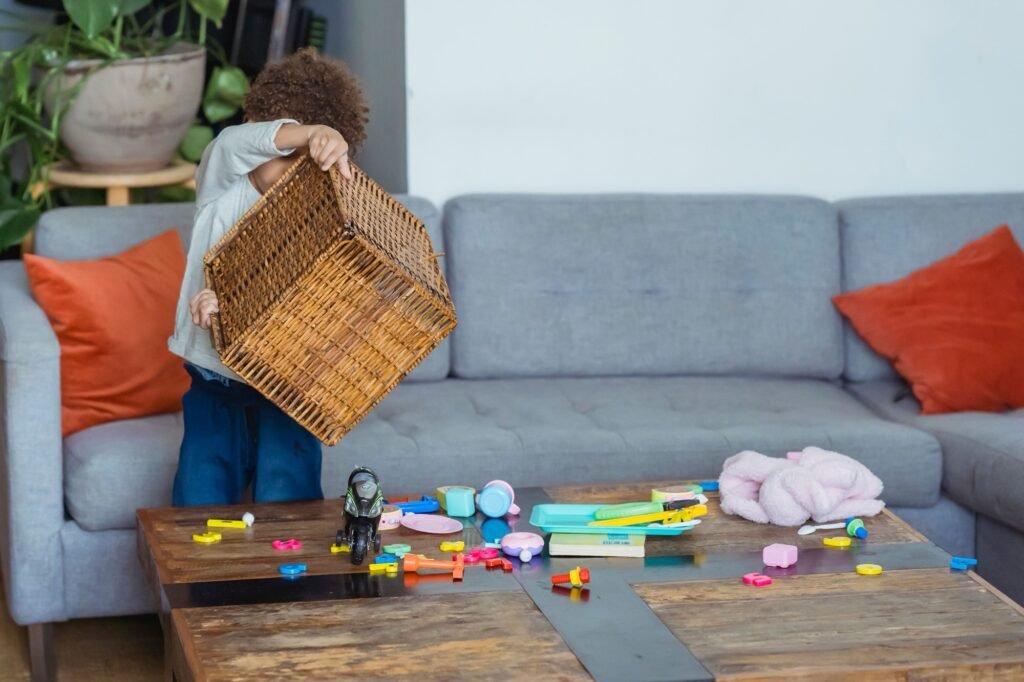
Toy decluttering can become emotional, especially when children suddenly rediscover a toy the moment they see it in the donation pile. I prefer working in smaller categories instead of emptying the entire playroom at once. A huge pile creates more chaos and makes it harder to finish before my toddler starts “helping.”
11. Broken Toys
Discard toys with sharp edges, exposed batteries, cracked plastic, loose wires, or damage that makes them unsafe. If you have not repaired an ordinary broken toy after several months, you probably will not.
12. Toys With Important Missing Pieces
A puzzle missing a piece, a board game that cannot be played, or a building set missing a necessary part usually creates frustration rather than meaningful play.
13. Toys Your Children Have Outgrown
Baby rattles, basic stacking toys, and toddler push toys may still be in good condition, but they do not all need to remain accessible once your youngest has moved past them.
14. Cheap Party Favors
Clear out tiny plastic toys, novelty erasers, mini puzzles, and prizes that were exciting for ten minutes but have not been touched since.
15. Dried-Out Art Supplies
Test markers, glue sticks, paint pots, and modeling dough. Removing unusable supplies makes creative time easier because the boys can immediately find materials that actually work.
16. Completed Activity Books
Recycle coloring books, sticker books, school practice books, and puzzle pads that are mostly completed or too damaged to use.
17. Toys That Encourage Constant Fighting
You do not need to remove every popular toy just because your children argue over it. However, if a low-value toy repeatedly causes conflict and rarely supports happy play, it may not deserve permanent space in your home.
18. Unwanted Stuffed Animals
Ask each child to choose his genuine favorites instead of asking which ones he wants to get rid of. Choosing what to keep often feels easier and more positive.
19. Books That Are Damaged Beyond Repair
Recycle books with missing pages, extensive scribbling, mold, or damage that prevents them from being enjoyed. Repair only the special books you realistically intend to fix.
20. Books Nobody Enjoys
A book does not have to be damaged to leave your home. Donate duplicates, stories your children consistently reject, and books they have completely outgrown so another family can enjoy them.
Entryway and School Supplies
Our entryway can become a landing zone for shoes, jackets, backpacks, water bottles, papers, and all the little items four children bring home. Clearing this area before fall makes school mornings easier because the things we genuinely need are no longer buried under everything else.
21. Outgrown Shoes by the Door
Only current, frequently worn shoes should occupy valuable entryway space. Move special-occasion pairs elsewhere and donate outgrown ones promptly.
22. Broken Backpacks and Lunch Bags
Discard bags with broken zippers, torn straps, peeling linings, or lingering odors that cannot be cleaned. Keeping them as “backups” rarely helps if they are not functional.
23. Leaking Water Bottles
Match every bottle with its lid and test it over the sink. Recycle damaged bottles and remove any with missing seals, cracked straws, or odors that will not disappear.
24. Dried-Out or Duplicate School Supplies
Test pens, markers, glue sticks, and highlighters. Keep a reasonable supply of usable extras in one labeled container rather than scattering them across several rooms.
25. Old School Papers
Keep meaningful artwork, report cards, and a few samples that show each child’s progress. Recycle routine worksheets, outdated notices, duplicate practice pages, and paperwork you no longer need.
Kitchen and Pantry
The kitchen is one of those spaces that can look reasonably tidy while hiding an impressive amount of clutter behind closed doors. Expired food, duplicate condiments, lidless containers, and gadgets we never use quietly take up the space we need for everyday meals and school snacks.
I prefer to declutter one small area at a time: one pantry shelf, one drawer, or one cabinet during each 15-minute session. Pulling everything out of the kitchen at once would create a bigger mess than I have time to finish.
26. Expired Pantry Food
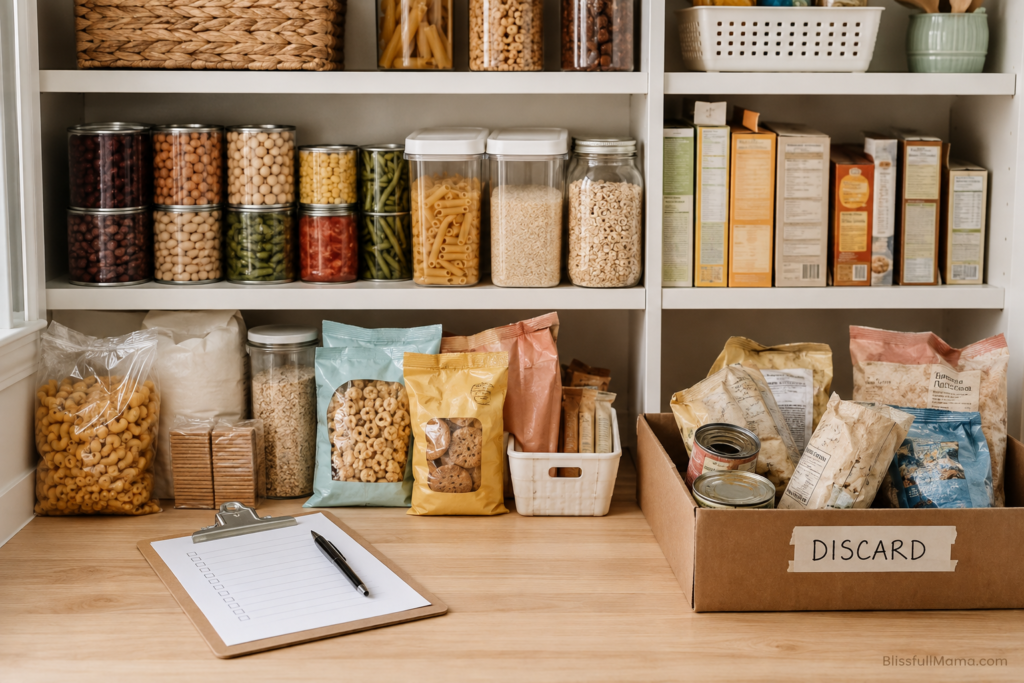
Check canned goods, sauces, baking ingredients, spices, and packaged foods. Look at dates, but also check for damaged packaging, unusual smells, moisture, pests, or signs that the food is no longer safe.
27. Stale Snacks and Open Packages
Remove stale crackers, forgotten cereal, crushed snack bags, and foods your children tried once but refuse to eat. If something is still safe but your family will not use it, offer it through a local community-sharing group rather than letting it expire.
28. Duplicate Condiments
Combine duplicates when it is safe and appropriate, then place bottles that need to be used first toward the front. Toss expired sauces and nearly empty containers that have been living in the refrigerator door for months.
29. Food Your Family Never Eats
Sometimes we buy an ingredient for a recipe, discover nobody likes it, and then keep it because throwing away food feels wasteful. If it is unopened and safe, donate it before it expires. Keeping unwanted food until it becomes unusable does not save it.
30. Kitchen Gadgets You Never Use
Declutter duplicate peelers, specialty cutters, extra measuring cups, unused appliances, and gadgets that seemed helpful but made cooking more complicated. In a small kitchen, an item should earn its storage space by making real life easier.
31. Lidless Containers and Damaged Food Storage
Match every container with its lid. Recycle pieces that no longer have a match and remove containers that are cracked, badly stained, warped, or no longer seal properly.
Bathroom and Beauty Products
Beauty products are a difficult category for me because I can easily convince myself that I will use something eventually. Maybe the shade will work in a different season, or perhaps I will suddenly start using the complicated product that has been sitting untouched for a year.
But keeping products I do not enjoy does not help me practice self-care. It only makes the products I actually like harder to find.
32. Expired or Unneeded Medication
Check expiration dates on prescription medicines, pain relievers, children’s medication, vitamins, creams, and first-aid products. Keep all medication out of children’s reach while sorting.
Do not automatically pour medicine down the sink or place it in the trash. The FDA recommends using a drug take-back location or prepaid mail-back envelope for most unused or expired medications. Follow the product instructions and current local guidance for safe disposal. You can read the FDA’s medication disposal guidance before completing this category.
33. Expired Makeup
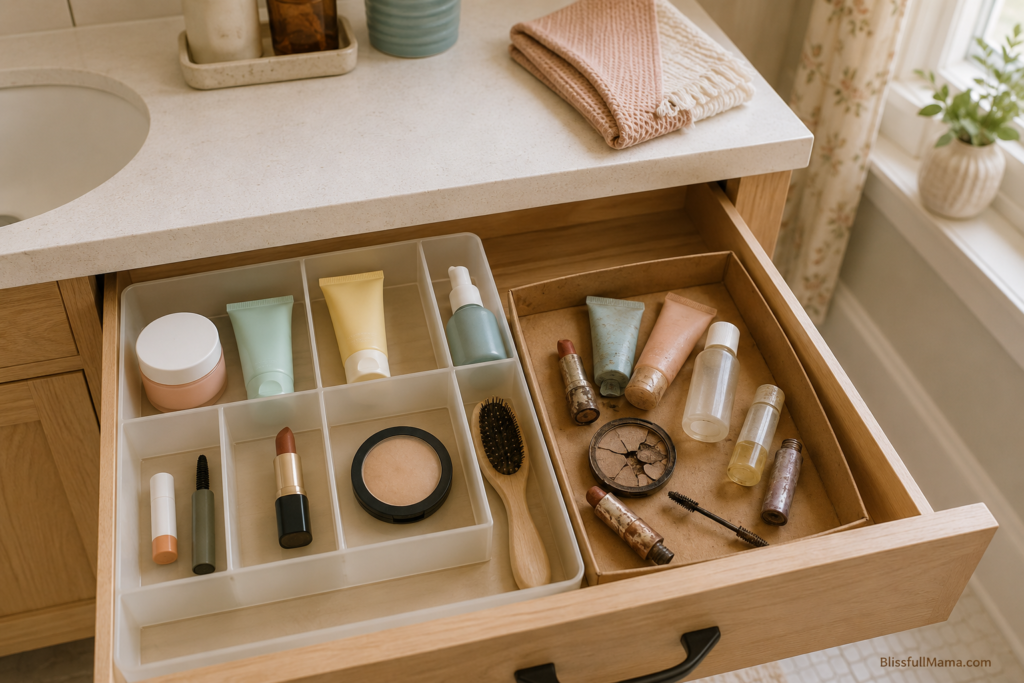
Check products for changes in color, texture, separation, smell, or performance. Let go of old mascara, dried eyeliner, crumbling powders, and anything you no longer feel comfortable applying to your skin or eyes.
34. Nearly Empty Bottles
Use up products that have one or two applications remaining, then recycle or discard the containers according to your local rules. Empty bottles taking up shower and cabinet space create unnecessary visual clutter.
35. Products That Irritate Your Skin or Hair
If a product caused itching, breakouts, dryness, or discomfort, you do not need to keep trying to make it work. Your bathroom should not become storage for products you cannot comfortably use.
36. Beauty Products You Simply Dislike
A product does not have to be expired or irritating to leave your home. If you dislike the scent, texture, color, or results, keeping it will not turn it into the right product for you.
Unopened products may be suitable for donation, depending on the organization’s rules. Do not donate opened cosmetics unless a specific program confirms that it accepts them.
37. Worn Towels and Washcloths
Keep enough towels for your real family needs and laundry schedule, but remove those that are badly frayed, permanently stained, rough, or no longer absorbent. A few old towels can become cleaning cloths, but you probably do not need an entire stack.
Bedrooms, Closets, and Linens
My bedroom can easily become the place where items go when I do not know where else to put them. Clothes to sort, products to try, bags to donate, and things I want to hide before someone visits somehow end up competing with the calm space I want my bedroom to be.
If you feel the same way, do not attempt your entire bedroom in one session. Start with one nightstand, drawer, shelf, or small section of the closet.
38. Your Own Uncomfortable Clothes
Remove clothes that pinch, itch, ride up, fall down, or make you feel uncomfortable throughout the day. A smaller collection of clothes you can genuinely wear is more useful than a crowded closet full of frustrating options.
39. Clothes That No Longer Fit Your Current Life
You do not have to get rid of everything that represents a different size or season of life. However, keeping large quantities of clothes that make you feel guilty every time you open the closet is not helpful.
Save a small, intentional selection if you genuinely want to. Donate pieces you would not choose even if they fit perfectly tomorrow.
40. Unused Handbags, Accessories, and Costume Jewelry
Remove damaged bags, tangled or broken jewelry, uncomfortable scarves, and accessories you consistently skip. Keep the pieces that work with your current wardrobe and everyday mom life.
41. Old or Uncomfortable Bedding
Declutter sheets that slip off the mattress, scratchy blankets, flattened pillows, and bedding your family avoids using. Keep one practical backup set per bed rather than multiple incomplete or uncomfortable sets.
42. Unmatched Linens
Match sheet sets and pillowcases, then fold each set together. Donate usable extras and remove lone pieces that do not fit any bed in your home.
Once you’ve cleared out the products you no longer use, my fall self-care routine for busy moms has simple ideas for making a little more time for yourself during the season.
Paper, Cords, and Forgotten Household Clutter
This category is easy to ignore because each individual item seems too small to matter. A receipt here, an unidentified cable there, and a few dead batteries do not look like much. When they collect in every drawer, however, they make the whole home feel harder to manage.
43. Old Mail, Receipts, and Paperwork
Recycle outdated school notices, envelopes, expired coupons, old shopping lists, and receipts you no longer need. Shred documents containing sensitive financial, medical, or identifying information.
Keep important paperwork in one defined location instead of several “safe places” that are impossible to remember later.
44. Manuals You Can Access Online
Recycle manuals for products you no longer own. For products you still use, check whether the manual is available online before letting go of the paper copy. Keep documents that contain unique warranty or purchase information you may need.
45. Mystery Cords and Broken Electronics
Match chargers and cables with the devices they belong to. Remove damaged cords, chargers for devices you no longer own, and electronics that have been waiting indefinitely for a repair.
Use an appropriate electronics recycling program rather than placing electronic waste in ordinary household trash.
46. Dead and Corroded Batteries
Collect loose batteries carefully and keep them away from children. Disposal requirements depend on the battery type and where you live.
The EPA advises that lithium, button-cell, coin, and rechargeable batteries should not go into household trash or curbside recycling. Terminals may need to be covered with nonconductive tape or batteries individually bagged before being taken to an appropriate collection site. Check the EPA household battery guidance and your local waste authority.
Seasonal Décor and “Just in Case” Clutter
I love the idea of making our home feel cozy for fall, but bringing out seasonal décor before clearing unwanted items can make a small home feel more crowded. I want a few warm, intentional touches—not another collection of objects that must be moved every time I clean.
47. Broken Seasonal Decorations
Discard decorations with broken parts, exposed wires, missing pieces, or damage that makes them unsafe. If you have not repaired an ordinary decoration since last fall, decide whether it is genuinely worth carrying into another season.
48. Fall Décor You No Longer Love
Donate decorations that no longer suit your home, require too much work to display, or make the room feel cluttered. You do not need to use something every year simply because you already own it.
Once you have created some breathing room, use my guide to cozy fall home essentials to choose a few intentional touches without overfilling your home again.
49. Empty Organizers and Unused Storage Containers
A basket or bin is not automatically useful just because it is an organizing product. Donate containers that do not fit your shelves, have no clear purpose, or create an excuse to keep more clutter.
Declutter first and organize second. Otherwise, it is easy to spend money finding attractive ways to store things your family does not need.
50. The “I Might Need It Someday” Items
This is the hardest category because it can include almost anything: duplicate kitchen tools, extra bags, old clothes, unused toys, spare décor, and products we are afraid to waste.
Ask yourself:
- Have I used this within the past year?
- Would I remember that I own it if I needed it?
- Would I choose this item again today?
- Is it difficult or expensive to replace?
- Am I keeping it because it is useful or because I feel guilty?
- Is this item worth the space and mental energy it requires?
If you are still unsure, place the item in your dated “decide later” container. Revisit it after 30 days instead of allowing it to return silently to the same crowded drawer.
Helpful Decluttering and Organization Tools
You do not need to purchase new organizers to complete this checklist. Shopping before decluttering can actually create more clutter. However, once you know exactly what you are keeping, a few practical tools can help maintain the progress.
- Reusable donation bags: These (AD) extra-large zippered moving and donation bags have handles and backpack straps, which can make it easier to remove donations from the house instead of leaving open piles by the door.
- Collapsible lidded bins: These (AD) large fabric storage bins with lids can work for carefully selected hand-me-downs or seasonal linens. Because they fold, they do not need to occupy as much space when empty.
- Home label maker: The (AD) Brother P-touch home label maker is designed for labeling spaces such as closets, pantries, children’s items, and playrooms. Labels are especially useful when several children need to return items to the correct place.
- Larger investment for limited closet space: (AD) heavy-duty rolling garment rack with a basket and shoe shelf may help families who genuinely lack hanging space. Measure carefully before ordering because a large rack can overwhelm a small room if it does not have a specific purpose.
You can find more practical home and family organization products in my Blissful Mama Amazon Storefront.
Product availability can change. Choose organizers only after measuring your space and deciding exactly what they need to hold.
How to Finish This Fall Decluttering Checklist Without Burning Out
You do not need to declutter all 50 categories in one weekend. A realistic routine for a busy mom might look like this:
- Choose one category.
- Set a timer for 15 minutes.
- Fill one donation or trash bag.
- Put the items you are keeping back where they belong.
- Remove the bag from the room immediately.
- Check the category off your printable.
Some days, you may finish three categories. Other days, your 15 minutes may be interrupted by a toddler, homework questions, spilled snacks, or a child who suddenly needs the exact toy you are holding. That does not mean the system failed. It means you are decluttering in a real family home.
After removing the excess, use my ultimate fall deep cleaning checklist to clean each newly cleared space without trying to complete your entire home in one exhausting day.
If papers, backpacks, and pencils are your biggest problem, these school supply organization hacks will help you create simple systems for the items that remain.
Frequently Asked Questions
When should I start fall decluttering?
Start fall decluttering before you bring out seasonal decorations, heavier bedding, jackets, and other cool-weather items. Late August through early October works well for many families, but you can use this checklist whenever your home begins to feel crowded. The best time is simply when you are ready to complete one small area.
How do I start decluttering when I feel overwhelmed?
Choose one contained category that you can finish in approximately 15 minutes, such as expired makeup, children’s shoes, or one pantry shelf. Avoid emptying an entire room at once. Completing one small category gives you visible progress without creating another overwhelming mess.
What should I get rid of first when decluttering?
Begin with items that require very little emotional decision-making: expired food, broken toys, dried-out markers, empty bottles, damaged clothing, and products that are no longer safe to use. Easy decisions help you build momentum before you handle sentimental or “I might need it someday” items.
How do I decide whether to keep or donate something?
Ask whether you use it, like it, and have a realistic place to store it. Consider whether you would buy it again today and whether replacing it later would be genuinely difficult or expensive. If you are still unsure, place it in a dated container and reconsider it after 30 days.
How can I stop donation bags from sitting in my house?
Choose the donation destination before you begin decluttering. Place completed bags directly in your car or schedule a collection within 48 hours. Treat removing the bags as the final step of the decluttering session rather than a separate job you will handle someday.
Final Thoughts
A cozy home is not a home filled with more baskets, blankets, candles, and seasonal decorations. It is a home where the things your family genuinely uses are easy to find, easy to put away, and not buried beneath items you are keeping out of fear or guilt.
I am working on reminding myself that letting go of something does not mean buying it was a mistake. Sometimes an item served us during one season and is no longer right for the next one. Passing it along can create space for another family while giving us more room to live comfortably in our own home.
Start with one drawer. Set the timer for 15 minutes. Fill one bag. Then stop and notice the difference.
Small progress still counts, and 50 small decisions can completely change how your home feels before cozy season begins.
Ready to make your home feel lighter before cozy season?
Download the free Fall Decluttering Checklist with all 50 items organized by room. You do not need to complete it in one weekend—choose one small category, set a timer for 15 minutes, and begin there.
One Comment