
The Before-the-Holidays Home Reset for Overwhelmed Moms
As an Amazon Associate, I earn from qualifying purchases.
A before-the-holidays home reset starts with making room for the things your family will need over the next few weeks. Somewhere to put the groceries. A table you can sit around. A place for the packages arriving at the door. If you’re already tired from keeping up with ordinary meals, laundry, and school days, those are useful places to begin.
I’m a mom of four boys, ages nine, seven, four, and two, so any home plan I consider has to leave room for interruptions. My older boys have school things to keep track of, my four-year-old still needs plenty of help, and my toddler can’t be left to entertain himself while I disappear into a closet for two hours. I want a house that supports our days, and I also want some energy left when the housework is finished.
You might know the feeling of looking around your kitchen while making a holiday shopping list. There’s a school paper beside the fruit bowl, a toy on the table, and a package you still need to return. Now you’re trying to decide where a grocery order and several gifts will fit. The trouble often starts before you’ve bought anything, because the spaces you need are already doing too many jobs.
I’d begin there, with the places you’re repeatedly clearing just to get through the day. A few finished jobs can give you room to prepare dinner tonight and put away tomorrow’s delivery. You can keep the bigger projects on a separate list until you have time to complete them.
Get Your Free Before-the-Holidays Home Reset Checklist
Keep the next job on paper instead of trying to remember the whole list. My free two-page checklist covers everyday surfaces, kitchen space, toys, gifts, and guest preparation, with room to share tasks and record donation and return deadlines.
Sign up for my emails to get the checklist and practical home routines for busy family days.
Decide What You’re Preparing Your Home For
Before adding “holiday cleaning” to your calendar, look at what your family actually has planned. Hosting an afternoon meal calls for different preparation from having relatives stay for four nights. Traveling changes the list again. And spending school-break days at home with young children means you’ll need places for ordinary meals and play, even if nobody visits.
Write down the plans that will put extra pressure on your space, then connect each one to a job. If you’re hosting dinner, check the table and where the food will go. If you’re expecting gift deliveries, choose somewhere to store them. If the children will be home more, think about the living area you’ll all be using.
For a busy family, a starting list could look like this:
- Clear enough counter space to prepare a meal.
- Make room for the groceries you plan to buy.
- Return the things covering the family seating.
- Check the bathroom guests will use.
Keep the wording specific enough that you can tell when the work is finished. “Organize the kitchen” might take several afternoons. “Clear the counter beside the stove and put everything away” gives you a smaller job with a stopping point.
If daily housework already feels heavy, read my guide to how to stop feeling behind on housework as a busy mom. Keep the next meal, clean clothes your family needs, and messes that need immediate attention ahead of optional holiday projects.
Choose a Small Job You Can Finish
I’d aim for a 15-minute session, with the final few minutes saved for putting things away. The time limit helps you choose a job that fits the day you have. One countertop section works. Pulling everything out of three kitchen cabinets probably won’t, especially if you’ll need to stop halfway through to help a child.
Before you start, decide what “finished” means. For a kitchen counter, it might mean dishes are moved, belongings are returned, papers are dealt with, and the surface is wiped. For the entryway, it might mean shoes are put away and the empty delivery boxes are taken out. Choose one area and finish the cleanup before opening another.
If you have five minutes, make the job smaller. Remove the empty boxes beside the door. Return the books sitting on the dining table. Put away the clean towels already folded in the basket. You can still complete something useful without adding a longer session to an already crowded evening.
I wouldn’t build this around a strict catch-up schedule. If someone is sick or the afternoon runs late, resume with the next small job when you can. Doubling tomorrow’s list would make the plan harder to return to.
Begin With the Surface You Keep Clearing
If you move a pile every time you serve lunch, start with that pile. If you have to shift packages to open the front door, begin at the entrance. The area that keeps interrupting your day deserves attention before a cupboard nobody will open this week.
I’d usually choose a kitchen counter or the dining table first. Those spaces have to carry the family’s everyday routines as well as any extra preparation. Clearing them gives you somewhere to unpack groceries, help with a school project, or sit down with a cup of tea.
Take away the obvious trash, move the dishes to the sink or dishwasher, then return things that already have a home. Avoid carrying the whole pile into another room and calling the job finished. You still need those belongings put away, even if the counter looks better for a few minutes.
Then look at what’s left. A school form needs a signature. A return needs its receipt. A toy might belong in a bin the children can’t reach. Deal with the next step while the item is in front of you, or write down what needs doing and when. Keep papers you genuinely need in one folder or tray instead of spreading them across several surfaces.
Once the area is clear, wipe it and leave it ready for use. If you only have enough time for half the table, finish that half properly. You can come back to the rest in another session.
Use a Pickup Basket, Then Empty It
A basket you already own can save you several trips between rooms. Collect a small batch of misplaced belongings, carry it around the house, and return its contents before you stop. Keep it light enough to empty in the time you’ve left.
The basket needs to be part of the job. If it goes into a bedroom corner full of things you’ll “sort later,” you’ve added another pile to remember. Leave yourself enough time to put away what you collect, even if that means clearing a smaller area today.
Some objects won’t have an obvious place. Ask whether your family still uses them before shopping for storage. A worn-out water bottle, a duplicate kitchen tool, and a forgotten party favor need different decisions. An extra basket won’t answer those questions for you.
If you need help choosing what can leave, my fall decluttering checklist gives you categories to work through. Pick the category that matches the area you’re clearing and keep the rest for another day.
Give Family Members a Job With a Clear Finish
With boys at different ages, I’d give each child a task they can understand and complete. “Put your books on the bookshelf” is easier to act on than “help tidy up.” An older child can gather his school things and put them in their usual place. A younger child may need you beside him as he returns a few toys.
For my two-year-old, I’d keep the task brief and stay close. My expectations for him can’t be the same as my expectations for his nine-year-old brother. Adjusting the job to the child makes participation more realistic and gives you less explaining to do halfway through.
Where another adult can help, agree on a whole task. Taking out the delivery boxes includes breaking them down and getting them to the recycling spot. Managing a return includes checking the deadline and arranging the drop-off. Write down who is handling it so you don’t have to keep every unfinished job in your head.
Clean the Floor After the Belongings Are Put Away
Once you’ve returned the things on the floor, vacuum the crumbs and visible dirt in the area you’ve cleared. Use the vacuum you already have. A clear patch of floor gives you a job you can complete quickly, without stopping repeatedly to move shoes and toys.
If replacing your vacuum is already in your budget, one higher-cost option to compare is the (AD) Shark Clean & Empty cordless vacuum on Amazon. Its dock charges the vacuum and empties the dust cup after use. Check the space the dock needs and whether the model suits your floors before buying.
You can browse my (AD) Amazon storefront for home and family finds as you work through your list. I would measure the space and decide what needs storing before choosing an organizer. That makes it easier to buy something you’ll use instead of another container you’ll need to find room for.
Planning several holiday orders? (AD) Check the current Amazon Prime membership options and compare the membership cost with the benefits your family would use before signing up.
Make Room for Holiday Groceries Before You Shop
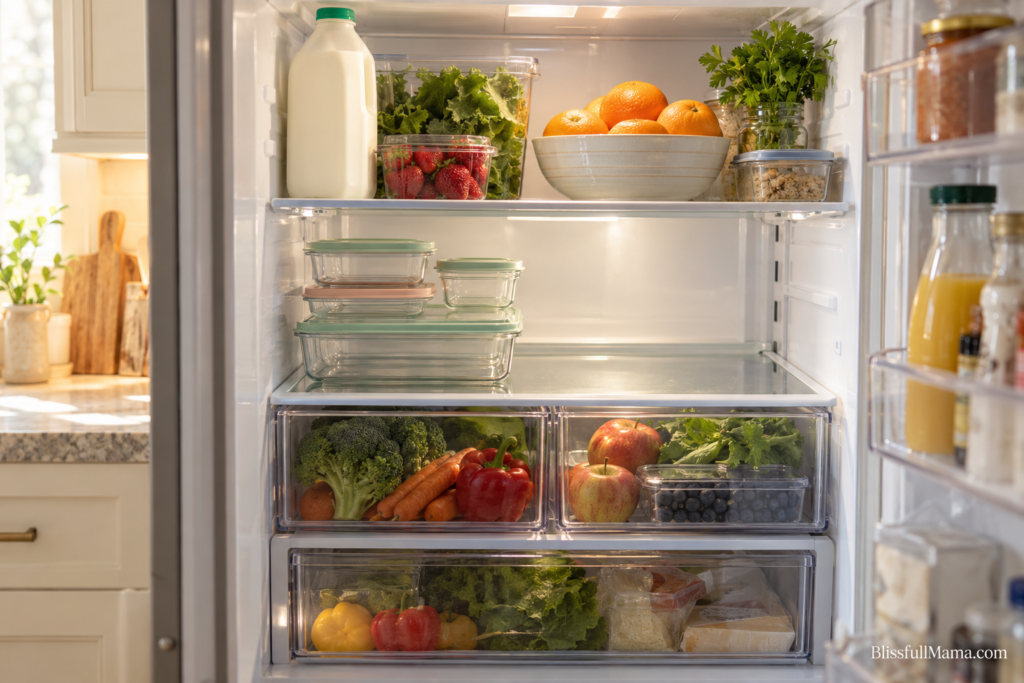
Once the kitchen counter is usable, look at where the extra food will go. A before-the-holidays home reset becomes much more useful when you can put away the groceries without rearranging the refrigerator while your children are asking for lunch.
Start with one shelf. Check what’s there, remove anything spoiled, and wipe the cleared section before returning the food. Work in small batches so refrigerated food stays cold. If you’re hosting a meal, think about the space you’ll need for ingredients beforehand and leftovers afterward. That large dish you plan to prepare ahead needs somewhere to sit.
I’d check the freezer in a separate session and write down what could become dinner over the next week. With four boys to feed, ordinary family meals still need a place in the plan. Having food for a gathering won’t help much on the evening before it if everyone is hungry and you haven’t thought about dinner.
Then look through the pantry shelf that holds the ingredients you’ll need. Make your shopping list with the cupboard open. You might already have the baking supplies you were about to buy, while the snacks your children eat every afternoon are nearly gone. Buy for the meals you’ve planned and leave enough room to put the order away.
Match a Few Containers With Their Lids
Before adding food-storage containers to your shopping list, check the ones you own. Match the sizes you use with their lids and put them somewhere you can reach. If several are holding forgotten leftovers, deal with those during your refrigerator session so the containers can be washed and returned.
You only need to check the pieces you’ll use. Emptying the entire container drawer can wait if you’re short on time. The aim is to have somewhere to put the food after a meal without searching through a cupboard while everyone else is ready to leave the table.
For hosting, take out the serving dish or tray you plan to use and check that it’s clean and accessible. If you genuinely need replacements, you can browse my (AD) Amazon storefront for home and family finds. Measure your shelf first and choose containers for the amount of food you usually store.
Give New Toys Somewhere to Go
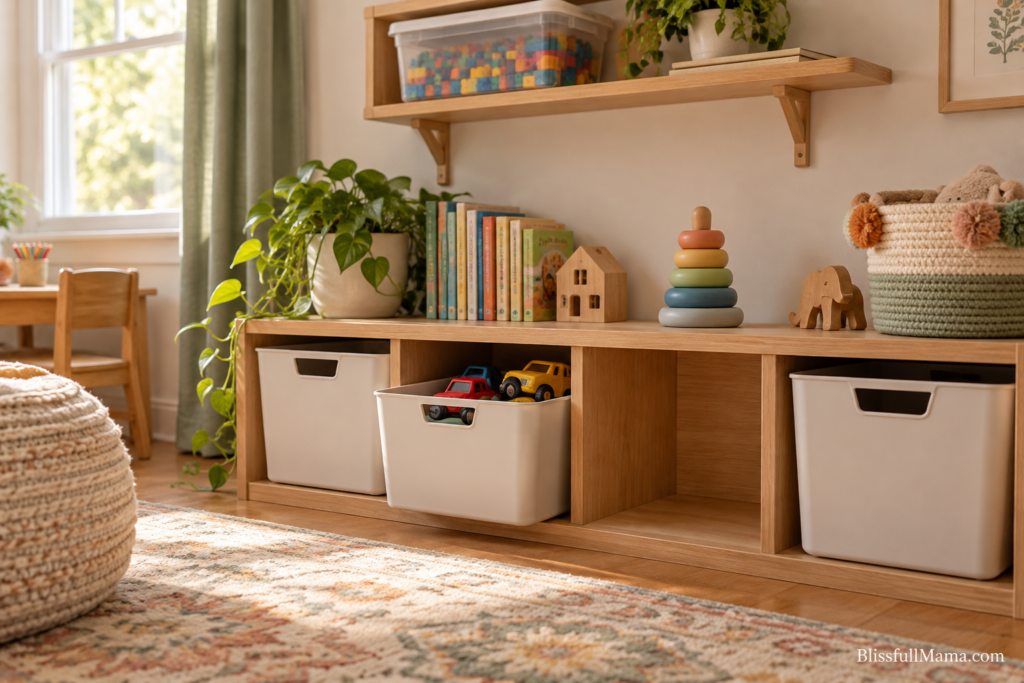
A full toy bin is worth checking before new gifts arrive. Start with the one your children find hardest to use. If they have to empty it to find a truck, or you have to rearrange every piece before the lid closes, that area already needs attention.
Having boys at different ages makes the decisions less straightforward. Something my nine-year-old has finished with might still suit my four-year-old. But keeping every toy for the youngest would mean storing years of belongings, including things nobody particularly wants to play with.
Work through one small area and decide what belongs in each group:
- Toys someone regularly uses and wants to keep available.
- Good-condition toys your family agrees to donate.
- Toys you’d like to keep in a limited rotation.
- Damaged items that need repair or disposal.
Give your children a say in decisions about their belongings. I’d ask, “Which of these do you want to keep in this basket?” and look at the toys with them. A small, worn toy can matter more to a child than a large set that barely gets touched. Leave time for that conversation instead of treating every unused-looking item as ready to leave.
Protect unfinished projects too. My older boys both love Minecraft, and I know a particular theme can hold their attention for a long time. A build sitting on a table may still be in progress. Agree on somewhere it can stay, then return the loose pieces around it. Keep older children’s small parts somewhere the younger boys can’t access.
My toy organization for small spaces guide has storage ideas to compare with the toys your children actually use. Before buying another bin, try putting the current selection away together. You’ll see whether the problem is the container, its location, or the amount you’re trying to fit inside.
Put Donations on the Calendar
A donation bag needs a destination and a date. Check what the organization accepts, choose a drop-off or arrange collection, and add it to your calendar. Keep the bag somewhere that leaves doors and walkways clear while it waits.
Be honest about selling too. Taking photographs, writing a listing, answering messages, and arranging a handoff all take time. If you want to sell an item, choose when you’ll list it. If that date passes, decide whether you’re still willing to do the work or whether donating it would suit you better.
I’d keep the amount small enough to handle in one trip. A few items that actually leave the house give you space back. Several bags waiting indefinitely can make the room harder to use.
Choose One Place for Gifts and Returns
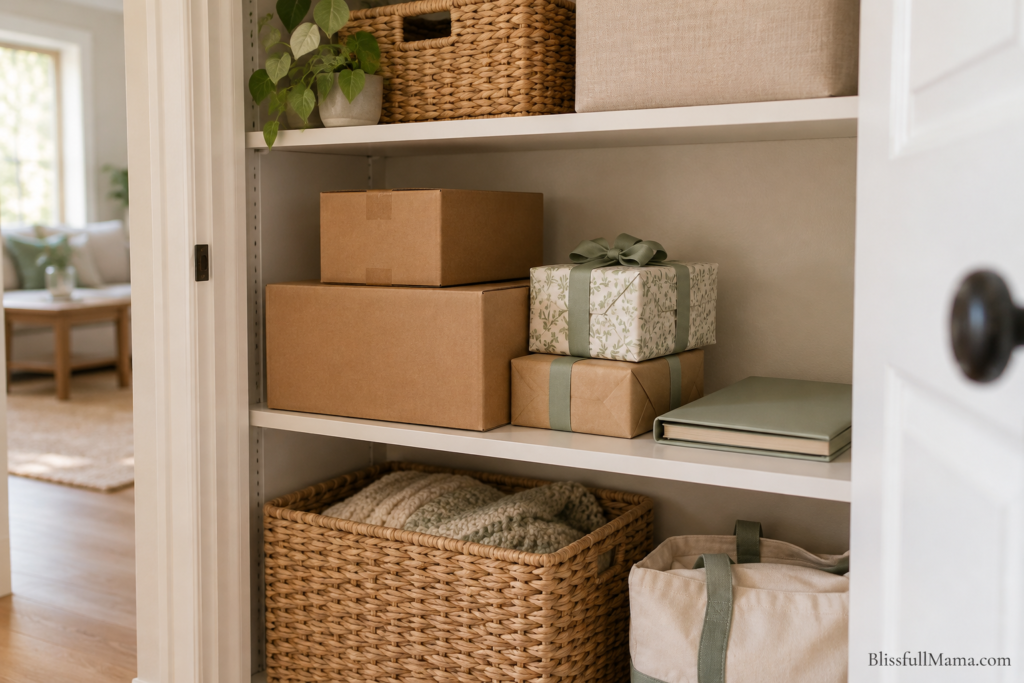
Clear a contained storage spot before the packages start arriving. It could be part of a closet or a suitable storage box you already own. Choose somewhere inaccessible to the children if gifts need to stay a surprise, and keep scissors, plastic packaging, and other wrapping supplies out of younger children’s reach.
Keep a purchase list on your phone or a sheet of paper. Include the recipient, what you bought, and where you put it. “Books for Adam, bedroom closet” is enough detail to save you another search. If relatives tell you what they’re buying, add that too so you can check for duplicates.
Returns need their own next step. Keep the receipt and required packaging together, check the seller’s instructions, and record the actual deadline. Where another adult is handling the return, agree on who will pack it and take it to the drop-off. Having it written down lets you stop checking the same unfinished task every day.
Prepare the Bathroom Your Guests Will Use
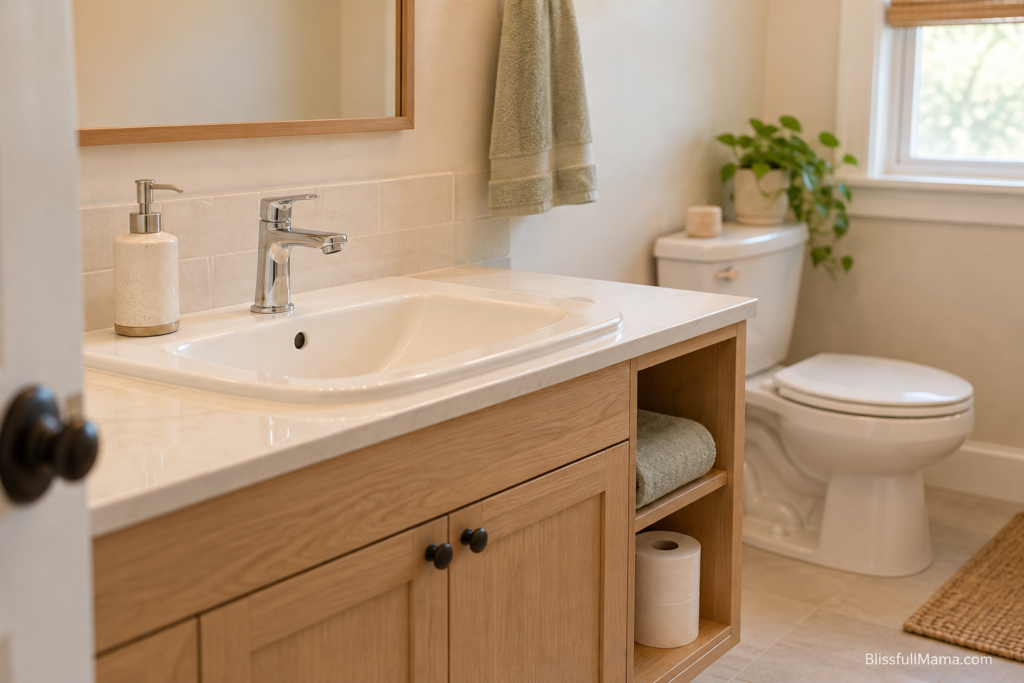
Start with the bathroom people will actually use. Clear and clean the sink, clean the toilet, empty the trash, and replace the hand towel. Check that soap and spare toilet paper are easy to find. Follow the directions on your cleaning products and store them away when you’re finished.
For overnight guests, add the shower and clean bath towels. Check the sheets for the sleeping space before starting the laundry, especially if the spare bedding hasn’t been used recently. Leave enough time for everything to dry and clear somewhere for a guest’s bag.
If you’re already behind on laundry, complete a load before starting several more. A clean sheet still sitting damp in the machine won’t help at bedtime. I’d put away the basket that’s ready first, then decide which guest items need washing next.
Your Before-the-Holidays Home Reset Checklist
Copy this list into your phone or onto a sheet of paper. Cross out anything your family doesn’t need, then choose one unfinished job for your next short session.
- Clear the counter or table we use every day.
- Return the belongings collected in the pickup basket.
- Check one refrigerator shelf and write the grocery list.
- Match the food containers we’ll need with their lids.
- Review one crowded toy bin with the children.
- Schedule the donation drop-off or collection.
- Choose a place for gifts and record any return deadlines.
- Clean the bathroom guests will use.
- Prepare bedding only if someone is staying overnight.
Give each chosen job a name beside it when another family member can take responsibility. Leave the list somewhere you can find it again, and stop adding jobs once it covers the plans you actually have.
Keep One Useful Space Ready for Tomorrow
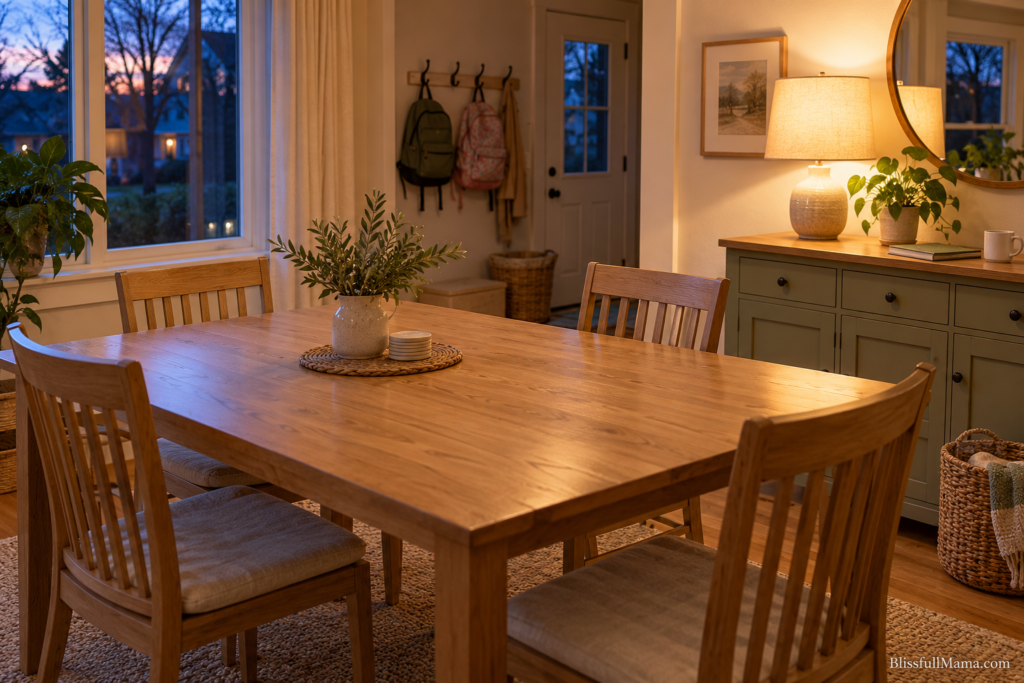
Once you’ve cleared a surface or made room on a shelf, give it a small place in your evening routine. Choose the area you’ll need first tomorrow and return the things that have collected there. Ask family members to gather their belongings before everyone settles down for the evening.
My nightly reset routine for busy moms gives you a starting point if you want more help choosing evening jobs. For this holiday reset, keep the task tied to tomorrow. Clear the counter you’ll need for breakfast or return the toys blocking the family seating.
Some evenings, there will only be time to deal with the next meal and get the children ready for bed. Leave the pantry sorting for another day. If you have five minutes before stopping, return the things on the table and put the folder back in its place. Leave enough room to sit down for breakfast.
Frequently Asked Questions About a Before-the-Holidays Home Reset
When should I start my holiday home reset?
I’d start two to four weeks before your first busy holiday week or planned gathering. That gives you room to spread the work across short sessions. If you only have a few days, choose the spaces you’ll use first: the kitchen, family seating, and the bathroom guests will use. Leave jobs that won’t affect those plans for later.
What should I declutter first when the whole house feels overwhelming?
Begin with the spot that repeatedly interrupts your day. If you move papers before every meal, clear the table. If grocery bags sit on the floor because the counter is full, start there. Finish one usable area before moving to another so you have somewhere to prepare food or sit down.
How can I prepare for the holidays with only 15 minutes a day?
Choose one job small enough to finish, including putting everything away. Clear one refrigerator shelf, match a few food containers with their lids, or review one toy basket with your child. Save the last few minutes for returning belongings and removing trash. Skip opening a second area if the first still needs finishing.
Should I declutter toys before buying holiday gifts?
Yes, I’d review the crowded toy storage before shopping. You’ll see what your children still use, what they already own, and where a new gift could fit. Include them in decisions about their belongings and keep favorite comfort toys available. If you’re considering a large toy, decide where it will go between play sessions before ordering.
Do I need to deep-clean the whole house before guests arrive?
I’d plan around the visit. For a meal or afternoon gathering, focus on the kitchen, seating, and shared bathroom. Overnight guests also need a prepared sleeping space and clean towels. Add other cleaning jobs when they’re needed and you have time to finish them.
How do I stop the clutter from building up again?
Make returning belongings part of an existing moment in your day, such as before dinner or before the children go to bed. Give each family member a specific job and empty the pickup basket during that session. If the same items keep collecting on a surface, check whether their usual storage is easy to reach and has room for them.
Make Room for the Holiday Days You Want to Enjoy
With four boys, I can’t plan our home around long stretches when nobody needs me. I can choose a smaller job, involve the children where it makes sense, and leave a useful space ready for the next meal. That’s the approach I’d carry into the holiday weeks too.
Choose the job that will help your family soonest and finish that one first. Let the guest-room closet wait if nobody is sleeping there. Take the donation bag out on the date you chose. Once the table is ready for dinner, use it.
I want room for the boys to play and somewhere to sit with them, without spending every spare evening sorting belongings. When today’s job is finished, put the basket away and close the cupboard. Leave yourself time to sit down while your tea is still warm.
Get Your Free Before-the-Holidays Home Reset Checklist
Ready to choose your first small job? Get my free two-page Before-the-Holidays Home Reset Checklist and work through the spaces your family will use most.
You’ll have a printable task list, space to assign jobs, donation and return deadlines, and a five-minute reset for the days when time is short.
Sign up for my emails to get the checklist and join me for practical home routines that fit around family life.